
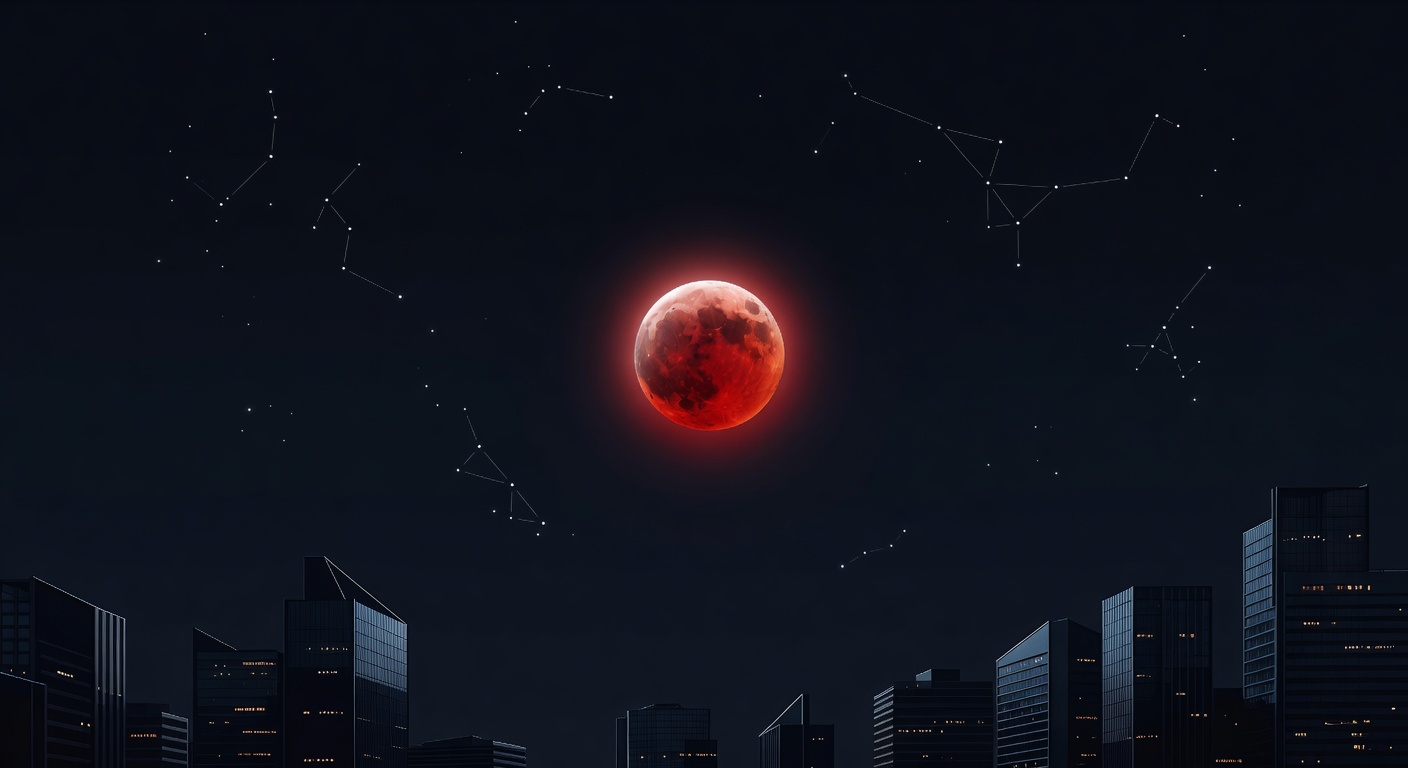
The Moon is About to Put on a Show (And You're Invited!)
Hey space lovers! 🌙
I have to admit, I'm getting pretty excited about the upcoming lunar eclipse. There's just something absolutely mesmerizing about watching our everyday moon slowly disappear and then reappear as this gorgeous, blood-red sphere. It's like nature's own magic trick, except the science behind it is even cooler than magic.
So What Exactly IS a Blood Moon?
Let me break this down without getting all textbook-y on you. A "blood moon" is really just a total lunar eclipse with a dramatic nickname (and honestly, whoever came up with that name deserves a marketing award).
Here's what happens: Earth decides to photobomb the sun and moon's relationship. When our planet slides perfectly between the sun and moon, we cast a shadow that completely covers the lunar surface. But here's the cool part — the moon doesn't just disappear into blackness.
Instead, Earth's atmosphere acts like a giant lens, bending sunlight around our planet. This bent light is mostly red and orange (the same reason sunsets look so gorgeous), and it bathes the moon in this incredible rusty glow. It's like the entire moon gets Instagram's "warmth" filter cranked up to 11.
Why I Think Everyone Should Watch This
Look, I get it. Waking up early or staying up late to stare at the sky isn't everyone's idea of fun. But lunar eclipses are surprisingly rare events — we only get a couple each year, and they're not always visible from your backyard.
What I love most about eclipses is how they remind us that we're actually floating on a rock in space. It sounds cheesy, but there's something profoundly humbling about watching these celestial mechanics play out in real-time above your head.
Plus, unlike solar eclipses (where you need special glasses and can literally damage your eyes), lunar eclipses are completely safe to watch with the naked eye. Grab a lawn chair, maybe some hot chocolate, and you're set.
Your Viewing Game Plan
The best part about lunar eclipses is that you don't need any fancy equipment. Your eyes are perfectly fine, though binoculars or a small telescope will give you an even more stunning view of the moon's cratered surface bathed in that eerie red light.
Find a spot with a clear view of the sky — away from streetlights if possible. The moon will be doing its thing whether you're in the city or countryside, but darker skies always make the experience more magical.
I'd recommend checking your local astronomy websites or apps for exact timing in your area. The whole event usually unfolds over several hours, but the "totality" phase (when the moon is fully red) typically lasts about an hour.
A Few Pro Tips From This Space Nerd
Here's what I've learned from watching these celestial shows over the years:
- Dress warmly — March nights can still be pretty chilly, and you'll be outside longer than you think
- Bring a red flashlight (or cover a regular flashlight with red paper) so you don't mess up your night vision
- Set multiple alarms — I've definitely overslept through eclipse viewing opportunities before, and the regret is real
- Invite friends — these events are so much better when shared
Why This Stuff Still Blows My Mind
We live in an age where we can stream any movie ever made and have food delivered by drone, yet there's something timelessly amazing about looking up at the same sky our ancestors watched thousands of years ago.
Ancient civilizations thought lunar eclipses were omens or dragons eating the moon. We know better now, but honestly? The real explanation — that we're watching the shadow of our own planet projected onto another world — is way more incredible than any dragon story.
So mark your calendars, set those alarms, and give yourself permission to be amazed by something that doesn't involve a screen for once. Your inner space nerd will thank you.
Source: https://www.wired.com/story/how-to-view-the-blood-moon-total-lunar-eclipse-on-march-3