
The main blog post with markdown formatting
The Dream of a Better Battery
Okay, I'll admit it — I'm a total battery nerd. Not in a weird way, but in a "I get genuinely excited about energy storage" kind of way. And honestly? You should be excited too, because a team of researchers just solved one of the biggest puzzles standing between us and some pretty incredible technology.
Imagine your smartphone running for three or four days before you need to plug it in. Picture an electric car that can go 600 miles on a single charge. We're talking about technology that could genuinely change how we live, work, and commute.
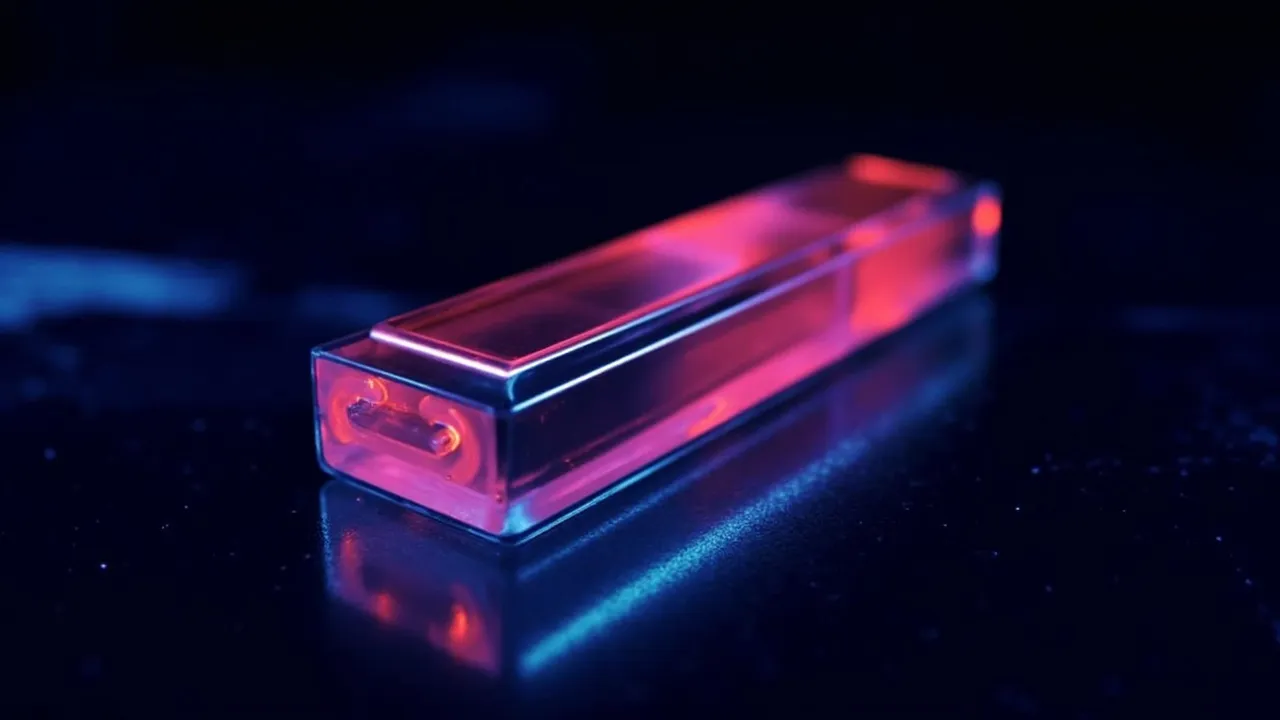
This isn't science fiction anymore — it's the promise of solid-state batteries.
So What's the Big Deal?
Let me break down the basics. Your phone, your laptop, your electric car — they all run on lithium-ion batteries. These batteries work by moving lithium ions between two electrodes through a liquid electrolyte. It's a proven technology, but it has limitations. The liquid electrolyte is flammable, limits how much energy you can pack in, and degrades over time.
Solid-state batteries swap that liquid for a solid material — usually a ceramic. The benefits are huge: higher energy density (meaning more power in the same space), better safety (no flammable liquid), and longer lifespan.
But here's the problem that's been driving scientists crazy.
The Dendrite Dilemma
When you charge a battery, lithium ions build up on the negative electrode (the anode). In some conditions, they don't deposit nicely — instead, they grow into tiny, tree-like structures called dendrites. (The name comes from the Latin for "tree," which I think is pretty fitting.)
These dendrites are like uninvited guests at a party. They keep growing until they eventually pierce through the solid electrolyte and create a short circuit. Boom — your battery fails.
What's baffled researchers is the mechanics of this. The lithium dendrites are soft. Really soft — like a gummy bear, according to one researcher. The ceramic electrolytes are hard. Like, really hard.
So how in the world does something soft break through something hard?
The Waterjet Discovery
This is where it gets cool.
Researchers at the Max Planck Institute for Sustainable Materials decided to investigate this exact question. They hypothesized two possible explanations. Maybe stress builds up inside the dendrites and causes fractures. Or maybe electrons leak through the material and create new lithium deposits that connect.
Using some seriously impressive microscopy techniques — including working in vacuum conditions at cryogenic temperatures to eliminate interference — they examined dendrites trapped inside cracks.
Here's what they found: the soft lithium acts like a continuous waterjet cutting through rock. The hydrostatic pressure inside the dendrite tip creates enough force to fracture the ceramic, even though the lithium itself is soft.
It's counterintuitive, right? You'd think something soft couldn't break something hard. But when you concentrate force at a tiny point and keep applying pressure, the math changes.
Why This Matters So Much
Now, here's the thing that makes me genuinely excited about this research. Understanding the how is the first step to solving the problem.
The researchers aren't just content to say "now we know why batteries fail." They're already thinking about solutions. Some ideas they're exploring:
- Making the solid electrolyte tougher and more fracture-resistant
- Creating microscopic voids that redirect dendrite growth (like speed bumps steering traffic)
- Adding protective coatings to the lithium electrodes to prevent dendrites from forming in the first place
Each of these approaches could significantly extend battery life and reliability.
The Bigger Picture
Look, I know this might sound like another "lab discovery that's 10 years from实际应用" situation. And yeah, there's still work to do. But here's what I find encouraging: we're not just throwing ideas at the wall anymore.
When you understand exactly why something fails — down to the microscopic mechanisms — you can design targeted solutions. This isn't incremental improvement. This is the kind of fundamental understanding that unlocks rapid progress.
Solid-state batteries have been "almost here" for years. But with researchers finally cracking these fundamental mysteries, I think we're closer than ever to seeing this technology in the devices we use every day.
And honestly? I can't wait to see what happens when our gadgets stop being limited by yesterday's battery technology.
What do you think? Are you as excited about next-gen batteries as I am? Drop a comment below — I'd love to hear your thoughts!
Source: ScienceDaily