
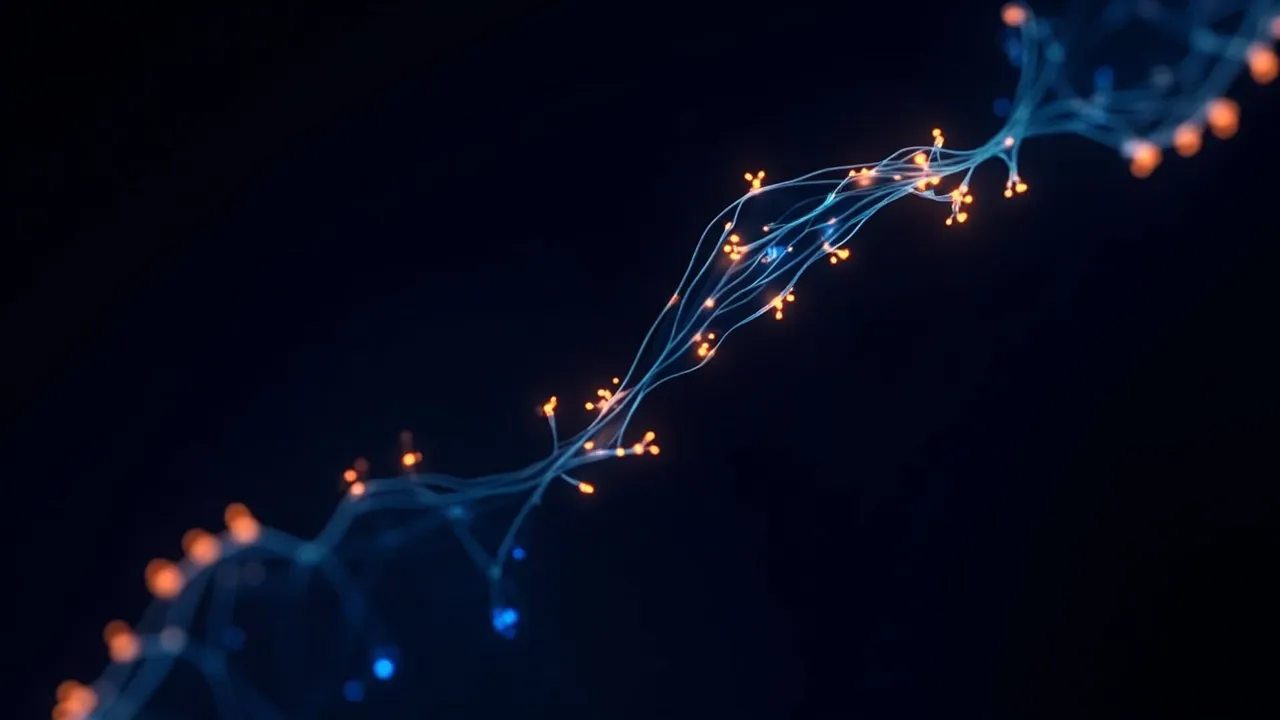
The Mystery of Nerves That Won't Heal
Okay, I have to share something that genuinely blew my mind when I first read about it.
You know how your skin can heal from cuts and scrapes, but when you damage a nerve — especially in your spinal cord — it often doesn't come back? Scientists have been scratching their heads over this for decades. Why can some cells in our body regenerate while our neurons seem to give up?
Well, researchers at Mount Sinai may have finally cracked the code. And honestly? The answer is both fascinating and a little bit humbling.
Meet the "Brake" Inside Your Neurons
The scientists discovered that inside your nerve cells, there's a protein called the aryl hydrocarbon receptor — or AHR for short. This little molecule acts like a brake pedal on healing.
Here's what happens: When you injure a nerve, the neuron goes into crisis mode. It needs to survive. The problem? That survival mode tells the cell to focus entirely on not dying rather than on growing back what was lost.
"Think of it like your car's engine," explains Dr. Hongyan Zou, the study's senior author. "When something's wrong, the brake goes on. The cell is so focused on staying alive that it forgets about regeneration."
So essentially, our own bodies are working against us when we're trying to heal. Our neurons are making a choice — and unfortunately, they're choosing survival over repair.
The Clever Science of Blocking the Brake
Here's where it gets really interesting. The researchers figured out that if they remove AHR or block it with certain drugs, the neurons change their priorities. They start producing more proteins associated with growth and regeneration. The axons — those long tendrils that carry signals between nerve cells — actually start rebuilding.
In mice with damaged peripheral nerves and spinal cord injuries, suppressing AHR led to noticeable improvements in movement and sensation. I don't know about you, but I find that pretty remarkable.
It's a Delicate Balance
Now, you might be wondering: if AHR helps neurons survive stress, is it safe to just block it?
That's the million-dollar question, and the answer is — it's complicated.
See, AHR isn't all bad. It helps neurons maintain what's called "proteostasis" — basically, keeping their protein quality control system running smoothly. When you knock out AHR, you might be trading one problem for another.
But the researchers noticed something crucial: without AHR, neurons appeared to activate another factor called HIF-1α, which helps control genes involved in metabolism and tissue repair. It's almost like the cells found a workaround.
The Plot Twist: A Protein Best Known for Detecting Poison
Here's the part that made me actually laugh out loud.
AHR was originally discovered because it helps our bodies detect environmental toxins and pollutants. You know — the harmful stuff in our environment. It's essentially a ** toxin sensor**.
And now we're finding out it also controls whether our nerves can heal? The same protein that detects poison also decides whether our neurons grow back after injury?
That's either incredibly poetic or deeply ironic, depending on how you look at it.
What's Next? From Lab Mice to Human Treatments
Before you get too excited (or before I get too excited and start making promises), this research is still in its early stages. We're talking about mouse studies here, and what works in rodents doesn't always translate to humans.
That said, there's reason for cautious optimism. Several AHR-inhibiting drugs are already being tested in clinical trials for other conditions. That means researchers aren't starting from scratch — they might be able to repurpose existing medications.
The next steps include figuring out:
- The best timing for treatment after injury
- What dosage works without causing other problems
- How AHR inhibition affects other cells involved in the healing process
The Mount Sinai team is also exploring gene therapy approaches that would reduce AHR specifically in neurons — a more targeted approach that might minimize side effects.
My Two Cents
I'll be honest — when I first heard about this research, I felt that mix of wonder and frustration that comes with modern science. On one hand, we live in an incredible time where we're unraveling the molecular secrets of our own bodies. On the other hand, we're still so far from turning these discoveries into actual treatments.
But here's what gives me hope: the fact that our bodies already have the machinery for regeneration. They're just being prevented from using it. Once we understand exactly what's holding the brakes, we can start releasing them.
And if even some of this research pans out, we might be looking at a future where spinal cord injuries, stroke damage, and peripheral nerve disorders become significantly more treatable.
That's worth getting excited about, even if we have to wait.
Source: https://www.sciencedaily.com/releases/2026/08/260828005427.htm