
The Robot Revolution is Happening in Your Living Room
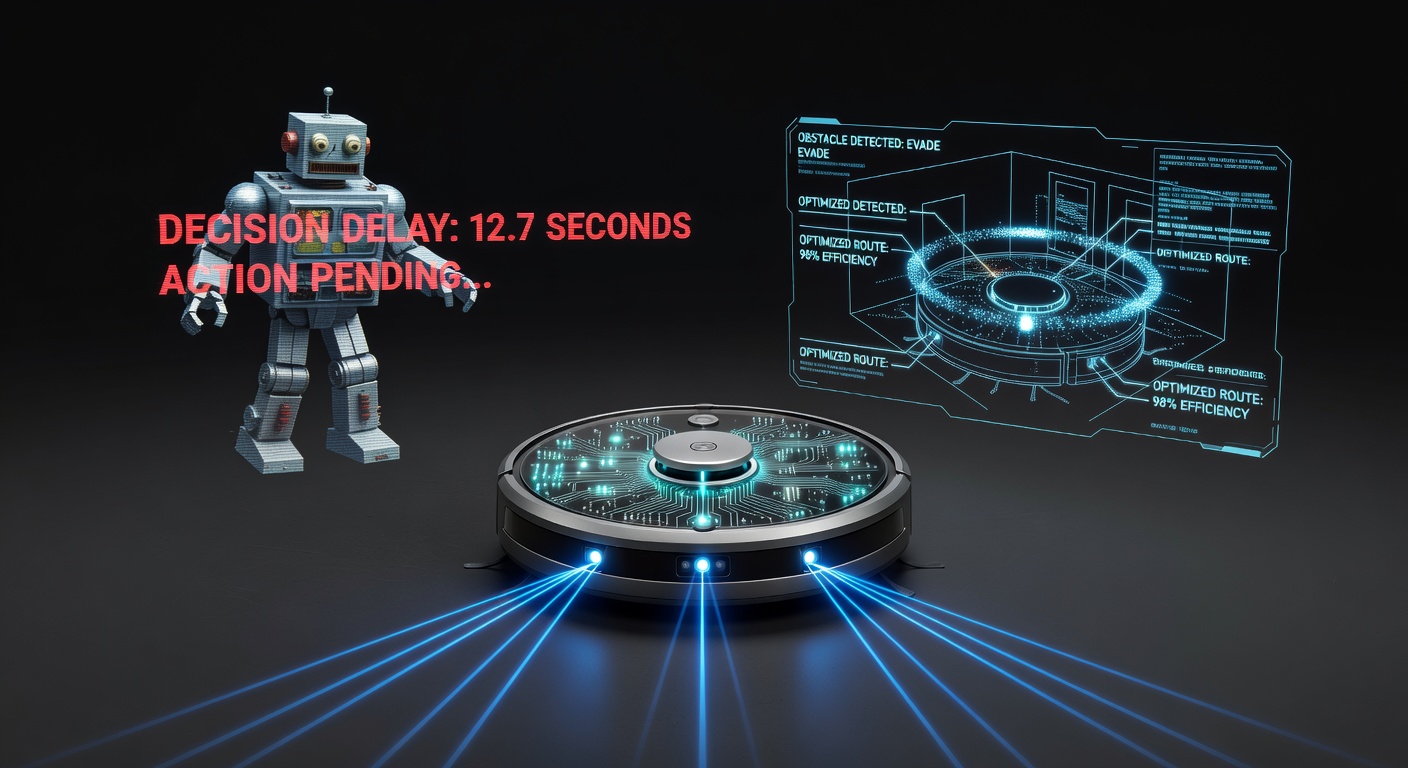
I've been following robotics for years, and honestly? The most impressive robot I interact with daily isn't some humanoid assistant—it's my robot vacuum. That little disc navigating around my coffee table represents something profound: truly intelligent machines working in real-world environments.
But here's what gets me excited: we're on the cusp of robots that don't just follow pre-programmed paths. They're developing genuine understanding of what they see and can make split-second decisions based on that visual information.
From Chatbots to Robot Brains
You know how ChatGPT can understand text and images? Well, scientists have been busy teaching similar AI systems to control robot arms and bodies. These "Vision-Language-Action" models (let's call them VLA for short) can literally watch what's happening and decide what to do next.
Think of it like this: instead of a chatbot that responds with words, imagine one that responds by moving a robotic arm to pick up your coffee mug. Pretty cool, right?
The Real Challenge: Making Robots Think Fast Enough
Here's where things get really interesting (and challenging). Most of these smart AI systems need massive computers in data centers to work. But robots can't be tethered to the cloud—they need to think locally, instantly, and with very limited computing power.
The timing problem is fascinating: imagine a robot arm trying to catch a falling object. If the robot's "brain" takes 2 seconds to process what it sees and decide what to do, that object is already on the floor. For smooth, natural movement, robots need to think and act in milliseconds, not seconds.
This creates what I like to call the "embedded intelligence paradox"—we need desktop-level AI performance in smartphone-level hardware.
The Art of Teaching Robots Through Examples
One thing that really struck me about recent developments is how we're teaching robots now. Instead of programming every possible scenario (which is impossible), we're showing them examples through recorded demonstrations.
Picture this: you want to teach a robot to make tea. Instead of writing thousands of lines of code, you simply demonstrate the task while cameras record everything. The robot watches, learns the patterns, and eventually figures out how to generalize that knowledge to slightly different situations.
But here's the catch—the quality of those demonstrations matters everything. It's like teaching a friend to cook: if you're inconsistent with your instructions or the lighting keeps changing so they can't see what you're doing, they'll never learn properly.
Why This Actually Matters to You
You might be thinking, "This is neat, but when will I see this in real life?" Well, sooner than you think.
The same technologies being developed for research robots are already trickling down to consumer applications. That robot vacuum I mentioned? Future versions might understand voice commands like "clean around the Christmas tree but avoid the presents underneath."
Warehouse robots are getting smarter about handling packages of different shapes and sizes. Medical robots are becoming more precise and adaptable. Even our cars are essentially robots that are learning to navigate complex, unpredictable environments.
The Engineering Marvel Behind the Magic
What fascinates me most is that this isn't just an AI problem—it's a complete systems engineering challenge. You need:
- Smart scheduling: The robot's brain needs to think ahead while its body is still executing the previous action
- Optimized hardware: Every chip and sensor needs to work together efficiently
- Real-time performance: No laggy responses allowed when dealing with the physical world
Companies like NXP are working on specialized processors designed specifically for these kinds of intelligent robotics applications. It's like having a graphics card, but instead of rendering video games, it's rendering real-world understanding and decision-making.
What's Next?
I'm genuinely excited about where this is heading. We're moving toward a world where robots aren't just following scripts—they're genuinely understanding their environment and adapting to new situations.
The breakthrough isn't going to be one massive leap, but rather the steady improvement of making these systems more efficient, more reliable, and more accessible. Every month, researchers are finding new ways to squeeze more intelligence into smaller, more affordable packages.
And honestly? I can't wait to see what problems we'll solve when robots can truly see, understand, and act with the same fluidity that we take for granted in our daily lives.
The future of robotics isn't just about building better robots—it's about building robots that can think for themselves.
Source: https://huggingface.co/blog/nxp/bringing-robotics-ai-to-embedded-platforms