
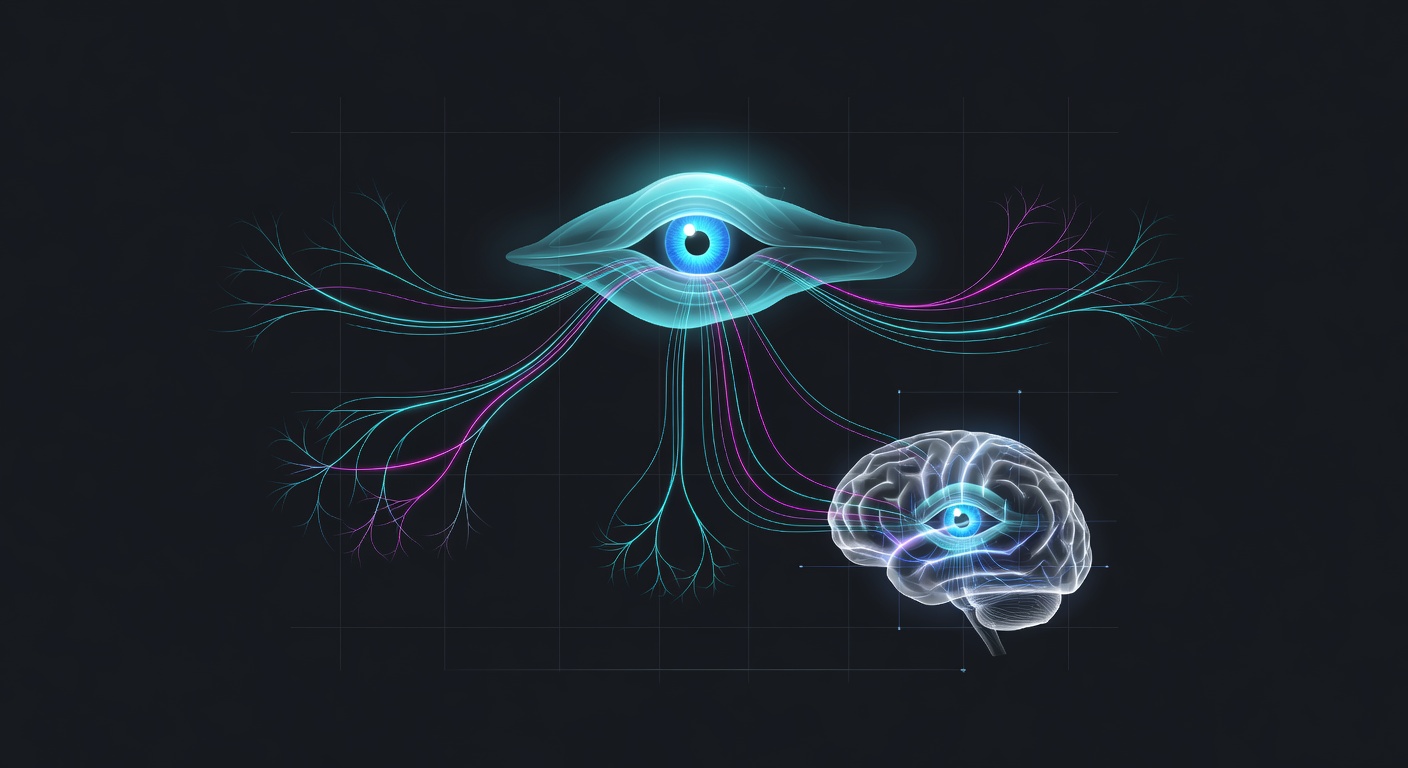
The Weirdest Thing Your Family Tree Has Hidden
Okay, so I stumbled across this research that genuinely blew my mind, and I had to share it because evolution is basically the ultimate plot twist machine.
Imagine this: 600 million years ago, your super-distant ancestor was a tiny worm-like creature living in the ocean. Nothing fancy, just vibing, filtering plankton out of the seawater. But here's the kicker—this little guy had a single eye smack in the middle of its head. Like an actual cyclops. I cannot stress enough how wild this is.
How We Went From Two Eyes to One (Then Back to Two Again)
This is where it gets even wilder. Way earlier in evolutionary history, this creature actually had two normal eyes, just like you. But eventually, as it settled into a more stationary, couch-potato lifestyle, those paired eyes became sort of... redundant? Why waste energy maintaining two eyes if you're just sitting around filtering food all day?
So evolution did what it does best: it said "we don't need those anymore" and they gradually faded away.
But—and this is the beautiful part—the creature didn't lose its light-sensitivity entirely. Instead, it had a cluster of light-sensing cells right in the center of its head that evolved into a single, functional eye. Just one lonely eye, right there in the middle, like some kind of adorable biological Cyclops.
The Comeback Nobody Expected
Here's where things get really interesting. After hanging out for millions of years with just this one median eye, the ancestor's lifestyle changed again. It got more active. It started swimming around more. Suddenly, that single eye in the center wasn't cutting it anymore—the animal needed better vision to hunt and navigate.
So what did evolution do? It basically recycled parts of that ancient median eye and repurposed them to build new, paired eyes that could actually form detailed images. It's like nature looked at the spare parts from the old median eye and said, "Hey, I can work with this."
This is genuinely mind-bending. We didn't evolve eyes the straightforward way. We took a detour. We went from two eyes → one eye → two different eyes built from the pieces of the old one.
Why Your Eyes Are Basically Alien Compared to Insects
This weird evolutionary history actually explains something scientists have been puzzled about for ages: why vertebrate eyes are constructed so differently from insect eyes or squid eyes.
In your eye, the light-sensing part (the retina) is basically an extension of your brain tissue. It developed from the inside out. But insects and squid? Their eyes evolved from skin tissue on the outside of their bodies, built from a completely different biological starting point.
It's not that vertebrates are better at seeing—insects can see plenty well. It's that we built our eyes using completely different blueprints. And now we know why: we took that weird evolutionary detour through the median eye.
The Plot Twist: Your Ancient Cyclops Eye Still Exists
Okay, I saved the best part for last, and honestly, this is what made me lose my mind about this research.
That ancient median eye? It didn't disappear. It's still there. Inside your head. Right now.
It transformed into something called the pineal gland—a small, light-sensitive organ deep in your brain. And here's the function that's going to absolutely wreck you: it produces melatonin, the hormone that controls when you sleep and when you wake up.
So every time your pineal gland detects that it's getting dark outside and starts producing melatonin to make you sleepy, you're literally using an organ that descended directly from an ancient cyclopean eye from 600 million years ago. Your sleep schedule is being governed by the ghost of a one-eyed worm creature that your ancestors were hanging out with in the ocean way before dinosaurs even showed up.
If that doesn't make you feel connected to deep evolutionary time, I don't know what will.
Why This Matters (Besides Being Absolutely Bonkers)
This research isn't just cool trivia for science nerds like me to geek out about. Understanding how our eyes actually evolved helps us comprehend how the brain develops and how different sensory systems work. It's one more piece of the puzzle in understanding how billions of years of adaptation shaped the biology we're walking around with today.
Plus, honestly? It's just humbling. Your pineal gland, working away quietly in your brain, controlling your sleep—that's a biological artifact from one of the strangest chapters in your family's history. Every night when you get drowsy, your ancient cyclops ancestor from 600 million years ago is basically tucking you in.
Pretty cool, right?