
markdown formatted blog content
Let me paint you a picture. You're trying to read an article (ironic, I know), but someone nearby is having a lively conversation. Or maybe you're working from home while the TV hums in the background. For most of us, our brain handles this pretty well — we can tune out the noise and stay locked in on what's important.
But for people with ADHD, that filtering system feels broken. Every little distraction demands attention, like a bouncer who's forgotten how to do their job.
Well, scientists might have just figured out why — and it's thanks to some clever mice and a region of the brain you probably haven't heard of.
The Brain's Secret Focus Filter
Here's the wild part: researchers at Johns Hopkins University have discovered that our ability to concentrate doesn't come from the brain region you might expect. For decades, scientists assumed attention was mainly controlled by the prefrontal cortex — that fancy, evolved brain area we humans are so proud of.
Makes sense, right? We've got the biggest prefrontal cortexes in the animal kingdom, and we're pretty good at focusing (when we want to be).
But here's the puzzle: plenty of animals can focus their attention just fine without a big, fancy prefrontal cortex. Birds, fish, even frogs — they've been solving the "ignore distractions" problem for hundreds of millions of years. So how?
The answer, it turns out, is much older.
Say Hello to Your Brainstem
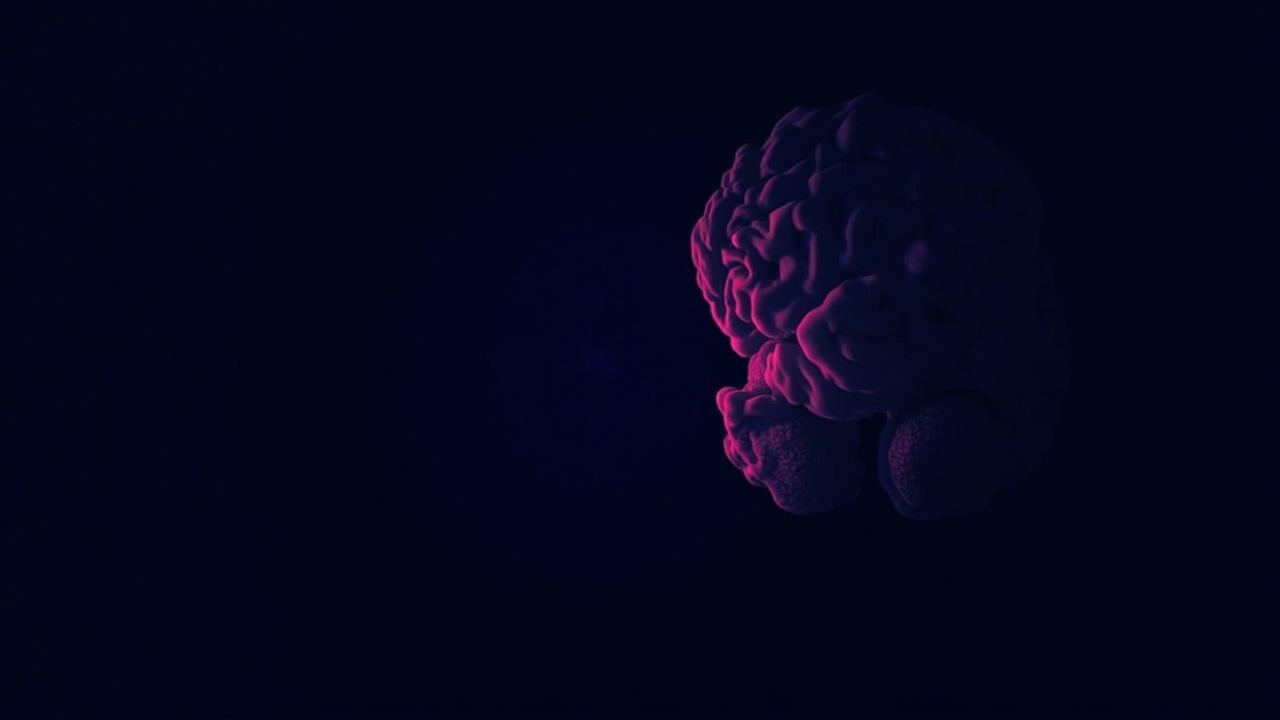
The researchers found a network of neurons hiding in the brainstem — yes, the brainstem, that ancient, primitive part at the base of your brain that handles basic life functions. This isn't the sophisticated cortex doing the mental heavy lifting here. It's something far more fundamental.
"We're talking about an evolutionarily ancient region," explained lead author Ninad Kothari. "For hundreds of millions of years, creatures have had this ability to focus. And they didn't need a fancy prefrontal cortex to do it."
The team ran an experiment that's actually pretty similar to those attention tests you might have done as a kid (remember the ones where you had to spot the differences between two pictures?). They trained mice to focus on a target directly in front of them while ignoring distracting cues off to the side. The mice caught on and performed beautifully.
Then came the fun part: researchers temporarily switched off those brainstem neurons.
"When we inactivated these neurons, the mice became hyper-distractible," Kothari said. They couldn't ignore the distractions anymore — even when those distractions were weak or irrelevant.
Sound familiar? It should. The researchers say this looks remarkably similar to what happens in ADHD.
What This Means for ADHD and Autism
The study's senior author, neuroscientist Shreesh Mysore, put it this way: "A hallmark of ADHD is that even faint distractors draw attention away — and that's exactly what we see here when these neurons are silenced."
But here's the encouraging part: when those neurons were switched back on, the mice immediately regained their ability to filter out distractions, even strong ones. The system could be restored.
This discovery opens up some exciting possibilities. If these neurons exist in humans (and all evidence suggests they do), and if they function similarly, researchers might be able to develop more targeted treatments for attention disorders. Instead of broadly affecting the whole brain, future medications could potentially aim directly at this specific "attentional selection engine."
The team is particularly interested in studying whether these neurons behave differently in people with ADHD or autism. That could help explain why some brains struggle with selective attention — and point toward more precise ways to help.
Your Brain Is Older (and Smarter) Than You Think
I find this stuff genuinely thrilling. We've spent so long thinking of the human brain as this uniquely sophisticated organ that evolved toward ever-greater complexity. And while that's true in many ways, it's also humbling to realize that some of our most important mental abilities — like the power to focus amid chaos — trace back to the brain systems of creatures that have been swimming and crawling around for hundreds of millions of years.
Your brain has been solving the "what should I pay attention to right now?" problem since before dinosaurs existed. That's pretty remarkable.
So the next time you successfully ignore your phone buzzing while you're deep in conversation, or find your way to your friend's face in a crowded room — give a little mental thank you to your ancient brainstem. It's been working hard to keep you focused.
Now, if you'll excuse me, I need to go practice ignoring my own distractions...