
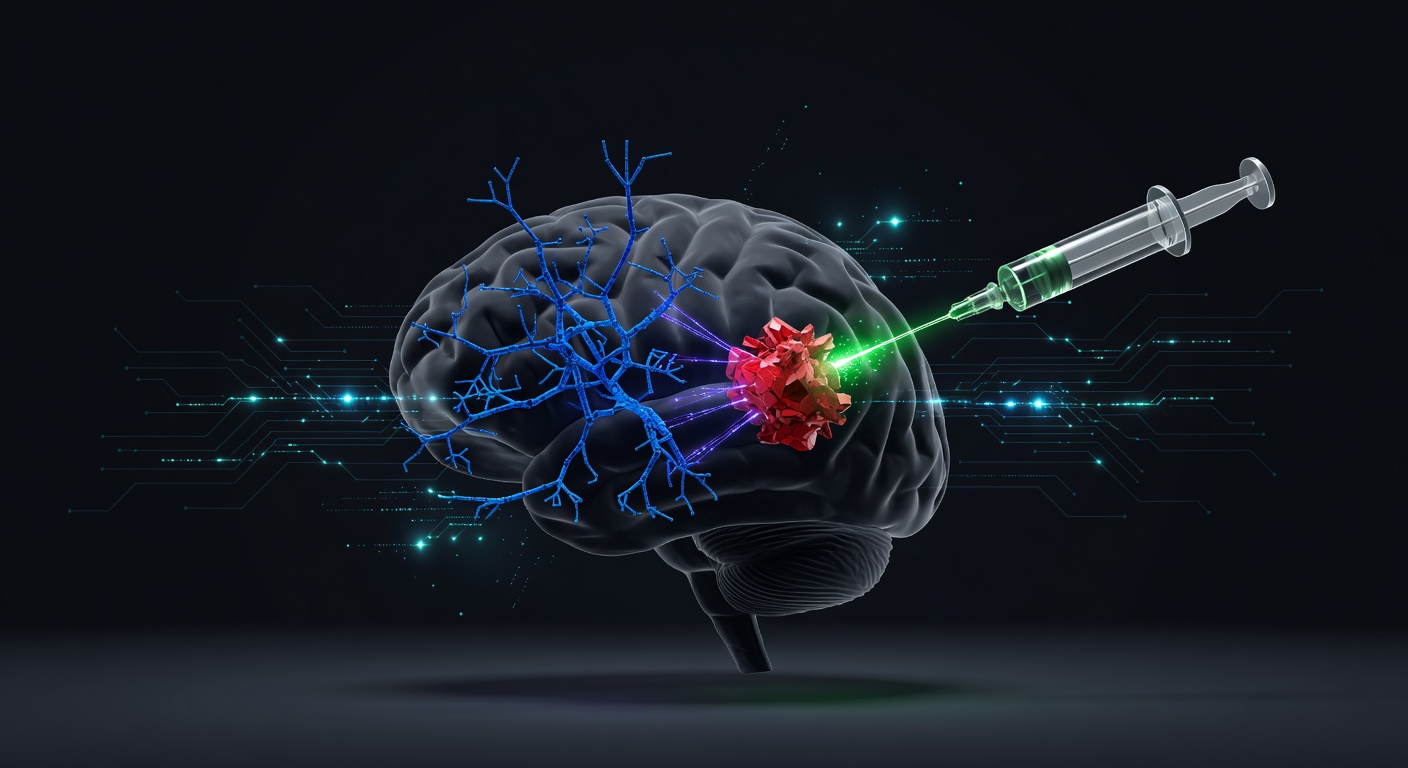
When Good Proteins Go Bad Together
You know that moment when you realize you've mixed bleach with ammonia and you panic? Yeah, that's basically what's happening in the brains of Alzheimer's patients—except with proteins instead of cleaning supplies.
Here's the wild part: the proteins involved in this dangerous duo are actually fine on their own. The NMDA receptor? Super important for how your brain cells communicate. The TRPM4 ion channel? Perfectly normal on its own. But when these two bump into each other, they trigger a cellular catastrophe that damages and kills nerve cells. It's like they have a sinister partnership that only activates when they're together.
A team of researchers from Heidelberg and Shandong Universities, led by Dr. Hilmar Bading, stumbled upon this discovery and published their findings in Molecular Psychiatry in 2025. And honestly? This might be one of those breakthroughs we look back on in 20 years and think, "How did we not see this sooner?"
The Drug That Plays Molecular Referee
So these scientists didn't just identify the problem—they actually came up with a creative solution. Enter FP802, an experimental drug that works like a tiny wall between two LEGO bricks that are trying to snap together.
Think of it this way: FP802 slides into the space where NMDA and TRPM4 would normally connect. It's not flashy, it's not aggressive, it's just... in the way. And that's exactly what you want in this situation. By preventing these proteins from binding, the drug essentially flips off the "death switch" before the cascade of cell death can begin.
When they tested this on mice with Alzheimer's, the results were genuinely impressive. The cellular damage slowed way down. Mitochondria (the little powerhouses of your cells) stayed healthier. Even amyloid buildup—that sticky protein associated with Alzheimer's—decreased without being directly targeted.
Why This Approach Actually Feels Different
Here's what gets me excited about this research: most Alzheimer's drugs try to clean up the mess after it's already made. They focus on removing amyloid proteins or preventing their formation. It's like trying to sweep up broken glass after someone's knocked over a vase.
But FP802 is doing something different. It's preventing the actual breaking of the vase in the first place by stopping the toxic protein pair from ever getting together. The researchers call this a "downstream cellular mechanism," which is fancy talk for "we're stopping the problem before it cascades into bigger problems."
Dr. Bading explains it perfectly: instead of cleaning up after the fact, they're blocking the cellular process that causes nerve cells to die and then triggers even more amyloid buildup. It's a more elegant solution, if you ask me.
Beyond Alzheimer's: The Bigger Picture
Here's the thing that really makes me optimistic: this isn't just an Alzheimer's story. The researchers have already tested FP802 in ALS (Lou Gehrig's disease) research with promising results. They're suggesting this same mechanism might apply to Parkinson's disease, traumatic brain injuries, and even age-related cognitive decline.
Basically, if cell death and neurodegeneration are involved, there might be a role for this protein-blocking approach. That's a pretty big deal.
The Reality Check
Before we all start celebrating, though, I should mention: this is still experimental. These are mouse studies, not human clinical trials yet. The researchers themselves are being appropriately cautious, saying more preclinical work needs to happen before we can start prescribing this to patients.
It could be years before FP802 or its successors make it into actual treatments. Drug development is a long, careful process, and rightly so. But the fact that we've identified a new mechanism for brain cell death and found a way to block it? That's the kind of scientific breakthrough that gets the ball rolling.
My Take
What I love about this research is how it shows the scientific method working the way it should: observe something, understand why it's happening, then think creatively about how to stop it. The researchers didn't just say "Alzheimer's is complicated and hard to treat." They dug deeper, found a specific toxic pairing, and found a way to break it up.
Is this a cure? Not yet. Is this going to instantly solve neurodegenerative diseases? No. But it's a genuinely new approach to a problem that's affected millions of people and their families. And in the world of medical research, that's often where progress starts.
SOURCE: https://www.popularmechanics.com/science/health/a70848744/memory-loss-brain-switch