
- Introduction to the concept (conversational)
- The discovery story
- What the waves do
- The 4 functions
- Comparison to AI (Reynolds' LLM comment)
- Why this matters/closing thoughts
Okay, I need you to picture this with me: you're frantically searching for your keys, retracing your steps, opening drawers you'd swear you already checked. Then — there they are. Sitting in the exact spot you looked at five times already.
We've all been there, and it's deeply frustrating. But here's the thing: your eyes definitely saw those keys. So why didn't your brain register them?
Well, some fascinating new research from the Salk Institute suggests the answer might have to do with something called neural traveling waves — and honestly, learning about them made me feel like I finally understand something fundamental about how consciousness works.
So What Exactly Are These Brain Waves?
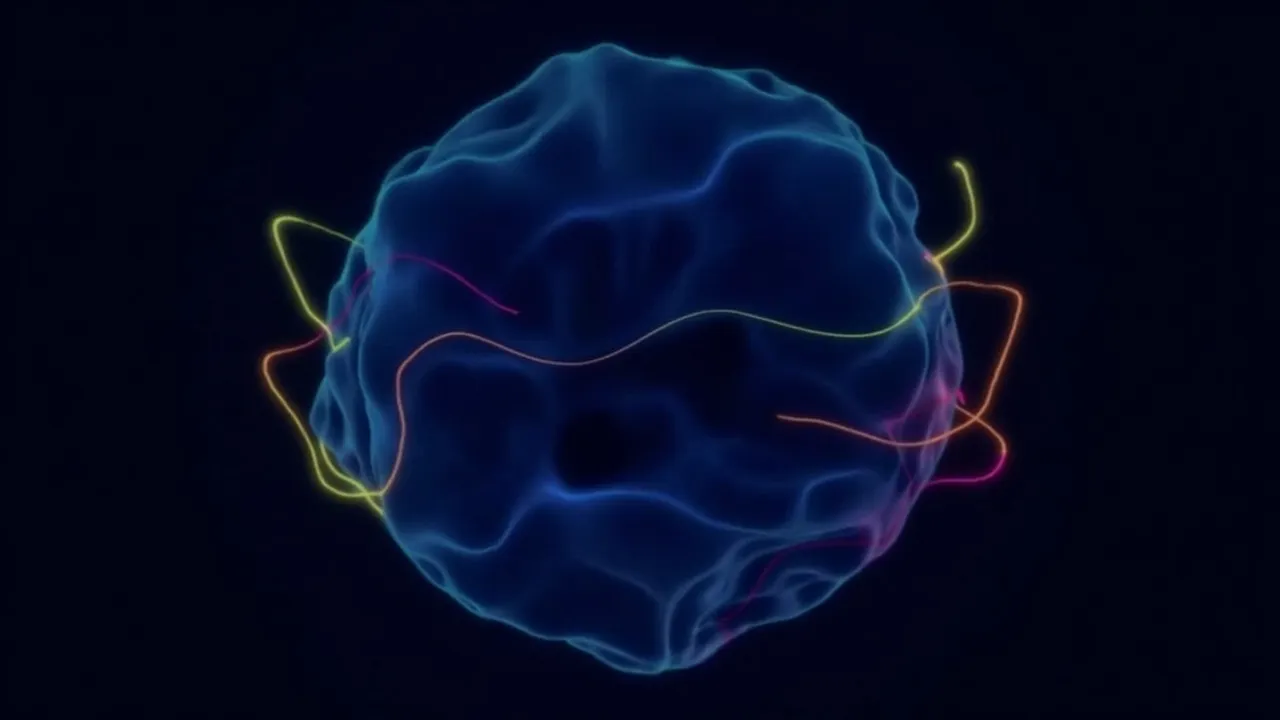
Think about waves in the ocean. They roll across the water's surface, right? Well, your brain does something surprisingly similar. Electrical activity can sweep across the brain's surface in patterns, creating what scientists call "traveling brain waves" or "neural traveling waves."
These aren't the brain waves you might've heard about in sleep studies (those are more like rhythmic oscillations). These are more like... actual waves moving through neural circuitry. And just like ocean waves, they can come from different sources — sometimes from within the brain itself, sometimes triggered by things happening around you.
The really exciting part? A researcher named John Reynolds first identified these waves in awake animals back in 2020, and here's the kicker: he found that whether these waves were present or not actually predicted whether an animal would notice an object placed in front of it.
That, my friends, might be why you walked right past your keys. Your brain generated the wrong kind of wave at the wrong time, and suddenly your visual system just... didn't register what was right there.
The Brain's Secret Computational Engine
Now, Reynolds and his team didn't stop there. They wanted to know why on earth our brains would bother generating these waves in the first place. And their new paper, published in the journal Neuron, lays out what I think is a genuinely mind-blowing answer.
According to their research, neural traveling waves might actually be a computational engine — the mechanism the brain uses to create internal representations of the outside world.
Let me break that down. Your brain is constantly flooded with sensory information: light hitting your retina, sounds bouncing around, all kinds of input coming in at once. But here's the challenge — that raw data is basically chaos. Your brain has to take all that messy signal and turn it into something coherent. Something meaningful. Something you can actually perceive and act on.
The researchers propose that traveling waves are part of how the brain does this heavy lifting.
Four Jobs These Waves Apparently Do
The team identified four major things these neural waves seem to do:
First, they adjust perception moment to moment. Depending on what your brain needs to pay attention to right now, the waves shift and change, essentially fine-tuning what you're aware of.
Second, they transform recent sensory information into internal representations. Think of this like your brain taking a "snapshot" of what just happened and storing it in a way that's useful for future reference.
Third, they help produce short-term predictions. Your brain isn't just passively receiving information — it's constantly trying to predict what comes next. And these waves might be part of how that prediction happens.
Fourth, they preserve and replay memories. Particularly for events that unfold over time, the waves seem to help encode and later recall the patterns associated with those experiences.
Together, these abilities suggest that traveling waves are central to how your brain interprets information rather than just passively processing it.
Your Brain Is Basically Doing What ChatGPT Does
Here's where things get really interesting. Reynolds made a comparison that I can't stop thinking about: he said the brain's wave-generating system is, in a meaningful sense, analogous to how large language models like ChatGPT work.
Think about it. These AI systems learn statistical patterns from all the text they've been trained on. Then, when you ask them something, they use that learned knowledge to generate responses that are appropriate and meaningful — responses that reflect the patterns they've absorbed.
According to Reynolds, your brain might be doing something functionally similar. You experience the world — every sight, sound, smell, and action. Those experiences modify the connections in your brain (specifically something called "synaptic weights"). Over time, those changes shape the neural circuitry that produces these traveling waves. And those waves then help your brain generate appropriate responses to the world around you.
A "biological generative model built from the ground up by experience." That's a pretty poetic way of putting it, right?
Why This Matters (A Lot, Actually)
Here's the thing — for a long time, scientists weren't even sure if these traveling waves were real or just artifacts of measurement. Some people thought they might just be electrical noise passing through the nervous system.
But this research suggests otherwise. The connections that generate these waves aren't just passive signal carriers — they actively change based on what you experience. They're learning. They're adapting. They're part of what makes you, you.
And if traveling waves really are central to how the brain computes perception, predictions, and memory, then understanding them better could bring us much closer to understanding consciousness itself — that mysterious subjective experience of being aware and having a continuous sense of self.
That's not a small thing.
The Big Picture
So the next time you spend five minutes looking for something that was in your hand the whole time, you can blame your brain's wave patterns. But also — and I think this is the beautiful part — you can marvel at the fact that your brain is doing incredibly sophisticated computational work every single moment, constantly trying to make sense of a chaotic world and predict what comes next.
You're not just passively seeing reality. Your brain is actively constructing a model of it, one wave at a time.
That's pretty amazing when you think about it.