
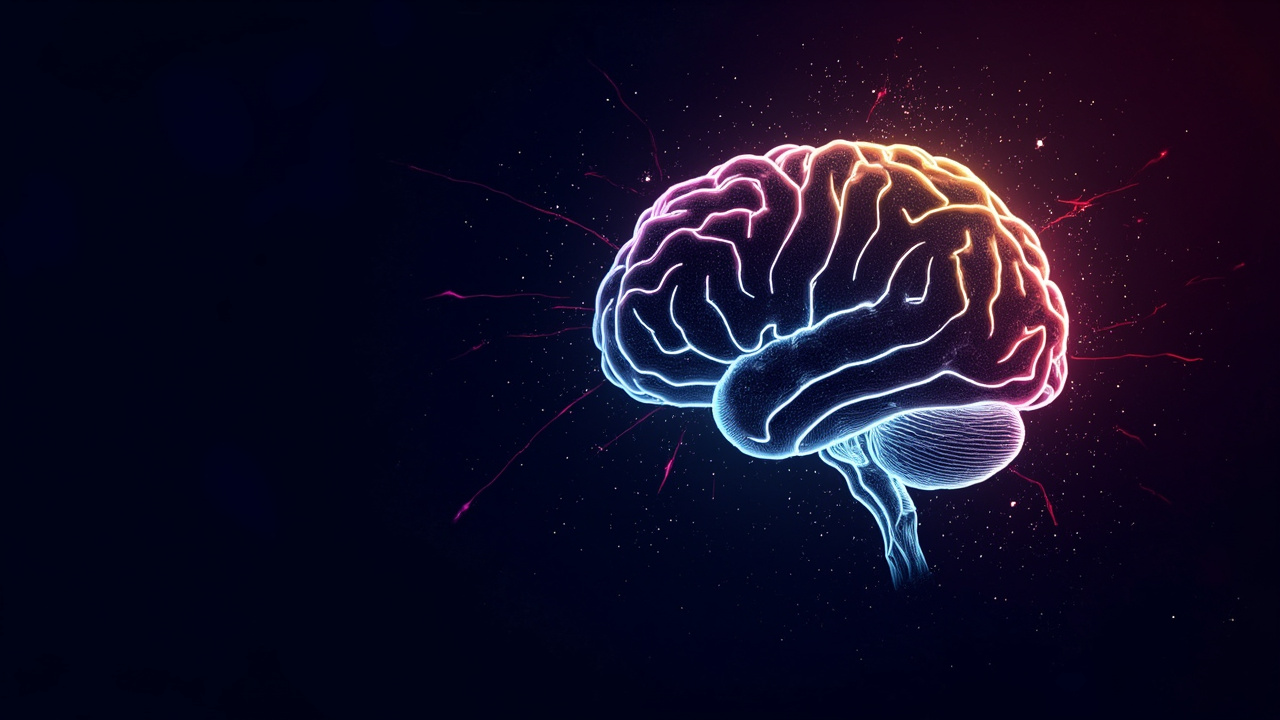
Your Brain Is Basically Lying to You (And Psychedelics Know It)
The Reality You Experience Isn't Actually Real
Here's something wild to think about: the world you're experiencing right now isn't the actual world. It's a heavily edited, curated, pre-digested version of it—carefully processed by your brain into something manageable and coherent.
I know, I know. That sounds like philosophy student nonsense. But stick with me, because neuroscientists have been digging into this and they're finding some genuinely fascinating stuff.
Meet the Thalamus: Your Brain's Bouncer
Buried deep inside your brain is a tiny, egg-shaped structure called the thalamus. For decades, scientists basically ignored it. They figured it was just a relay station—like a biological switchboard passing information along without doing much of anything important.
Turns out, that's wildly wrong.
New research suggests the thalamus is actually running the show. Think of it like the world's most important filter. Every single thing you see, hear, smell, and feel gets funneled through this little hub, and it's constantly doing something remarkable: compressing an absolutely overwhelming amount of sensory information into a single, unified stream of consciousness.
Why Your Brain Cheats (And Why That's Actually Smart)
Here's the thing—if your brain didn't filter and compress everything, you'd be in trouble. A big trouble.
Imagine if you had to consciously process everything your senses detect. Every pixel of your peripheral vision. Every sound, no matter how quiet. Every microscopic sensation across your entire body. The data would be incomprehensible. Your brain would basically freeze, unable to form a coherent sense of self or make any decisions.
Evolution solved this problem elegantly: it just... stopped letting all that information through. Instead, your brain works with what scientists call "best guesses." It uses your memories, your expectations, and patterns it's learned to predict what you're probably seeing, even when you're not really seeing it in perfect detail.
That's right—a huge chunk of your visual experience is literally your brain making stuff up. You think you see your entire field of vision sharply, but you don't. Your brain fills in the blanks. And because it does this constantly, you never notice it's happening.
Speed over accuracy. Efficiency over perfection. It's a brilliant trade-off, but it does mean reality has been filtered through a pretty aggressive compression algorithm.
And Then Psychedelics Showed Up
For a long time, psychedelics were basically scientific pariahs. Governments banned them, researchers couldn't study them, and the whole field went quiet. But in recent years, that's changed dramatically.
Scientists have started analyzing brain scans of people under the influence of psychedelics, and something wild is happening. The brain regions that normally play by strict rules suddenly start breaking those rules. Communication pathways that are usually kept separate start lighting up and interacting in unusual ways. The thalamus—that gatekeeper we talked about earlier—appears to lose some of its filtering power.
Think of it like this: normally, your thalamus is very strict about what gets through. It says, "Okay, here's what you're allowed to see, hear, and experience. Here are the rules. Here's your reality." And because these rules have been operating your whole life, they feel natural. They feel like the reality.
But psychedelics seem to make those rules more... flexible.
What Happens When the Filter Breaks?
Researchers suspect that psychedelics amp up activity in the cortex—the higher thinking part of your brain—while simultaneously loosening the thalamus's grip. Suddenly, those carefully controlled rules for what is and isn't "real" start breaking down.
And that's when things get weird.
You know those stories people tell about psychedelics—sounds turning into colors, time stretching out, boundaries between self and not-self dissolving? That's not mystical nonsense. That might actually be your brain's filtering system failing to do its job. Without those constraints, you're suddenly experiencing reality closer to how it actually is—unfiltered, uncompressed, and absolutely overwhelming.
Which, honestly, sounds kind of terrifying. And maybe it is. But it's also potentially revealing something profound about how consciousness works.
Why This Actually Matters
The reason neuroscientists are getting excited about this isn't just because it's trippy (though it is). It's because studying how the brain creates the experience of consciousness is one of the deepest mysteries in science.
By understanding what happens when psychedelics disable the normal filtering process, scientists might be getting glimpses into how that filtering works in the first place. And that could eventually help us understand the nature of consciousness itself—something we still barely comprehend.
Plus, there are legitimate therapeutic applications. Researchers are investigating psychedelics for treatment-resistant depression, PTSD, and addiction. Maybe part of why they work is that they temporarily allow the brain to escape its rigid patterns and habits. They force a reset.
The Takeaway
Your brain is constantly lying to you. Not maliciously, but systematically. It's compressing reality down into a manageable stream of experience, filtering out the overwhelming chaos underneath, and building a coherent sense of self out of educated guesses and predictions.
And for most purposes, that's perfect. You need that filter to function in the world.
But psychedelics—and the neuroscience emerging around them—suggest that reality is far stranger, more complex, and more fluid than our everyday consciousness normally allows us to perceive. Understanding that gap between the filtered version and the actual thing? That might be the key to understanding consciousness itself.
Pretty wild to think about, right?