
When Your Brain Plays Hide-and-Seek With Reality
Here's something that'll mess with your head: what if I told you that after a stroke, some people literally lose access to half their world—and the scariest part is they don't even realize it's gone?
This isn't science fiction. It's a real condition called hemispatial neglect, and honestly, it's one of the most mind-bending neurological quirks I've come across. The wild part? It's not about eyesight at all. Your eyes work perfectly fine. Your brain just... stops paying attention to one entire side of existence.
The Breakfast Test
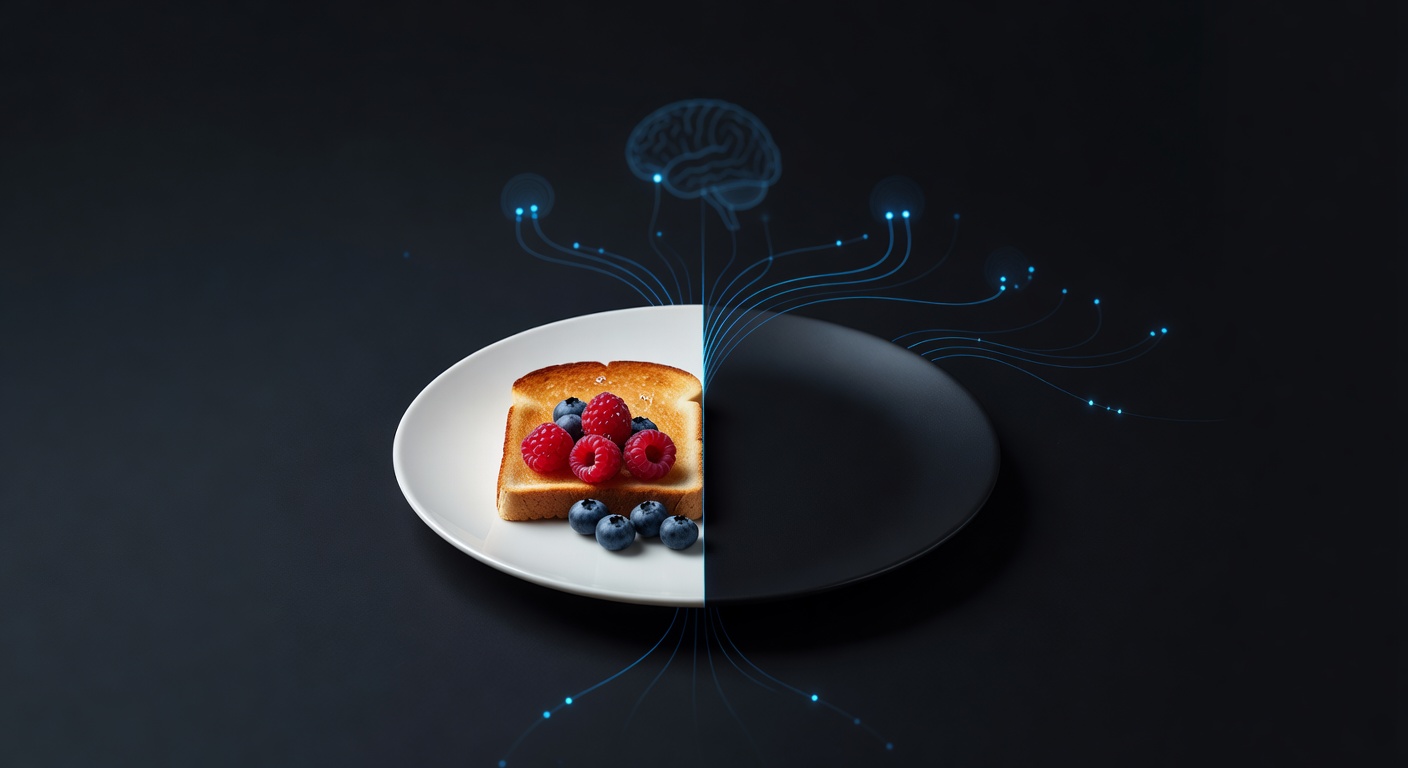
Let me paint you a picture. You're sitting down to your morning eggs and toast. But here's the thing: you can only "see" the right half of your plate. So you eat the eggs, finish your coffee, and your partner asks if you're still hungry because you clearly left food untouched. Except you didn't leave it untouched—in your mind, that food never existed in the first place. The toast, fruit, and butter on the left side of your plate? They're in your blind spot, except it's not your eyes that are blind—it's your awareness.
That's hemispatial neglect in a nutshell.
Why Does This Happen?
Your right brain hemisphere is basically the CEO of attention in your body. It's the one responsible for noticing everything in your environment, especially the left side. When someone has a right-hemisphere stroke, that CEO gets knocked out of office, and suddenly the left half of the world becomes invisible to your brain's processing system.
The numbers are sobering: about 43% of people who have right-hemisphere strokes develop this condition. That's a huge percentage. One in five left-hemisphere stroke patients experience it too.
Two Flavors of Neglect
Here's where it gets even weirder. Hemispatial neglect shows up in two different ways:
Egocentric neglect is when you ignore the left side of your own body. Imagine only shaving the right side of your face, or genuinely not recognizing your own left arm. If a doctor holds your arm up and asks whose it is, you might say "yours." Your brain has literally rejected parts of your own body.
Allocentric neglect is when you ignore one side of everything around you. You read only half a word. You miss the handle on the left side of your mug. You navigate around your house like half the rooms don't exist.
How Do Doctors Even Figure This Out?
The diagnosis is actually kind of clever. A neurologist will ask you to draw a clock face, and you'll fill in all the numbers on the right side—because the left half never enters your mind. Or they'll ask you to draw a house, and you'll create a lopsided masterpiece with only the right half detailed.
There's also the tactile test: they touch both your left and right arms at the same time, and you only feel the right one. Or they show you objects on both sides of your vision, and you only spot the ones on the right.
The Heartbreaking Part
Here's what really gets me about this condition: many patients don't even know they have it. When a doctor tells them they're neglecting their left side, they often deny it outright. Their brain isn't just ignoring the left side—it's also broken the systems that would normally tell them something's wrong. It's like your brain is gaslighting you about your own body.
This creates real problems in relationships and families. Loved ones get frustrated. Patients get defensive. Isolation sets in. A neurological glitch becomes a social crisis.
But There's Hope
The good news? This isn't always permanent. Rehabilitation can actually help rewire things. When patients work with specialized therapists, they learn to compensate by deliberately turning their head and shifting their gaze toward the neglected side. It's like training your brain to remember that the left side exists again.
Research even shows that external motivation helps. In one study, when patients were asked to circle images of coins (which have monetary value) versus buttons (which are just... buttons), they suddenly did much better at spotting the coins, even on the neglected side. When something matters, your brain fights back harder to acknowledge it.
The Takeaway
Hemispatial neglect is a reminder of how complex the brain really is—and how fragile our sense of reality can be. Your perception of the world isn't just coming from your eyes; it's being actively constructed by your brain's attention system. When that system breaks, reality itself gets rewritten.
It's humbling, honestly. Your brain is more powerful—and more fallible—than you probably thought.