
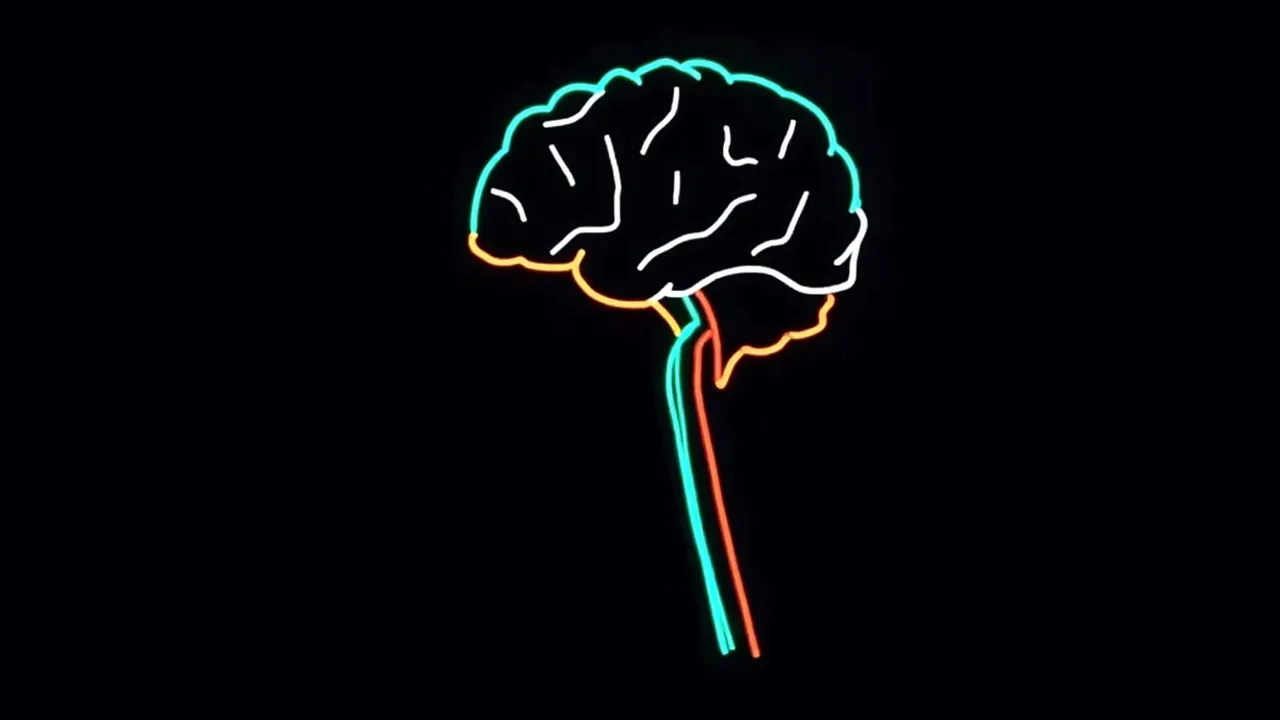
Okay, I need you to sit down for this one. You know that brain sitting right there inside your skull? The one you're using right now to read these words? According to brand new research from Stanford Medicine, what we've been calling "the brain" might actually be two completely separate organs that just happened to fuse together somewhere along the evolutionary road.
I know, I know—stick with me here.
So Wait, Two Brains? Like, Double Trouble?
Think of it this way. For forever, scientists have assumed the whole brain grows from essentially one starter kit of cells. Like if you were building furniture, everyone figured all the parts came from the same instruction manual, the same box of components.
But here's the wild part: this new research suggests the instruction manuals were different.
The front part of your brain—the bit that handles language, math, abstract thinking, and that thing you do at 2 AM where you suddenly contemplate the meaning of existence—comes from one set of progenitor cells. Meanwhile, the back part (what we casually call the brain stem) comes from an entirely different set.
They're not even from the same developmental family.
Why Does This Matter? (Besides Being Cool)
Here's where things get really interesting. Scientists have been tearing their hair out for decades trying to grow certain brain cells in laboratories. You know, the kind that live in the hindbrain—the part that controls breathing, heartbeat, all those things you never have to consciously think about.
Turns out, they were probably trying to coax one type of cell into becoming another type of cell. Like asking a cat to become a fish. Technically a mammal, sure, but it's just not going to happen.
This discovery basically gives researchers a new roadmap. "Oh, THAT'S why it wasn't working—you can't just convert these cells! You have to grow them from the right starting point."
This Could Change How We Study Some Really Important Diseases
This is the part that hit me hardest. Conditions like spinal muscular atrophy (SMA) and ALS affect the hindbrain, and they've been incredibly difficult to study precisely because researchers couldn't reliably grow these cells in the lab.
SMA is a leading genetic cause of death in children under one year old. ALS, well, most of us know someone who's been touched by it. These aren't abstract scientific problems—they're real diseases affecting real families.
Now that scientists understand the brain developed from two separate systems, they can potentially grow these specific neurons and study exactly what goes wrong in these conditions. That could open doors to treatments that simply weren't possible before.
Two Hundred Million Years of History in Your Head
Here's something that'll make you feel both tiny and extraordinary at the same moment: this dual-brain structure probably evolved over hundreds of millions of years. One system handles the ancient, life-or-death basics. The other handles the newer, distinctly human stuff.
We're literally walking around with what might be two ancient nervous systems squished together in one skull, and they somehow work well enough to let us build civilizations, create art, and wonder about our own existence.
That's kind of miraculous when you think about it.
The researchers themselves put it pretty clearly: the front of the brain and the back of the brain arise from completely different progenitor cells. Period. That's a fundamental shift in how we understand human biology.
I don't know about you, but I'm definitely looking at my own head a little differently now. Two brains for the price of one—best deal in human evolution.