
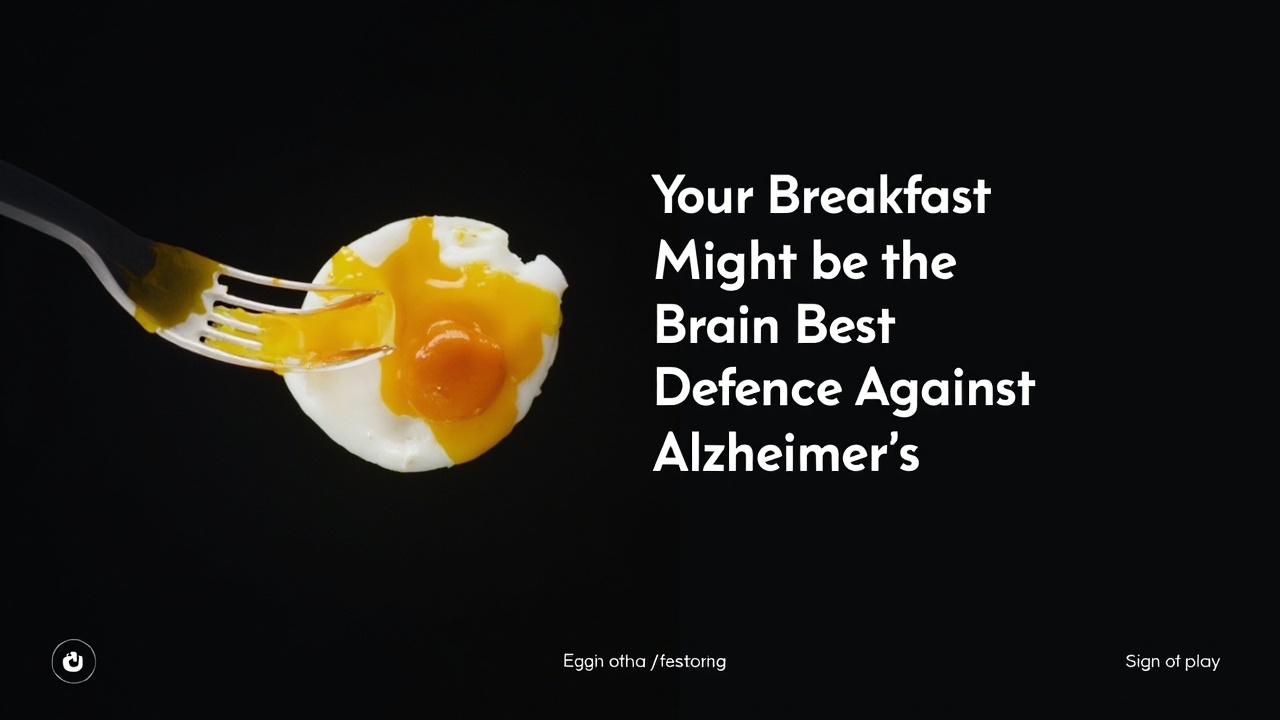
Could Eggs Be Your Brain's Secret Weapon?
Let me paint a scenario: You're standing in your kitchen making breakfast, cracking an egg into a pan. Sizzle. The yolk glistens. You probably aren't thinking "this is protecting my future," but according to recent research from Loma Linda University Health, you might actually be doing something really smart for your brain.
The findings are intriguing. People who eat eggs at least five times a week showed a 27% lower risk of developing Alzheimer's disease compared to those who rarely or never eat them. But here's what I find even more compelling—you don't have to become an egg obsessive to see benefits. Even eating eggs just once or twice a month showed a 17% risk reduction.
Why Are Researchers Getting Excited About This?
The science is pretty cool. Eggs are packed with compounds that your brain absolutely loves.
Choline is probably the MVP here. It's a nutrient that your body converts into acetylcholine—basically, the chemical messenger your brain uses for memory and thinking. Without enough choline, your brain struggles to wire new memories and process information efficiently.
Then there's the dynamic duo of lutein and zeaxanthin. These carotenoids actually accumulate in your brain tissue over time, and research suggests they're linked to sharper thinking and less cellular damage from oxidation (think of oxidation like rust developing inside your brain).
And if that wasn't enough, eggs contain omega-3 fatty acids and something called phospholipids that are crucial for how neurotransmitter receptors work. These are like the locks and keys of brain communication—your neurons depend on them to send signals to each other.
It's not one miracle nutrient doing the heavy lifting. It's a combination of things working together, which is honestly how nutrition usually works in the real world.
The Study: Let's Talk About the Real Numbers
I want to be transparent about what researchers actually found, because the details matter.
A team followed about 40,000 people in something called the Adventist Health Study 2 for an average of 15.3 years. They tracked how many eggs people ate—including eggs in obvious forms like scrambled or fried, but also eggs hidden in baked goods and packaged foods. Then they watched to see who developed Alzheimer's disease.
The breakdown is interesting:
- 1 to 3 times per month: ~17% lower risk
- 2 to 4 times per week: ~20% lower risk
- 5+ times per week: ~27% lower risk
There's a dose-response relationship here, which is exactly what you want to see in scientific research. It's not just a coincidence—it looks like more eggs genuinely correlates with more protection.
Here's the Honest Reality Check
I want to be real with you: this doesn't mean eggs are a magic bullet. The researchers themselves emphasized this important point.
The people in this study were Seventh-day Adventists, a group that tends to have healthier overall diet patterns than the average American. They're more likely to be vegetarian, eat more whole foods, and avoid processed junk. In other words, the eggs weren't doing their protective work in isolation—they were part of a bigger picture of good nutrition.
This is actually something I see a lot in health reporting. Everyone wants to find "the one food" that changes everything. But the truth is messier and more interesting: eggs appear to be genuinely beneficial, but only if they're part of an overall healthy eating pattern.
Think of it like this—eggs are a strong player on a championship team, not a solo performer saving the day.
What This Means for Your Breakfast
If you already eat eggs, great! You're potentially doing something good for your long-term brain health. If you're not an egg person, this might be worth reconsidering.
A couple of eggs a few times a week seems to offer meaningful benefits without requiring you to become an egg-eating machine. They're affordable, versatile, and apparently better for your brain than we previously appreciated.
The bigger takeaway? Small dietary habits that seem ordinary might be quietly shaping the health of your brain decades down the line. That's actually kind of powerful to think about.
One last thing: if you're worried about cholesterol or have dietary restrictions, this research doesn't mean you need to force eggs into your diet. Choline exists in other foods too, and there are lots of ways to support brain health. But if you're already eating eggs or open to it, you now know there's some solid science backing it up.
Your future brain will thank you.
Source: https://www.sciencedaily.com/releases/2026/05/260506225214.htm