
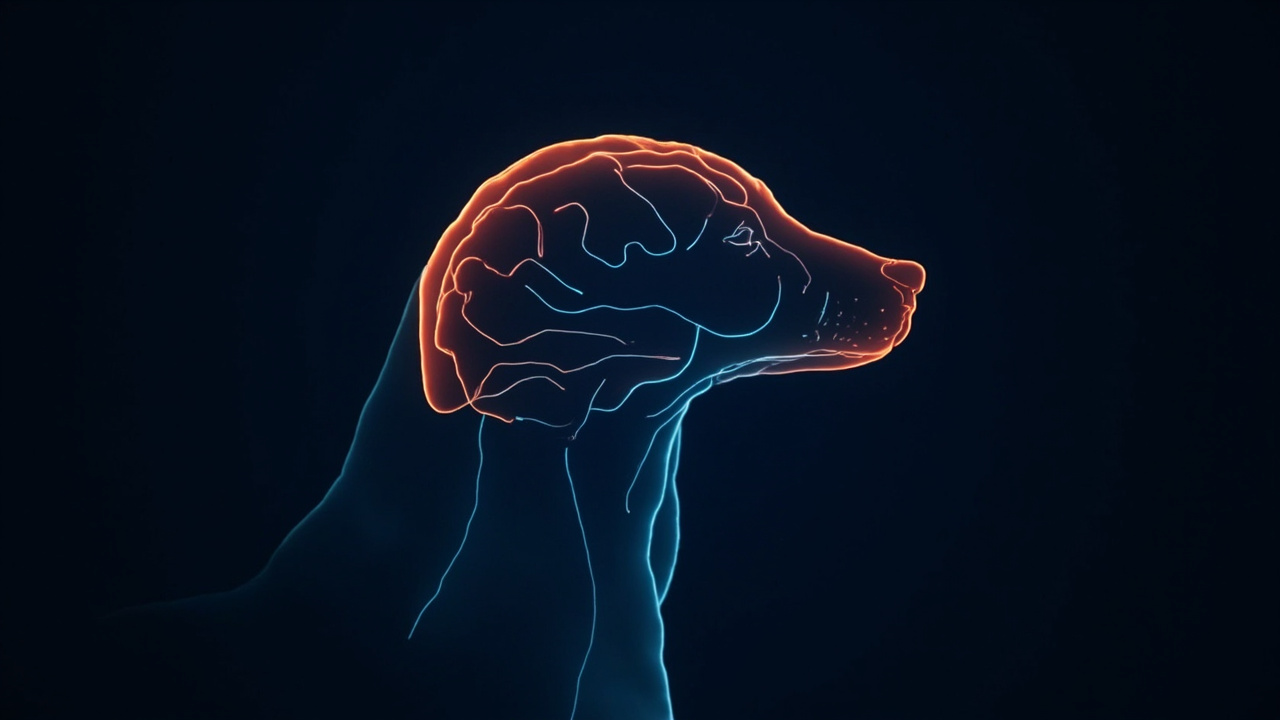
The Great Brain Shrink
Okay, so here's something wild: your beloved golden retriever has a noticeably smaller brain than the wolves their ancestors came from. And I'm not talking about a tiny difference—we're looking at nearly a 46 percent reduction in brain volume. That's... pretty significant, right?
But here's where it gets interesting. Scientists only recently figured out when this brain downsizing actually happened, and the timeline tells a fascinating story about how humans and dogs literally shaped each other's evolution.
Playing Detective with Ancient Skulls
Researchers did what researchers do best: they gathered a bunch of skull data. They looked at 185 modern wolves and 22 prehistoric wolves dating back to 35,000 years ago, then compared them to dog skulls from various time periods. Think of it like archaeological detective work, except instead of solving a murder, they're solving the mystery of shrinking brain pans.
Here's what they found: way back during the Upper Pleistocene era (we're talking 12,000+ years ago), protodogs and wolves had basically the same brain size. No difference. They were brain buddies. But then, somewhere between 5,000 and 4,500 years ago, everything changed. Dogs' brains shrank dramatically—like, to sizes comparable to modern toy breeds.
But Wait, Why Would This Be a Good Thing?
This is the part where my brain (still normal-sized, thank you very much) got blown. Scientists theorize that smaller brains might have actually been advantageous for early humans.
Think about it: a smaller dog would be less trainable and more cautious about environmental changes. Translation? They'd be absolutely perfect as alert dogs—basically furry alarm systems that would lose their minds at any suspicious sound. If you've ever owned a dog, you know exactly what I'm talking about. That bark at 3 AM? That's thousands of years of selective breeding at work.
Plus, smaller dogs need less food. When you're living in the Neolithic era and food is scarce, that's a huge advantage. You could keep more dogs without draining your resources.
Intelligence Isn't Just About Brain Size
Here's where I want to pump the brakes on anyone thinking their dog is now intellectually inferior. Brain volume is actually a pretty blunt measurement for intelligence. Your dog's brain might be smaller, but it's reorganized itself in some seriously impressive ways.
Thomas Cucchi, the lead researcher on this study, put it perfectly: "The way our dogs live nowadays doesn't give them the opportunity to always express most of their intelligence. But they are extremely clever and domestication didn't make them stupid, but made them really capable of reading us and communicating with us."
That's the real genius move. Dogs didn't lose intelligence—they redirected it. Their brains got better at reading human facial expressions, understanding our vocal cues, and basically becoming our emotional partners. It's like they traded general survival smarts for specific "how to live with humans" smarts. And honestly? That's a pretty solid trade.
We're All in This Together
Here's another fun fact that'll make you feel less weird about your dog: humans have been shrinking our brains too. For thousands of years. Scientists think it might be because large brains are incredibly metabolically expensive—they use a ton of energy. So maybe brains across the board are just getting a little more efficient.
It's kind of poetic when you think about it. Humans and dogs have been on this crazy co-evolutionary journey for millennia, changing each other physically and mentally. We made them smaller and more attuned to us. They made us better at cooperation and companionship. We literally grew (or in this case, shrunk) together.
So next time someone jokes about dogs not being that smart, you've got a whole evolutionary argument ready to go. Your pup's smaller brain is actually a feature, not a bug—a result of thousands of years of humans specifically breeding for dogs that would be perfect partners to us.
And honestly? That's kind of beautiful.