
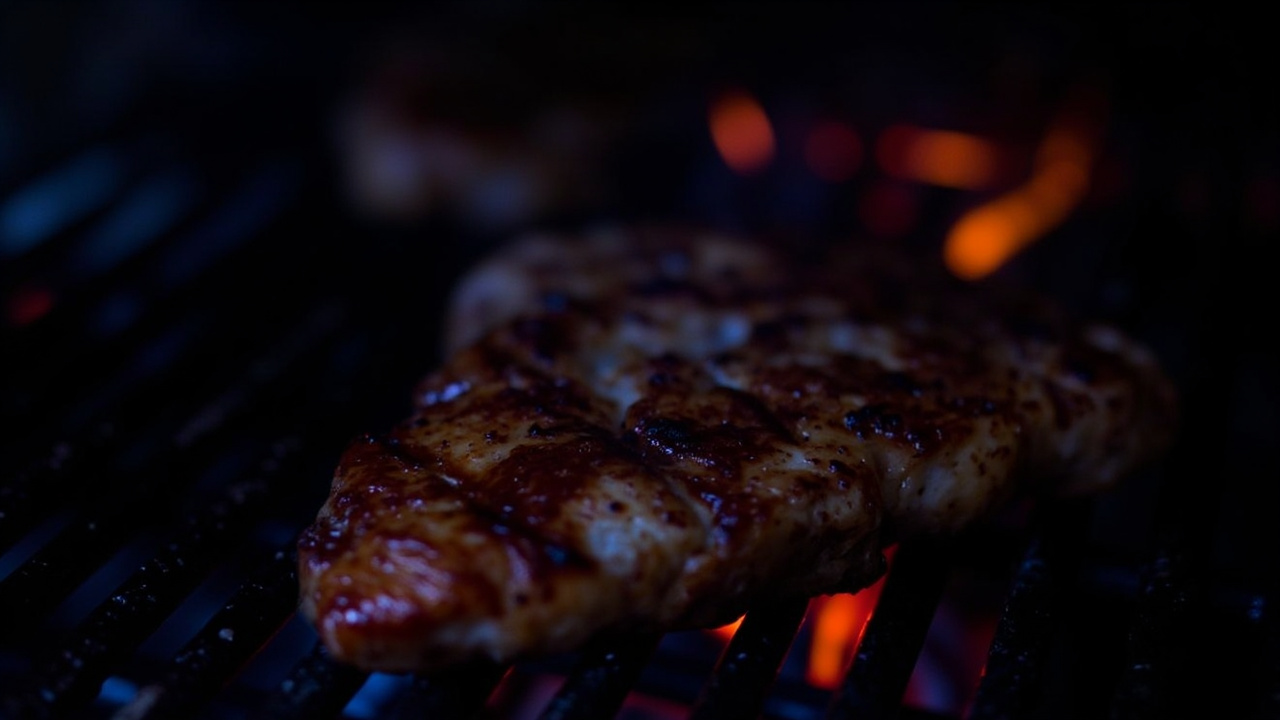
The Smoke from Your Barbecue Might Be More Dangerous Than You Think
We all know that cooking food with high heat creates amazing flavors. That gorgeous char on a grilled steak? The smoky flavor in pulled pork? It's absolutely delicious. But here's the thing that keeps food scientists up at night: when you cook at those high temperatures, especially with smoke and flames involved, you're accidentally creating chemicals called PAHs (polycyclic aromatic hydrocarbons) that have been linked to cancer in animal studies.
This isn't some fringe concern—it's real enough that researchers around the world are constantly working on better ways to detect these compounds before they end up on your dinner plate.
What Are PAHs, Anyway?
Imagine molecules that are basically toxic little bundles created when fat drips onto hot surfaces and creates smoke. That smoke coating your food? That's PAHs settling in. They can also form during smoking, grilling, frying, and even roasting. It's especially concentrated in things like grilled meats and smoked fish, which is why you might want to think twice about making barbecue a daily habit.
The tricky part is that these compounds are genuinely everywhere in our environment—car exhaust, cigarette smoke, industrial emissions—so food contamination is almost inevitable. But here's where it gets interesting: we don't actually have solid proof yet that eating PAH-contaminated food causes cancer in humans the way it does in lab animals. That uncertainty is actually why better testing matters so much.
The Old Way of Testing Was... A Nightmare
If you wanted to check whether a food sample contained PAHs, the traditional methods were basically the scientific equivalent of making someone do everything the hard way. We're talking about labor-intensive procedures that required tons of chemicals, took forever to complete, and honestly, weren't great for the people doing the testing or the environment.
Most food companies and safety labs couldn't realistically test everything because it was so expensive and time-consuming. Which means contaminated foods could slip through without anyone knowing.
Enter QuEChERS: The Game-Changing Shortcut
Around came this method with an almost comically perfect acronym: QuEChERS. It stands for "Quick, Easy, Cheap, Effective, Rugged, and Safe"—and honestly, it delivers on every single promise. Instead of the old complicated extraction processes, QuEChERS dramatically speeds things up, uses way fewer chemicals, and produces more reliable results.
Think of it like the difference between cooking a complicated French sauce that requires six different steps and timing everything perfectly, versus making something equally delicious in half the time with way fewer ingredients. Same basic goal, smarter execution.
Korean Researchers Just Made It Even Better
In 2025, a team at Seoul National University of Science and Technology decided to refine QuEChERS specifically for detecting eight different types of PAHs in food. What they came up with is genuinely impressive. Their method:
Works incredibly accurately. All their measurements had R² values above 0.99, which is the kind of precision you want when you're looking for potentially dangerous compounds.
Can actually detect really tiny amounts. They could identify PAHs at concentrations as low as 0.006 micrograms per kilogram. To give you context, that's like finding a single grain of sand on a beach.
Gets consistent results. When they tested the same samples multiple times, they got virtually identical answers every single time. That's what you want from a testing method.
So What Did They Actually Find?
When the researchers looked at various foods, some concerning patterns emerged. Soybean oil and canola oil had the highest PAH levels, followed by duck meat. This makes sense when you think about it—oils are often extracted and refined using high heat processes, and duck meat is frequently roasted or grilled.
The scary part? These are foods that otherwise seem totally healthy and normal. You're not eating deep-fried junk—you're using cooking oils that are supposed to be nutritious.
This Is Just the Beginning
The Seoul study opened the floodgates. Other researchers have been building on this breakthrough:
Some teams applied the method to smoked fish products and found that traditional smoked foods like Kezuribushi (a Japanese dried fish) had really concerning PAH levels.
Others tested cereals and grain products from Romania and found that while some cereals contained PAHs (especially a compound called chrysene), the processed products made from those grains were usually clean.
The method has been adapted to work with everything from grilled chicken (yes, grilled chicken feet specifically raised red flags) to baked goods.
Why This Matters More Than You Might Think
Here's the thing: we still don't have absolute proof that eating PAHs in food causes cancer in humans. But that's partly because we haven't had good ways to measure how much people are actually consuming. Once you have reliable testing methods, researchers can finally answer that question properly.
From a practical standpoint, food companies and safety regulators now have a tool that actually works. They can test more products, more frequently, without bankrupting themselves. That means they can identify problem areas—like which oils have the highest contamination or which cooking methods are most risky—and make changes.
The Bottom Line
Should you stop grilling? Probably not. Should you freak out about soybean oil? Definitely not. But should you be aware that some cooking methods create potentially harmful chemicals? Absolutely. The good news is that now we have scientists working overtime to figure out where these chemicals are hiding and how to reduce them.
The even better news? They're getting really good at detecting them. And you can't fix a problem you can't measure.