
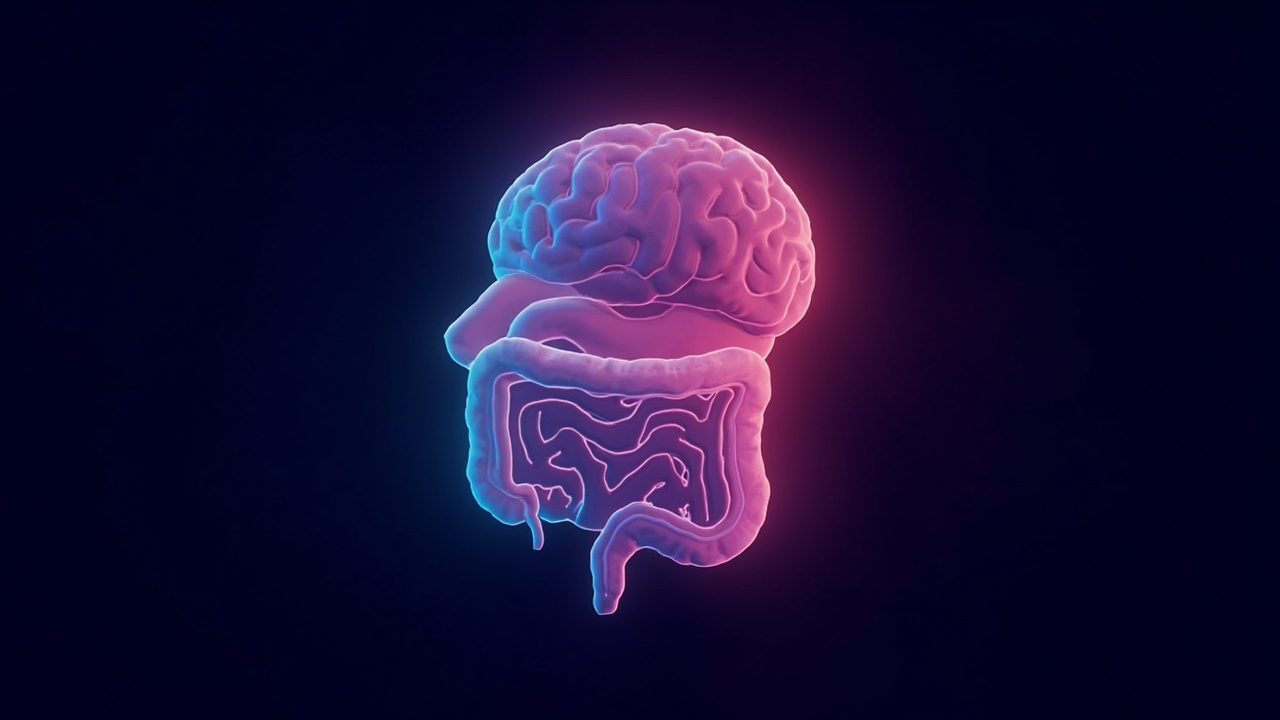
Okay, I'll admit it—when I first heard about this study, I had to read the headline twice. Scientists are suggesting that poop transplants could help de-age your brain? What is this, a sci-fi movie?
But here's the thing: the science is actually pretty fascinating. And before you scroll past, let me break down why this matters for all of us.
The Plasticity Problem
Think about how quickly kids learn things. A child can pick up a new language without an accent, master the art of making faces, and adapt to new situations faster than most adults can figure out Netflix's new interface. This is thanks to neuroplasticity—your brain's ability to form new neural connections and rewire itself.
The bad news? This superpower starts fading as we get older. By the time we're adults, our brains are more like well-worn paths through a forest than wild, explorable territory. Sure, we can still learn new things, but it takes more effort. (Anyone else struggle to remember new names since turning 30? Just me?)
Where Your Gut Comes Into Play
Here's where it gets interesting. Scientists have known for a while now that our gut health affects way more than just digestion. That collection of bacteria living in your intestines—your microbiome—seems to play a surprisingly big role in brain health. It influences everything from your mood to how your brain builds new connections.
In this study, researchers at the Sant'Anna School of Advanced Studies in Italy and UC Irvine wanted to know: could the microbiome be partly responsible for that age-related decline in neuroplasticity?
The Experiment (Yes, There Was Poop Involved)
The scientists recreated a condition called amblyopia—more commonly known as "lazy eye"—in mice. In childhood, this can sometimes be treated by covering the stronger eye, forcing the brain to strengthen connections with the weaker one. It's a perfect example of neuroplasticity in action.
First, they gave one group of mice antibiotics to wipe out a bunch of their beneficial gut bacteria. Then they tested whether the mice could develop neuroplasticity in the classic lazy eye experiment.
The results? Mice with the disrupted microbiomes couldn't form those new neural connections. Their brains had lost that youthful flexibility. Meanwhile, the mice with healthy guts still showed plasticity.
The Plot Twist: Young Poop to the Rescue
But here's where it gets really wild. The researchers took things a step further. They performed fecal transplants—transferring gut bacteria from young mice into older mice.
And guess what happened? The older mice that received the young donor poop started showing neuroplasticity again. Their brains were acting more youthful. Meanwhile, mice that received transplants from older donors didn't show the same improvement.
In other words, the young microbiome seemed to be carrying instructions that helped restore brain flexibility.
Why Should You Care?
Now, let's be clear: this was a mouse study. There's a massive difference between what works in a lab mouse and what might work in a human. We're probably years away from any practical applications, if they ever come at all.
But here's why this still matters: it's another piece of evidence that our gut and brain are connected in ways we're only beginning to understand.
For years, we thought of the brain as this isolated computer that just happened to be housed in our bodies. Now we're realizing it's more like a phone that's constantly syncing with other systems—and your gut microbiome might be one of the biggest sync partners it has.
So what can you do with this information? Honestly? Take care of your gut. Eat your fiber. Maybe throw in some fermented foods. Support your microbiome now, and who knows—your future brain might thank you.
And if nothing else, you now have a great conversation starter at your next dinner party. "Hey, did you hear about the poop transplants for brain aging?" Trust me, people will remember you.
The Bottom Line
We're living in an exciting era of science where the weirdest-seeming discoveries often lead to the biggest breakthroughs. Could fecal transplants one day help keep our brains sharp as we age? Maybe. Is it strange to think that something as "gross" as a poop transplant could be medicine of the future? Absolutely.
But then again, medicine has always been a little weird. And as someone who occasionally forgets why I walked into a room, I'm certainly not going to complain about any breakthrough that might help us keep our brains young.