
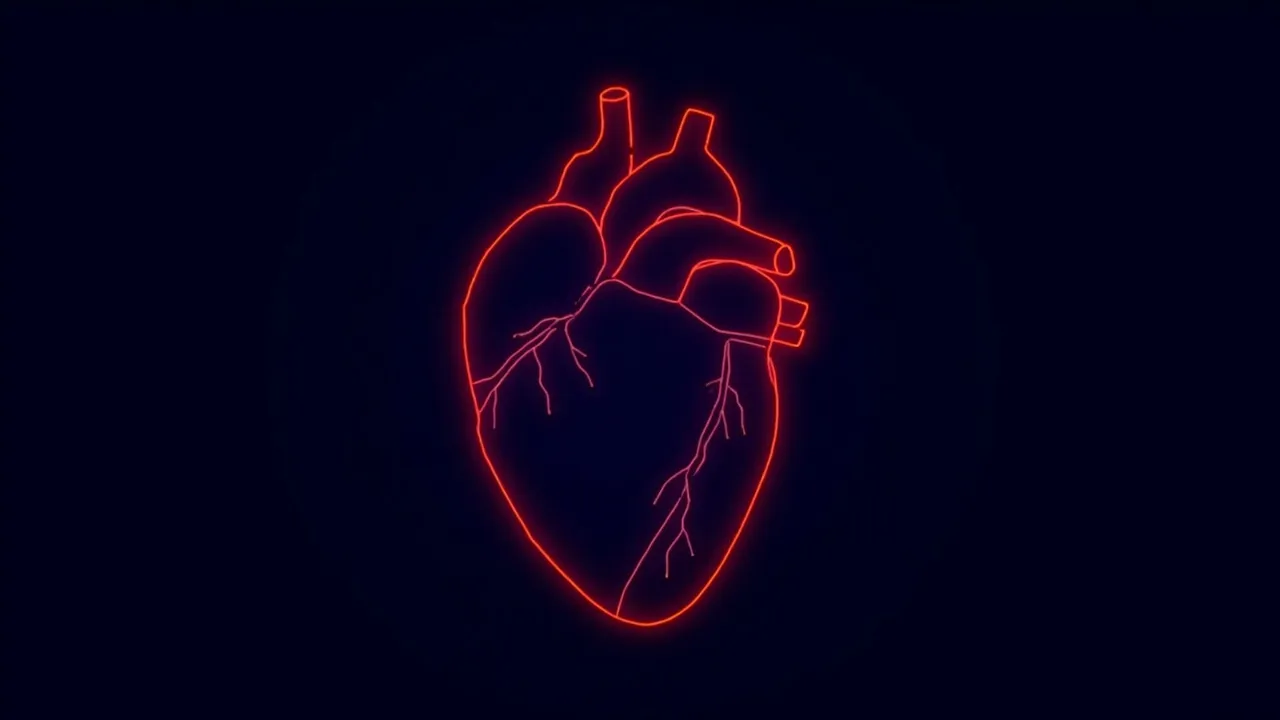
Your Heart Can Break Without a Heart Attack — And Now We Might Finally Know How to Tell the Difference
Okay, here's something wild that I guarantee will make you think twice about the phrase "dying of a broken heart."
It turns out — and this is straight from real medical research — your heart can essentially "break" without a traditional heart attack ever being involved. The condition is called Takotsubo syndrome, and it might be more common than you think. But here's the problem: until now, doctors had a really tough time telling it apart from a genuine heart attack. And that meant a lot of women were undergoing invasive procedures when they didn't need them.
I don't know about you, but I find that both fascinating and a little bit terrifying. Let me break it down for you.
What Exactly Is "Broken Heart Syndrome"?
Picture this: someone experiences an intense emotional shock — maybe the death of a loved one, a sudden betrayal, or even a joyful surprise that hits just as hard. Their chest starts hurting. Their heart rhythm looks abnormal. Cardiac enzymes spike. Everything points to a heart attack.
But when doctors look at their arteries? They're completely clear. No blockages. No plaques causing problems.
That's Takotsubo syndrome in a nutshell. It's like your heart gets so overwhelmed by stress hormones that it essentially stunned — sort of like how you might freeze up when you're caught off guard by something shocking. The heart's main pumping chamber even changes shape, ballooning outward in a way that Japanese researchers (who named the condition) said looked like an octopus trap, or "tako-tsubo."
The condition disproportionately affects postmenopausal women, which honestly deserves its own conversation about why women's hearts respond differently to stress. But for now, let's just say this is something that could affect your mom, your grandmother, your aunt, or maybe someday you.
The Problem: It Looks Exactly Like a Heart Attack
Here's the thing that blows my mind. During that critical first evaluation, Takotsubo syndrome and a heart attack can look virtually identical. Chest pain? Check. Abnormal ECG readings? Check. Elevated cardiac enzymes? Check, check, check.
The only real difference is what's happening inside the arteries — one has blockages, the other doesn't. But figuring that out traditionally meant putting patients through cardiac catheterization, this invasive procedure where doctors thread a tube through your blood vessels to get a direct look at your heart.
Talk about a lot of unnecessary poking around for something that might resolve on its own with the right care.
The Good News: A Simple Blood Test That Might Change Everything
Now, here's where things get exciting. An international team of researchers — working with some heavy hitters from the University of Zurich, Oxford, Imperial College London, and others — has developed something they're calling the BioTAK score.
Think of it as a diagnostic cheat sheet, but instead of answers, it uses biomarkers in your blood combined with your biological sex to flag whether you're likely dealing with Takotsubo syndrome or the real deal.
They trained artificial intelligence on tons of patient data to figure out which combination of biomarkers would give the most useful information. Then they put it to the test on nearly 1,800 independent patients.
The results? Around 90 percent accuracy before anyone had to touch a catheter.
Ninety percent. Let that sink in for a second.
What the Biomarkers Are Actually Telling Us
Here's where it gets even more interesting. The blood markers in the BioTAK score aren't just diagnostic tools — they're actually revealing new clues about what's happening in Takotsubo syndrome that we didn't fully understand before.
Two of the key biomarkers point to what's called the brain-heart axis. Basically, your brain and your heart are in constant conversation, especially when stress is involved. One of these proteins activates neuropeptides that regulate stress responses, anxiety, and your autonomic nervous system (that's the part of your nervous system that handles the stuff you don't consciously control, like heart rate). The other protein is linked to plaque stability — and here's the kicker — the pattern these markers reveal is fundamentally different from what you'd see in a classic heart attack.
Translation: Takotsubo syndrome isn't just a "less severe" heart attack. It's a different biological process entirely. Your heart isn't failing because of clogged arteries. It's more like your heart is having a stress-induced meltdown that affects the whole brain-heart communication system.
That's a pretty big deal for how we think about treatment, right?
What This Could Mean in the Emergency Room
Imagine you're in the emergency department with crushing chest pain. The team runs some tests, checks your blood, plugs the results into the BioTAK scoring system, and gets a strong indication that you're dealing with Takotsubo syndrome rather than a heart attack.
Now, cardiac catheterization might still happen in some cases — this isn't about replacing every test. But in the right patients, this could mean fewer unnecessary invasive procedures, faster confirmation of what's actually going on, and less time worrying about whether you're about to have a heart attack.
The researchers are careful to say this isn't about replacing the gold standard when it's genuinely needed. But it's about guiding things smarter, not just harder.
The Bigger Picture
I've been thinking about this since I first came across this research, and what strikes me most is the story it tells about how we understand the heart.
For so long, when something went wrong with this vital organ, the conversation defaulted to plumbing problems — blockages, clogs, mechanical failures. And yes, those are absolutely real and serious. But conditions like Takotsubo syndrome remind us that the heart is deeply connected to our emotional lives, our stress responses, our nervous system. It's not just a pump. It's part of who we are.
Anything that helps doctors distinguish between different types of cardiac events — and treat each appropriately — is a win in my book. And something that helps us understand the biology of stress and the brain-heart connection? That's the kind of science that makes me genuinely hopeful.
Here's to smarter diagnostics, less invasive testing, and hearts that — even when they break — can heal.
This blog post was inspired by research published in the European Heart Journal, drawing on data from the SPUM-ACS Registry and the International Takotsubo (InterTAK) Registry.
Source: https://www.sciencedaily.com/releases/2026/09/260901070518.htm