
The Tiny Happy Hour Nobody Knew About
Picture this: It's a beautiful spring morning, and a hummingbird zooms over to your garden for breakfast. What you don't realize is that little bird is about to consume the equivalent of an alcoholic drink before lunch. Sounds wild, right? Well, scientists at UC Berkeley just confirmed it's actually happening.
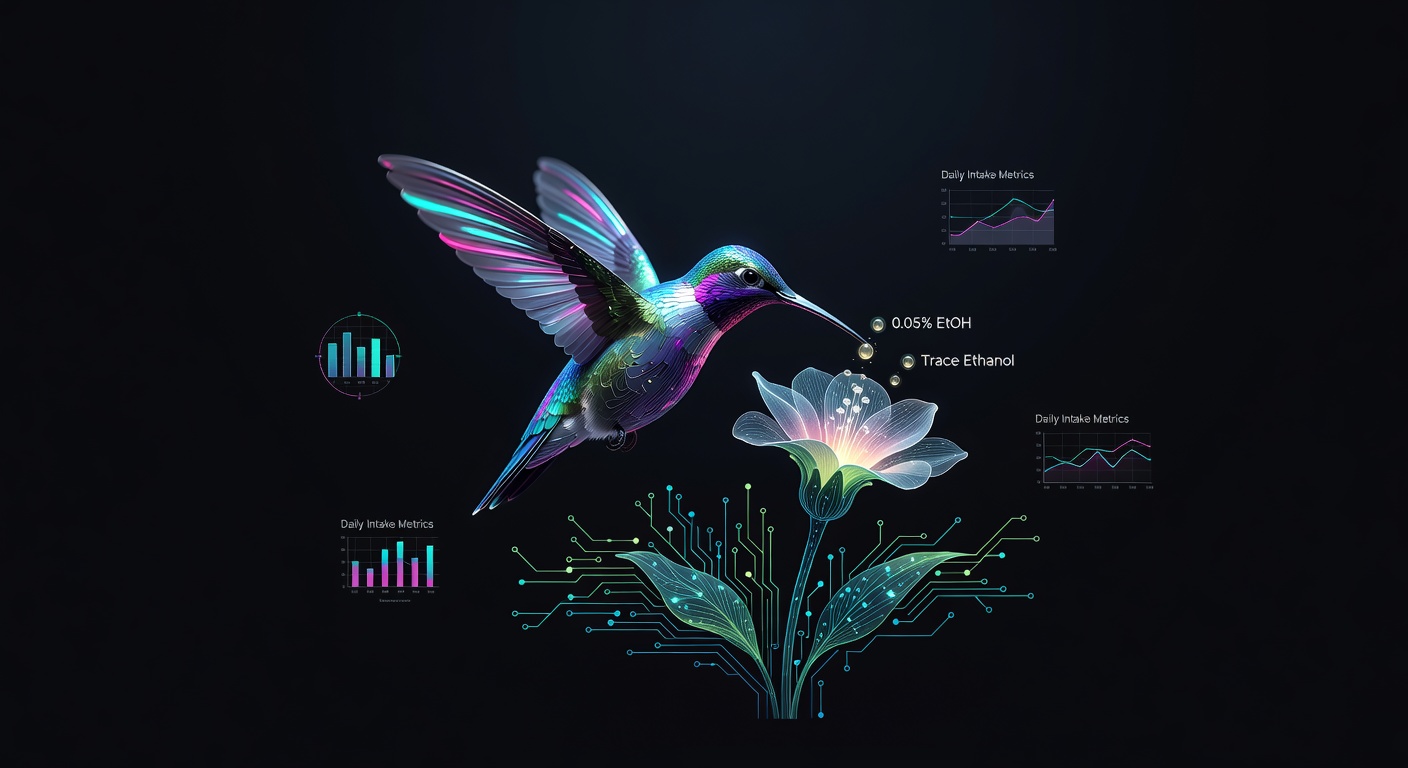
Turns out, the nectar that bees and hummingbirds depend on isn't just pure plant juice. It's laced with ethanol—real alcohol—produced by yeast that naturally ferments the sugars in flowers. We're talking about trace amounts in most cases, but when you consider how much nectar these creatures drink daily, it adds up fast.
The Math Gets Interesting (But Don't Worry)
Here's where it gets fascinating. An Anna's hummingbird—those gorgeous iridescent guys you see on the West Coast—drinks between 50% and 150% of its entire body weight in nectar every single day. That's like if you drank 30-90 pounds of juice before dinner.
Based on the alcohol concentrations researchers found, a typical hummingbird is downing about 0.2 grams of ethanol per kilogram of body weight daily. For context, that's roughly equivalent to what a human would get from one standard alcoholic drink. Every. Single. Day.
Now, before you worry about your local hummingbirds becoming little feathered party animals, here's the thing: they seem totally unbothered by it. No slurring, no stumbling, no signs of a hangover the next morning.
So Why Aren't They Getting Drunk?
The honest answer? We're not entirely sure, but scientists have a pretty good theory.
Hummingbirds are basically nature's high-performance athletes. Their metabolism is absolutely insane—they burn through energy so fast that alcohol likely doesn't accumulate in their systems the way it would in slower-moving animals (or humans). They're processing and burning it off almost instantly.
But here's what really intrigues researchers: the alcohol might not even be about getting buzzed in the first place. Plants produce ethanol naturally, and over millions of years, hummingbirds, bees, and other pollinators might have evolved to not just tolerate it, but actually prefer it. There could be other effects happening—behavioral changes, signaling molecules, or nutritional benefits—that have nothing to do with getting tipsy.
They Know When to Stop (Unlike Some of Us)
In a clever experiment, scientists set up feeders with different alcohol concentrations. When the alcohol content stayed below 1%, the hummingbirds were totally fine visiting multiple times. But crank it up to 2%? They suddenly visited about half as often, essentially saying "no thanks" to the stronger stuff.
This suggests that these birds have somehow calibrated a preference for the naturally occurring levels of alcohol they encounter in wild flowers. It's like they've got an internal safety mechanism that says "this much is fine, but that much is sketchy."
Scientists also discovered something cool by analyzing feathers: hummingbirds actually metabolize ethanol, breaking it down in their bodies the same way mammals do. This isn't just passing through their system—it's being processed and converted into byproducts that show up in their feathers.
A Glimpse Into Evolution
What's really mind-bending about this research is what it might tell us about our own history. If hummingbirds and other modern animals can handle alcohol well, maybe their ancestors could too. And maybe—just maybe—human ancestors had similar alcohol tolerance mechanisms that helped them survive and thrive.
The evidence is piling up: these animals consume alcohol regularly, they process it metabolically, and they seem to have developed preferences for it. This could suggest that alcohol tolerance is ancient and widespread in nature, not some quirk unique to humans.
The Takeaway
The next time you watch a hummingbird dart from flower to flower, you can smile knowing that tiny creature is living a very different kind of life than you realized. It's not just about pollination and survival—there's a constant, gentle buzz of fermented nectar fueling that incredible metabolism.
And honestly? It's kind of beautiful that nature works this way. Plants produce alcohol as a byproduct of fermentation, and pollinators have evolved to not just tolerate it but potentially thrive because of it. It's another reminder that the natural world is far stranger—and more sophisticated—than we give it credit for.
Just don't try offering your hummingbirds anything stronger than what nature provides. They've got their limits, and they're pretty good about enforcing them.