
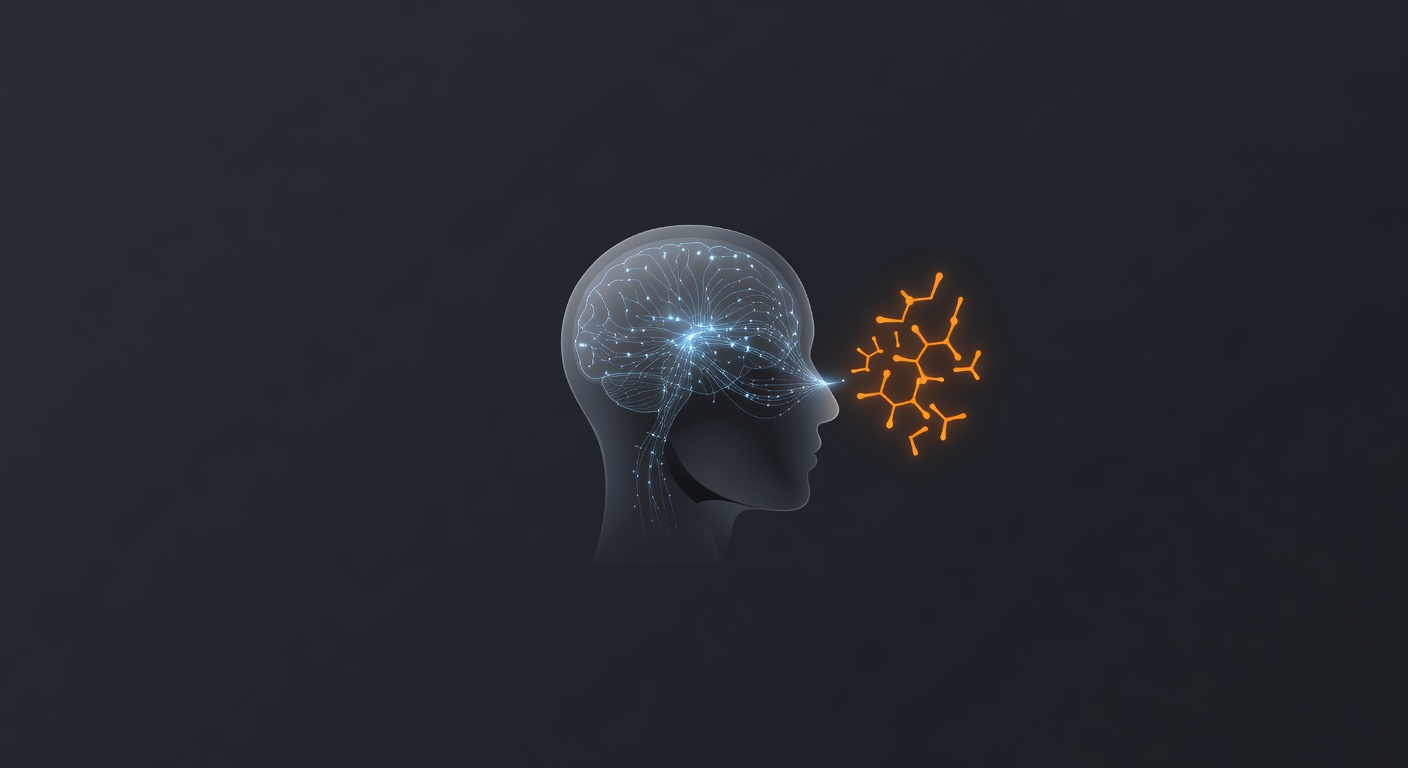
When Your Nose Knows Before Your Brain Does
Here's something kind of wild: your ability to smell might be a crystal ball for your brain's health. Researchers have found that a declining sense of smell could be one of the very first red flags for Alzheimer's disease — potentially showing up years before you experience any memory problems at all.
I know what you're thinking: Wait, my sense of smell matters for Alzheimer's? It sounds random, right? But stick with me, because this discovery is genuinely fascinating and could change how we catch this disease early.
The Brain's Immune System Gets a Little Too Eager
Here's where it gets interesting. Your brain has its own security team called microglia. These are immune cells whose job is to keep things clean and remove anything that looks damaged or out of place. Normally, that's great — they're like tiny brain janitors.
But in early Alzheimer's disease, something goes wrong. These immune cells start attacking connections between two specific brain regions: the olfactory bulb (which processes smell) and the locus coeruleus (which helps regulate a bunch of important stuff, including your sense of smell itself).
Think of it like a security guard becoming overprotective and demolishing a perfectly good hallway because they think something's wrong with it.
The Sneaky Membrane Signal
So why would the microglia suddenly turn against these nerve connections? Scientists discovered a telltale sign: a fatty molecule called phosphatidylserine.
Normally, this molecule stays tucked on the inside of nerve cell membranes, minding its own business. But in Alzheimer's disease, something causes it to flip to the outside surface. When it appears on the outside, it's basically a giant neon sign saying "EAT ME" to the microglia.
The researchers think this happens because these nerve fibers start firing abnormally — they're overactive, like a short circuit. The flip in membrane composition is the nerve cell's way of signaling distress, but the immune system misinterprets it as a command to destroy these connections.
They Proved It Three Different Ways
What I really appreciate about this research is that scientists didn't just have one line of evidence. They looked at it from multiple angles:
Mouse models: They studied mice engineered to have Alzheimer's-like features and watched this exact process happen.
Human brain tissue: They examined actual brain tissue from people who had passed away with Alzheimer's and found the same membrane changes.
Brain scans: They analyzed PET scans from people with Alzheimer's or mild cognitive impairment and saw the damage in the relevant brain regions.
Three different approaches, same answer. That's the kind of evidence that makes scientists sit up and pay attention.
Why This Matters Right Now
Here's the part that genuinely excites me: we finally have medications that can slow Alzheimer's down — specifically, antibodies that target amyloid-beta, the protein involved in the disease. But here's the catch: these drugs only work well if you catch the disease early, before too much damage is done.
If smell loss really is one of the earliest warning signs, we could potentially identify people at risk before their memory starts slipping. Then they could get tested, confirm the diagnosis, and start treatment when it's most effective.
Imagine that scenario: someone notices their sense of smell isn't quite right, gets tested, finds out they're in the early stages of Alzheimer's, and starts treatment years before they'd normally be diagnosed. That could make a huge difference in their outcome.
The Bigger Picture
What I find really compelling about this research is how it shows us that the brain's defense mechanisms can sometimes work against us. It's a reminder that disease often isn't just about something "bad" happening — it's about our body's normal processes getting hijacked or misdirected.
It also highlights why we shouldn't ignore seemingly small changes in our health. A gradual loss of smell isn't dramatic. It's easy to brush off as just getting older or a lingering sinus issue. But our bodies are constantly sending us signals; we just need to learn to listen to them.
The next time you can't quite smell your coffee the way you used to, or you need someone to tell you the trash needs taking out, it might be worth mentioning to your doctor — especially if you're in an age group where Alzheimer's risk is a concern.
Science keeps finding new puzzle pieces, and this one feels like it could really matter.