
The Evolution Story They Didn't Teach You in High School
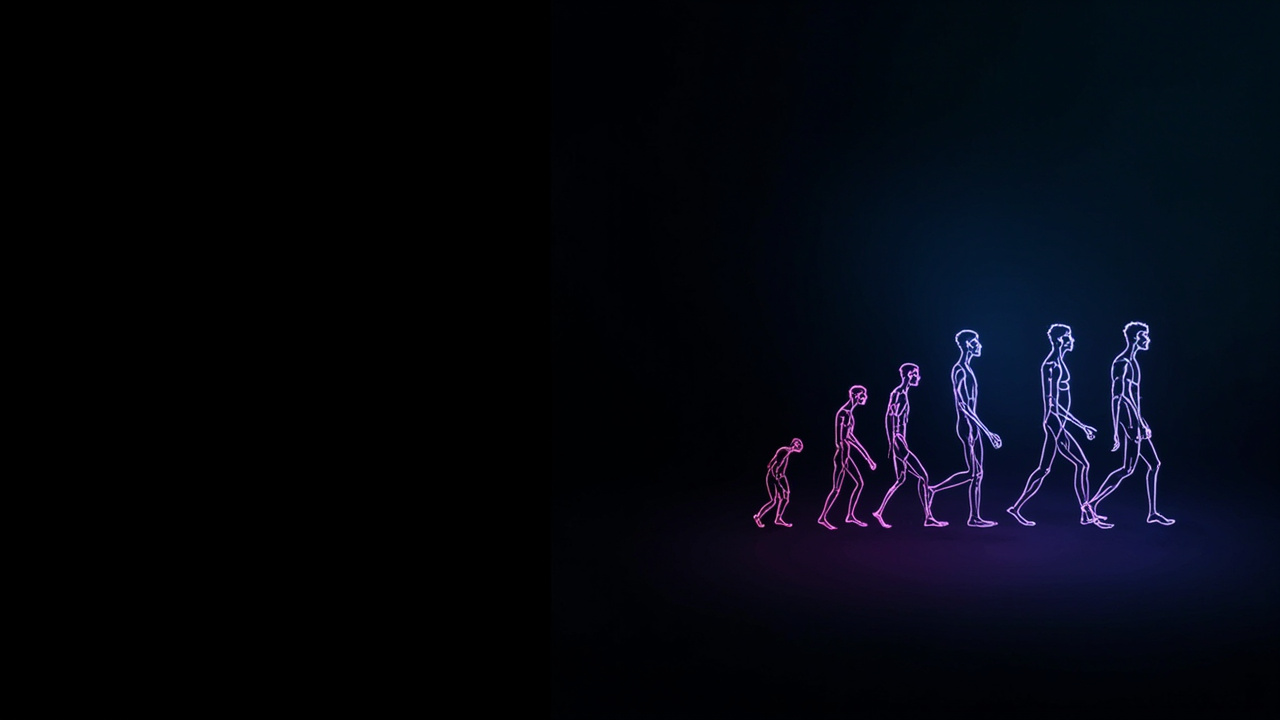
Remember that timeline in your biology textbook? You know the one—nice and linear, showing ape-like creatures gradually standing up straighter, growing bigger brains, and eventually becoming modern humans. Yeah, forget all that. Or at least, forget about half of it.
A research team from Arizona State University has been digging around in Ethiopia for over two decades, and they've just revealed something that fundamentally challenges how we think about human origins. And I have to say, the truth is way cooler than the oversimplified version we've been telling ourselves.
Wait, Multiple Human Ancestors Living at the Same Time?
Here's the wild part: between 2.6 and 2.8 million years ago, at least two different hominin species were literally sharing the same neighborhood in Ethiopia. We're talking about early members of our own genus, Homo, hanging out in the same landscape as their cousins from the Australopithecus family (you might know one of them as "Lucy").
This completely demolishes that neat, straight-line evolution chart. It's like finding out that instead of your family tree being a simple trunk with branches, it's actually a chaotic tangle where different branches were growing right next to each other at the same time.
The evidence? Thirteen fossil teeth. I know that doesn't sound like much, but teeth are absolutely packed with information—they're like tiny time capsules that can tell us who ate what, when they lived, and how they compare to their relatives.
Teeth Don't Lie (But Scientists Are Pretty Careful About Interpreting Them)
One of the biggest revelations from this study is what the teeth aren't. These ancient teeth definitely didn't belong to Australopithecus afarensis—the famous "Lucy" species. This confirms that Lucy's lineage basically died out around 2.95 million years ago, without directly leading to our genus. She was a cool ancestor, sure, but she wasn't our direct grandmother.
Instead, these teeth came from an entirely unidentified species of Australopithecus. Basically, scientists found evidence of a hominin species that nobody has officially named yet. How cool is that? Somewhere out there is a species waiting for a name, and it's been hiding in the fossil record this whole time.
How Do They Even Know These Teeth Are 2.8 Million Years Old?
Here's where Ethiopia's geology becomes genuinely clever. The country sits in an active rift zone, which means it's been volcanically active for millions of years. Every time a volcano erupted, it spread ash across the landscape—and that ash contained special crystals that scientists can date with incredible precision.
Think of it like this: imagine your fossil sitting between two layers of volcanic ash. Scientists can date the ash above it and below it, which means they can nail down the fossil's age with surprising accuracy. It's like the volcano is helping paleontologists keep precise records.
Because the Ledi Geraru region has erupted repeatedly over time, researchers can essentially read a geological timeline. They know that between layers dated to 2.6 and 2.8 million years ago, fossils are found, so those fossils must be from that time period. No guessing required.
The Landscape Matters Too
Here's something I find really fascinating: scientists aren't just looking at fossils in isolation. They're reconstructing what the entire ecosystem looked like back then.
Today, the Ledi Geraru area looks like harsh, rough badlands. But 2.6 to 2.8 million years ago? It was a greener landscape with rivers, lakes, and actual vegetation. By studying the sediment layers around the fossils, researchers can figure out what the environment was like—what plants were available, what the climate was like, how much water was around.
This matters because it might explain why multiple hominin species could exist in the same place at the same time. Maybe they exploited different food sources. Maybe they lived in different microhabitats within the same general area. The environment holds clues about how they coexisted.
Human Evolution Is a Bush, Not a Ladder
One of the researchers involved put it perfectly: "Human evolution is not linear, it's a bushy tree, there are life forms that go extinct."
I love this description because it finally captures how messy and complicated evolution actually is. We're so used to thinking in straight lines that we forget—nature doesn't work that way. Species branch off, some survive, some die out, and it's all happening at the same time in overlapping ways.
For millions of years, our planet hosted multiple branches of the human family tree simultaneously. Some of these branches became dead ends. Others, well, one of them eventually led to us.
What's Next?
Here's the thing: these scientists have named species based on less evidence than this. But they're not rushing to name this mystery Australopithecus yet. They want more fossils. They want to understand the differences between this unnamed species and early Homo. They want to piece together how these different lineages actually interacted with each other.
The Ledi Geraru Research Project has been going on since 2002, and it keeps revealing new layers of complexity. The team has already found the oldest known member of the Homo genus and the earliest known stone tools. Every new discovery refines our understanding of what it actually meant to be human—and apparently, it meant sharing your environment with several cousins who were finding their own way forward.
The Bigger Picture
What I find most inspiring about this research is that it shows how much we still have to learn. Our textbooks are being rewritten almost faster than they can print them. Every few years, another fossil discovery fundamentally changes how we understand our own origins.
That's not a bug in science—that's the feature. That's what makes paleontology and evolutionary biology so exciting. We're still uncovering our own story, piece by piece.
So yeah, forget that simple timeline. Embrace the complexity. Human evolution is messier, more interesting, and way more fascinating than anyone initially thought.