
The Invisible Eyes Are Everywhere
I've been writing about tech privacy for years, but this latest discovery genuinely gave me chills. We're all worried about our phones listening to us or cameras watching us, but it turns out WiFi itself has been quietly "seeing" us this whole time—and we had no idea.
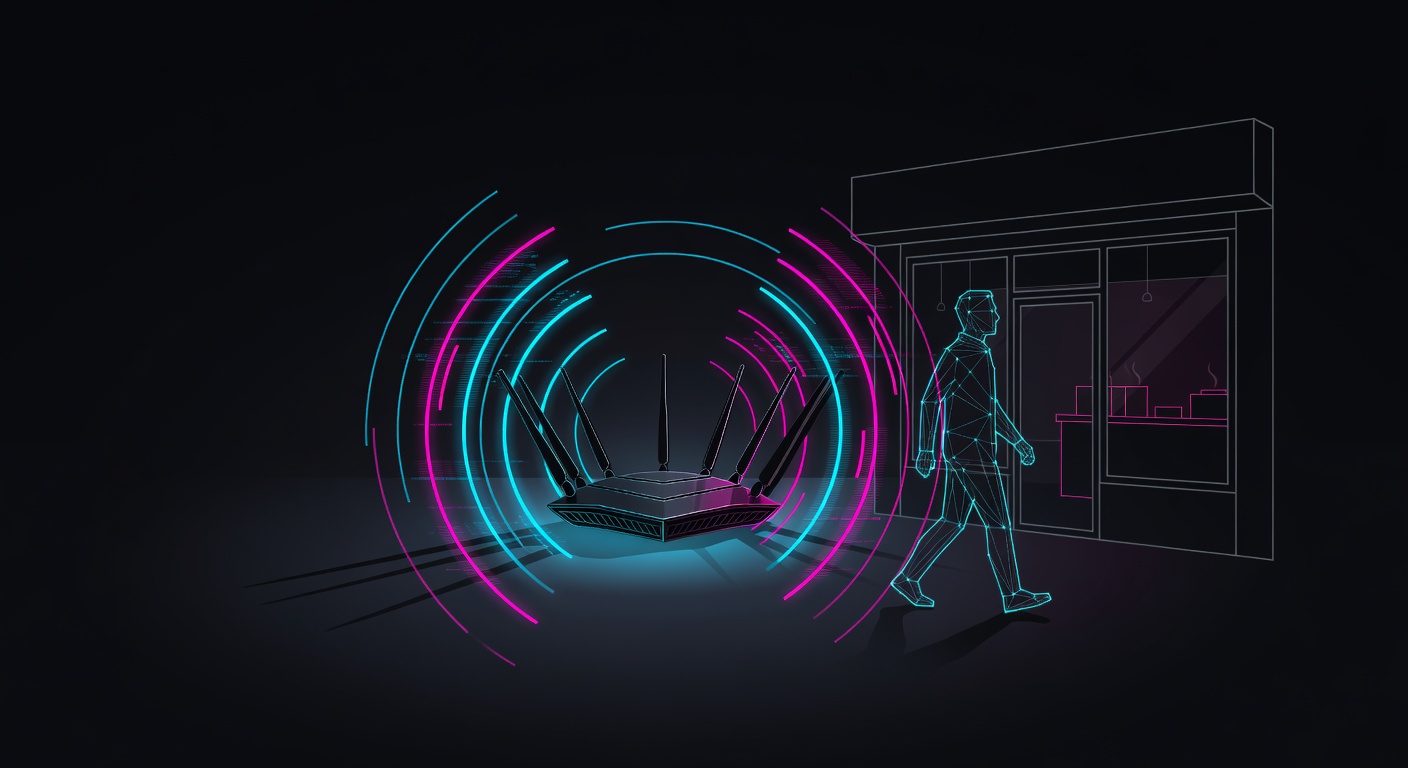
Picture this: you're walking down the street, no phone in hand, no smart devices on you. You think you're invisible to digital surveillance. But every WiFi router you pass is essentially taking a "radio photograph" of you, creating a unique signature that can identify and track your movements. It's like having X-ray vision, but instead of Superman, it's every coffee shop, apartment building, and office around you.
How Your Body Becomes a Walking WiFi Signature
Here's the wild part—your body is basically a walking interference pattern for radio waves. When WiFi signals bounce off you, they create a unique "radio shadow" that's as distinctive as a fingerprint.
The researchers call this Beamforming Feedback Information (BFI), which sounds boring but is actually terrifying. Think of it like sonar, but instead of sound waves mapping underwater objects, WiFi waves are mapping you. The craziest part? This data gets transmitted completely unencrypted, meaning anyone within range can just... grab it.
Why This Keeps Me Up at Night
What really bothers me isn't just that this technology exists—it's how effortless it is to use. Previous WiFi surveillance methods needed special hardware or technical know-how. This new approach? Any device on a WiFi network can potentially spy on you. No apps to install, no special equipment needed.
I keep thinking about the implications:
- Stalkers could track someone's daily routine without ever getting close
- Retailers might analyze your shopping patterns before you even enter their stores
- Governments could monitor crowds and protests with unprecedented detail
- Criminals might case locations by remotely observing when people come and go
The researchers found they could identify people with scary accuracy, even distinguishing between different walking styles. Your morning coffee run just became a daily privacy nightmare.
The WiFi 5 Problem We Didn't See Coming
Remember when we all got excited about faster WiFi speeds? Well, WiFi 5 introduced something called "beamforming" to boost performance by focusing signals more efficiently. Great for Netflix, terrible for privacy.
This feature unintentionally opened the door for mass surveillance. It's like we installed security cameras everywhere while thinking we were just upgrading our internet. The engineering team probably never imagined their bandwidth improvements would enable a new form of stalking.
What Can We Actually Do About It?
Here's the frustrating truth: there's no "opt out" button for this. You can't just turn off BFI on your devices because it's built into how modern WiFi works. The researchers mention some potential countermeasures exist, but they're not very confident about their effectiveness.
My practical advice for now:
- Be aware this technology exists (knowledge is power, even when the power feels limited)
- Support organizations pushing for stronger privacy regulations
- Consider that your movements near WiFi networks aren't as private as you thought
The Bigger Picture
What really concerns me is the pattern here. We keep discovering these surveillance capabilities after the technology has already spread everywhere. Millions of WiFi 5 routers are already installed in homes and businesses worldwide. The privacy invasion infrastructure is already built—we're just now realizing what it can do.
The IEEE is apparently planning to standardize even more WiFi sensing capabilities, and guess what's not on their agenda? Privacy protections. It's like we're sleepwalking into a surveillance state, one router at a time.
Time for a Wake-Up Call
This discovery should be a massive wake-up call about how we approach new technologies. We can't keep prioritizing speed and convenience while treating privacy as an afterthought. The researchers are calling for more investigation into BFI and ways to protect against it, but honestly, we should have been having these conversations before deploying the technology everywhere.
Maybe it's time we started asking tougher questions before we upgrade our digital infrastructure. Because once these capabilities are out there, putting the privacy genie back in the bottle becomes nearly impossible.
The next time you see that little WiFi symbol, remember—it might be seeing you back.
Source: https://www.popularmechanics.com/technology/security/a70373835/wifi-spying