In 1966, a U.S. bomber collided with a refueling plane over Spain, scattering nuclear weapons across tomato fields and into the Mediterranean. Now, more than 50 years later, the veterans who cleaned up the mess are finally getting recognition for the health problems they suffered. --- Okay, story time. Picture this: It's January 1966. You're a fisherman on the southeastern coast of Spain, maybe grabbing your morning coffee, when suddenly — BOOM — something massive crashes into the Mediterranean Sea right off your coast. You squint through the morning light and see parachutes descending. Multiple parachutes. Coming from two aircraft that just collided in mid-air. No big deal, right? Just a normal Tuesday morning. Except the aircraft in question were a B-52 bomber carrying four hydrogen bombs and a KC-135 refueling tanker. And the whole reason they were up there? A Cold War strategy called Operation Chrome Dome — America's way of keeping nuclear weapons perpetually circling the Soviet Union, ready to strike at a moment's notice. Why Were Nuclear Bombers Flying Over Spain? Let me take you back to the 1960s. The Cold War was at its peak, and the idea of "mutually assured destruction" ruled everything. The thinking went something like this: if you have weapons that can destroy the world, and your enemy knows you have them, maybe — just maybe — nobody will actually use them. But here's the problem. Missiles in silos are great, but they're stationary. Submarines are stealthy, but they can only launch from specific locations. What if you want options? What if you want weapons that can reach anywhere on Earth within hours? That's where the strategic bomber came in. During Operation Chrome Dome, B-52 bombers armed with thermonuclear weapons took turns flying continuous patrol routes around the globe. One of those routes took them right over the Mediterranean, near a small Spanish fishing village called Palomares. It was a numbers game. Keep enough bombers in the air, at all times, and you've got a credible threat. The problem? Keeping weapons that could sterilize entire cities flying in circles for years on end isn't exactly... safe. The Collision January 17, 1966. 10:30 a.m. local time. The B-52G is mid-refueling with a KC-135 tanker when something goes wrong. Maybe there was turbulence. Maybe someone miscalculated. Maybe it was just the kind of terrible luck that changes everything. The two aircraft collided. Seven of the eleven crew members between the two planes didn't survive. The B-52 broke apart, and its payload began falling toward Earth. Four hydrogen bombs. Each one capable of causing destruction beyond imagination. But here's the strange part of this story — and strange might be too mild a word. None of the bombs were armed. They weren't ready to detonate. So what happened when they hit the ground? Three landed near Palomares. Two actually buried themselves in the earth, creating craters in the tomato fields outside town. The fourth? It came down in the Mediterranean Sea, parachuting into the water while witnesses watched in horror. The Cleanup Begins Within hours, the U.S. military descended on this peaceful fishing village like an occupying force. We're talking 1,600 military personnel in a town that probably didn't have a Starbucks. They cordoned off areas, evacuated locals, and started hunting for nuclear weapons in tomato fields. John Garman was 23 years old and working as a military police officer. He got to the crash site just a few hours after the collision. Here's how he described it to The New York Times in 2016: "It was just chaos... Wreckage was all over the village. A big part of the bomber had crashed down in the yard of the school." Just let that sink in. Bomber wreckage in a schoolyard. Nuclear weapons half-buried in farmland. Plutonium scattered across fields where farmers had been growing vegetables that very morning. They eventually shipped about 1,400 tons of radioactive soil and vegetation back to the United States for disposal. But there was one little problem: bomb number four was missing. The Hunt for the Lost Bomb Imagine being part of the team searching for a hydrogen bomb at the bottom of the Mediterranean. That's not a movie plot. That's what happened next. The Navy deployed 33 vessels and about 3,000 personnel. They brought in the deep-sea submersible Alvin — yes, the same Alvin from the Titanic expeditions — to search the ocean floor. But here's what really helped: a local fisherman named Francisco Simó Orts had actually watched the bomb fall. He'd seen it descend on its parachute. His eyewitness account gave the search team a starting point. The Alvin found it on a steep underwater slope, roughly 2,500 feet down. Progress! Finally! Except... it gets better. (By "better," I mean worse.) During the first recovery attempt, a cable snapped. The bomb slid deeper into an underwater canyon. It was lost again. For nine more days, this weapon sat somewhere in the Mediterranean, and nobody knew exactly where. I don't know about you, but I would have been losing my mind. How do you even explain that to your superiors? "Sir, we found it. Then we dropped it again." They finally brought it to the surface on April 7, 1966 — nearly three months after the accident. The bomb was dented but intact. No radiation leakage. Somehow, miraculously, nobody was killed by the radioactive material itself. The Real Cost: Decades Later The plane crash killed seven people. The bombs didn't explode. The radiation didn't immediately harm anyone at the scene. So everything was fine, right? Not even close. For decades afterward, the veterans who participated in that cleanup started getting sick. We're talking cancers. Rare diseases. Health problems that seemed to follow them wherever they went. The common thread? Radiation exposure from spending weeks in a nuclear contamination zone, handling radioactive materials without fully understanding the risks. These were the guys who dug through contaminated soil. Who stood guard while others handled bombs. Who breathed the air and touched the debris and came home changed in ways they didn't understand yet. But when they tried to get help — when they filed for veterans' benefits and health care — the Department of Veterans Affairs said what? That there was no radiation risk at the site. No radiation risk. From a site where hydrogen bombs had buried themselves in the earth. Justice (Finally) Comes to Palomares It took years of fighting. It took organizing. It took veterans telling their stories, getting lawyers involved, and refusing to be ignored. The Palomares Veterans Act passed in 2022. That's 56 years after the accident. Better late than never, I suppose. The legislation finally provides disability benefits and health care to surviving veterans who participated in the cleanup, plus some benefits to families of those who had already passed. But here's what gets me: these men were exposed to radiation during an official military operation. They weren't doing anything wrong. They were following orders, trying to keep their country safe, and they ended up paying the price with their health. And it took more than half a century for the government to acknowledge that maybe — just maybe — that exposure had consequences. The End of Chrome Dome Operation Chrome Dome didn't survive the Palomares Incident. The military suspended it not long after, and it was officially discontinued in 1968. But here's an interesting footnote: almost exactly two years after Palomares, another B-52 carrying nuclear weapons crashed near Thule Air Base in Greenland. That's when the Air Force finally said, "Okay, maybe flying hydrogen bombs around the world 24/7 isn't the best idea." Go figure. Looking Back I think about this story often when people talk about the Cold War as if it were some kind of noble chess match between superpowers. Sure, there were diplomatic victories and strategic brilliance. But there was also this: military personnel sent to clean up nuclear accidents that never should have happened, and then told for decades that their suffering wasn't real. The Palomares incident reminds us that history isn't just made of presidents and generals and treaties. It's also made of 23-year-old MPs standing in a schoolyard surrounded by wreckage, and fishermen who watched bombs fall into the sea, and veterans who spent the rest of their lives wondering why they got sick. Sometimes the real cost of history is paid by people whose names we'll never know. --- Source: Popular Mechanics
If you've been eyeing that fancy Yeti cooler or travel mug but balked at the price tag, I've got news for you. Turns out, you don't have to wait for Prime Day to score decent discounts on this premium brand. Let me let you in on something I've discovered while bargain-hunting lately. Yeti doesn't really participate in Amazon Prime Day the way most brands do—they're kind of notorious for barely discounting their products even during the biggest sales events of the year. It's frustrating, I know. I remember almost buying a Hopper cooler last Prime Day only to see the price barely budge. But here's the thing: there ARE deals happening right now, and they're pretty decent—anywhere from 20 to 25 percent off on some pretty solid gear. The catch? You might need to be flexible with your color choices. Most of the discounts apply to the less popular colors—think of them as the "hidden gems" of the Yeti color palette. ## What's Actually on Sale Let me break down the highlights from what I'm seeing out there: The Hopper M20 Backpack Soft Sided Cooler is showing up with those sweet discounts. This is the one I keep eyeing whenever I go camping. It straps to your back like a regular backpack but keeps your drinks and food perfectly cold for days. The 25% off makes it a lot more digestible. For those of you who drink approximately a gallon of coffee or water a day (no judgment here), the Rambler Half Gallon Jug is also on sale. This thing is absolute tank of a water bottle—seriously, it weighs a ton when full. But if you need to stay hydrated on long hikes or road trips, it's a game-changer. The M30 Portable Soft Cooler and Hopper Flip 12 Portable Cooler are also in the mix. These are perfect for beach days, tailgating, or just keeping in your car for emergency snacks. The Flip 12 is particularly great because it actually fits in most cup holders, which sounds obvious but is surprisingly rare in the cooler world. And hey, if you're in the market for a new water bottle that isn't just going to end up lost at the bottom of your gym bag, the Yonder 1.5-Liter Water Bottle has a discount. It's a bit different from the standard Rambler—lighter weight, more affordable, but still built to last. Last but not least, the Rambler 30-Ounce Travel Mug is showing up in the deals. This is the one my husband refuses to let me replace because "it's the perfect size." Honestly, he's right. The 30-ounce is that sweet spot for morning coffee that stays hot (or cold) for hours. ## My Take on These Deals Here's my honest opinion: if you've been waiting for a good time to jump into Yeti products, this is about as good as it gets without buying refurbished or from sketchy third-party sellers. The color thing really doesn't bother me much. I actually kind of love having the less common colors—it means when I'm at the beach or campsite, I can spot my cooler immediately. Plus, some of these "unpopular" colors are actually really sharp-looking. Don't sleep on these deals waiting for Prime Day. From what I've seen, Yeti barely participates, and when they do, the discounts are usually smaller. These early 20-25% off deals are genuinely the best window you're going to get. Go grab that cooler you've been wanting. Your next camping trip will thank you.
Scientists using super-sensitive ground-scanning technology near the famous pyramids have found something unexpected buried just beneath the surface. It's not a treasure chamber or a hidden pharaoh's tomb — at least, not that we know of. But this mysterious L-shaped structure has researchers pretty curious, and honestly? I think you will be too.
Imagine diving into a murky lake and coming face-to-face with someone who died over 1,000 years ago. That's exactly what happened to researchers in Poland, and the story behind this haunting discovery is far more fascinating than you might expect.
Amazon's early Prime Day sale just dropped a top-tier robot vacuum and mop combo down to its lowest price ever—and honestly, if you've been on the fence about finally upgrading your cleaning routine, this might be your sign.
After years of treating my garage like a black hole where things go to disappear, I decided to tackle the chaos before summer hit. What I discovered surprised me — with the right storage setup, that cluttered mess can actually become functional space. Here's what actually works (and what to skip).
Imagine digging just three inches into the earth and discovering something that makes you question everything you thought you knew about your career. That's exactly what happened to archaeologist Linda Asheim in Norway's oldest town, and the story behind this glittering find is honestly one of the coolest things I've heard in a while.
When we think about boosting wildlife populations, planting more trees seems like a no-brainer. But new research from Japan reveals a surprising twist: those windbreak trees farmers plant to protect their crops might actually be pushing some bird species out of their homes. It's a classic case of good intentions potentially backfiring.
Two deadly viruses — Ebola and hantavirus — often begin with ordinary flu-like symptoms before taking a terrifying turn. Understanding these diseases could save your life, whether you're a healthcare worker or just someone who wants to be prepared.
Scientists have discovered that the Moon's largest crater was created by an ancient cosmic collision powerful enough to blast material from deep within the Moon's interior. The really exciting part? Some of that material might be sitting right where future Artemis astronauts plan to land.
Scientists are discovering that niacin—yes, the same vitamin B3 you might find in a drugstore supplement aisle—could potentially help the body's immune system fight one of the most aggressive cancers known to medicine. Early results from a clinical trial are generating excitement, though researchers are quick to caution that we're still in the early innings.
Scientists have discovered a tropical butterfly that seems to dodge the aging process almost entirely. While most butterflies live just a few weeks, some of these remarkable insects survive nearly a year, and they don't even show signs of physical decline as they get older. Now researchers think these butterflies might hold clues to healthy aging that could one day help us too.
Scientists have achieved what many thought would take decades: reliable nuclear clocks that tick based on the oscillations of a thorium nucleus instead of electrons. Two independent research teams have figured out the secret sauce for keeping these next-generation clocks stable, and the implications are absolutely mind-blowing — from超 precise navigation to potentially catching dark matter in the act.
Ever stumbled upon something so strange that it keeps you up at night? Well, archaeologists have been losing sleep over one particular artifact for over a century, and honestly? I think I know why. --- The Phaistos Disc has haunted my curiosity for years. There's something about it that keeps drawing me back — maybe it's the spiral pattern, or maybe it's the fact that we still can't figure out what the heck it actually is. Whatever the reason, I was thrilled to see fresh eyes being applied to this ancient mystery. Here's the deal: back in 1908, an Italian archaeologist named Luigi Pernier unearthed this curious disc on the island of Crete. It's about the size of a large cookie (roughly 6.3 inches across), covered in symbols arranged in a spiral pattern, and currently sits in a museum in Crete. Sounds simple enough, right? Wrong. This little disc has been driving experts absolutely bonkers for over 115 years. ## So What Makes It So Special? Let me break it down. The disc contains 241 symbols total, but here's where it gets interesting — only 45 of them are unique. That's a weird middle ground. It's way more than you'd see in an alphabet (most have around 20-30 characters), but nowhere near the hundreds you'd find in hieroglyphic systems. This peculiarity alone has fueled countless theories. But wait, it gets better. The way these symbols got there is what really blows my mind. They weren't carved or scratched into the clay — they were pressed. Think about that for a second. Someone took soft clay and stamped symbols into it, creating what's called "blind printing." This technique wouldn't show up again until the medieval period, thousands of years later. That's like finding a smartphone in an ancient tomb and realizing we somehow lost the technology for two millennia before rediscovering it. ## The Theories (Where Things Get Fun) Now, let's talk about the various attempts to explain this thing. Over the years, clever folks have proposed several ideas: The Text Theory: Maybe it's a language we haven't decoded yet — some unknown Minoan script or dialect that died out completely. This would be huge if true, but here's the problem: the symbols don't seem to follow patterns we'd expect from a written language. The Poem Theory: Some researchers noticed that symbols on one side seem to repeat at the beginning of phrases, while the other side shows patterns that might rhyme. Could this be an ancient hymn or song? That's a romantic idea, and honestly, I'd love it if true. The Board Game Theory: And here's where things get spicy. A recent preprint (basically a research paper that hasn't been peer-reviewed yet) suggests the disc might actually be a board game whose rules have been completely lost to history. The way it's manufactured and oriented apparently supports this interpretation. I have to say, there's something deliciously ironic about the possibility that archaeologists have been agonizing over what was essentially ancient entertainment. ## Why I Find This So Fascinating Here's my two cents: I think the board game theory might actually be onto something. Hear me out. The disc was found in a storage area of the palace, and it was made from unfired clay. Unfired clay, people! If someone wanted to preserve important religious texts or historical records, wouldn't you use something more durable? The fact that it was essentially "baked" accidentally by palace fires over the centuries is almost like finding your morning toast preserved after your kitchen burned down — it's preservation through catastrophe. Plus, let's be real: humans have always loved games. Why would ancient civilizations be any different? We have evidence of ancient board games from Egypt and Mesopotamia. It makes sense that the creative Minoans would have invented their own. But here's what really gets me: even if it IS a board game, we're still stuck. We can see the "game pieces" (the symbols), we have the "board" (the disc itself), but the rulebook? Completely missing. We'd still be guessing at how to play. ## The Bigger Picture Whatever the Phaistos Disc turns out to be, I think it teaches us something important: ancient people weren't so different from us. They created art, told stories, played games, and yes, probably drove each other crazy trying to figure out each other's weird creations. That continuity across thousands of years is pretty remarkable when you think about it. The mystery might never be solved in my lifetime. And honestly? That might be okay. Some puzzles are worth sitting with, worth revisiting with fresh eyes and new technologies. The Phaistos Disc reminds us that the past is full of surprises, and sometimes the most ordinary questions — "what IS this thing?" — lead us on the most extraordinary adventures. So the next time you encounter something you can't explain, remember: somewhere out there, a tiny clay disc is still spiraling in its ancient mystery, waiting for someone to finally crack its code. And honestly? I hope they do. But if they don't, I'll be content knowing that some mysteries are just too beautiful to solve completely. --- What do YOU think the Phaistos Disc was? A sacred text? An epic poem? An ancient game? Drop your theories in the comments — I'd love to hear them! Source: Popular Mechanics - https://www.popularmechanics.com/science/archaeology/a71619703/phaistos-disc
In 1950, the U.S. government secretly sprayed bacteria over San Francisco to test how a biological attack might spread. One man died, and for decades, nobody knew why—until a grandson decided to fight for the truth.
In 1950, the U.S. military secretly released bacteria over San Francisco to test how a bioweapon attack might spread. One man died. The government's defense? They thought the bacteria was completely harmless. --- Okay, story time. And trust me, this one will make your jaw drop. Picture San Francisco, 1950. The city of fog, cable cars, and about 800,000 people going about their lives, completely unaware that the U.S. government was about to turn their city into a giant science experiment. For an entire week in September, from the 20th to the 27th, military planes released clouds of bacteria over the Bay Area. Not because anyone wanted to hurt San Franciscans—but because they wanted to know what would happen if an enemy nation decided to. Wild, right? Let me break it all down for you. ## The Cold War Made Everyone Paranoid (For Good Reason) After World War I saw chlorine gas killing thousands of soldiers, nations became terrified of chemical and biological weapons. Then Pearl Harbor happened in 1941, and suddenly America's sense of invincibility shattered. If Japan could attack us on our own soil, anything was possible. So in 1942, President Roosevelt created America's first biological weapons program. The goal? Figure out how vulnerable American cities really were to a germ warfare attack. By 1948, scientists proposed something wild: simulate attacks using harmless bacteria to see how they'd spread through real cities. Real conditions, real weather, real populations. Just harmless bacteria, they said. Enter Operation Sea-Spray. ## What Did They Spray, Exactly? The military chose two bacteria: Serratia marcescens and Bacillus globigii. At the time, scientists believed both were completely harmless to humans. They were found naturally in soil and water, and researchers thought they posed zero risk. Why these specific bacteria? Harvard molecular biologist Matthew Meselson explained it well: "They needed something that was, first of all, thought to be harmless... And something that could easily be detected by simple methods." San Francisco was selected because it had ideal weather patterns for dispersal, tall buildings that could trap aerosols, and a large population to study. Perfect test conditions. ## Here's Where Things Got Ugly Here's the thing about "harmless" bacteria—you're never 100% sure until you test them in the real world. During the test, one of those bacteria clouds drifted right over Stanford University Hospital. Eleven patients developed Serratia marcescens infections. Doctors were completely baffled. They had never seen anything like it. One patient, 75-year-old Edward Nevin, was recovering from prostate surgery when the bacteria found its way to his heart. He died. The tragedy? Doctors didn't even connect his death to the government test until much later. They were so confused that they actually published a scientific paper about the mysterious infections the following year. ## The Aftermath Nobody Heard About Operation Sea-Spray was just one of 239 open-air germ warfare tests conducted across the United States during the Cold War. The military also tested in the New York City subway, along the Pennsylvania Turnpike, and at Washington D.C.'s national airport. All of this stayed classified for decades. It wasn't until 1969 that President Nixon ended U.S. biological weapons research. The documents were finally declassified in the 1970s, revealing the full scope of what had been done. ## The Grandson Who Said "No Way" Here's the part that really got me. Edward Nevin III—the grandson of the man who died—read those classified reports years later and discovered what had really happened to his grandfather. Instead of staying silent, he decided to sue the U.S. government. Did he think he'd win? Probably not. But he told KQED: "We still had to tell the story. To have a citizen submitted to that kind of risk is awful." That really struck me. It's not about the money or even winning. Sometimes, the truth just needs to be told. --- ## So What Do We Learn From This? Here's my take: The Cold War made governments do some genuinely terrifying things "for our safety." And here's the thing—they weren't entirely wrong to be worried. Biological weapons are a real threat, and understanding them is important. But conducting secret tests on unsuspecting civilians? That's a different story. We now know that Serratia marcescens isn't as harmless as scientists once thought. It can cause infections, particularly in people with weakened immune systems. The "harmless" experiment wasn't so harmless after all. History reminds us that good intentions don't always equal good outcomes—and that citizens deserve transparency, even (especially?) when national security is involved. What do you think? Does knowing this history change how you view Cold War era government actions? Drop your thoughts below—I'd love to hear your perspective. --- Source: Popular Mechanics
In the late 1940s, Idaho wildlife officials came up with an absolutely wild solution to a beaver problem—literally strapping the fuzzy critters into parachutes and dropping them from airplanes. It's one of those stories that sounds completely made up, but the documentation is real, and the results were remarkable.
Scientists have discovered that the type of fat you eat might matter way more than how much of it you consume — and swapping one common fat for another could actually help protect you from type 2 diabetes. Here's what you need to know.
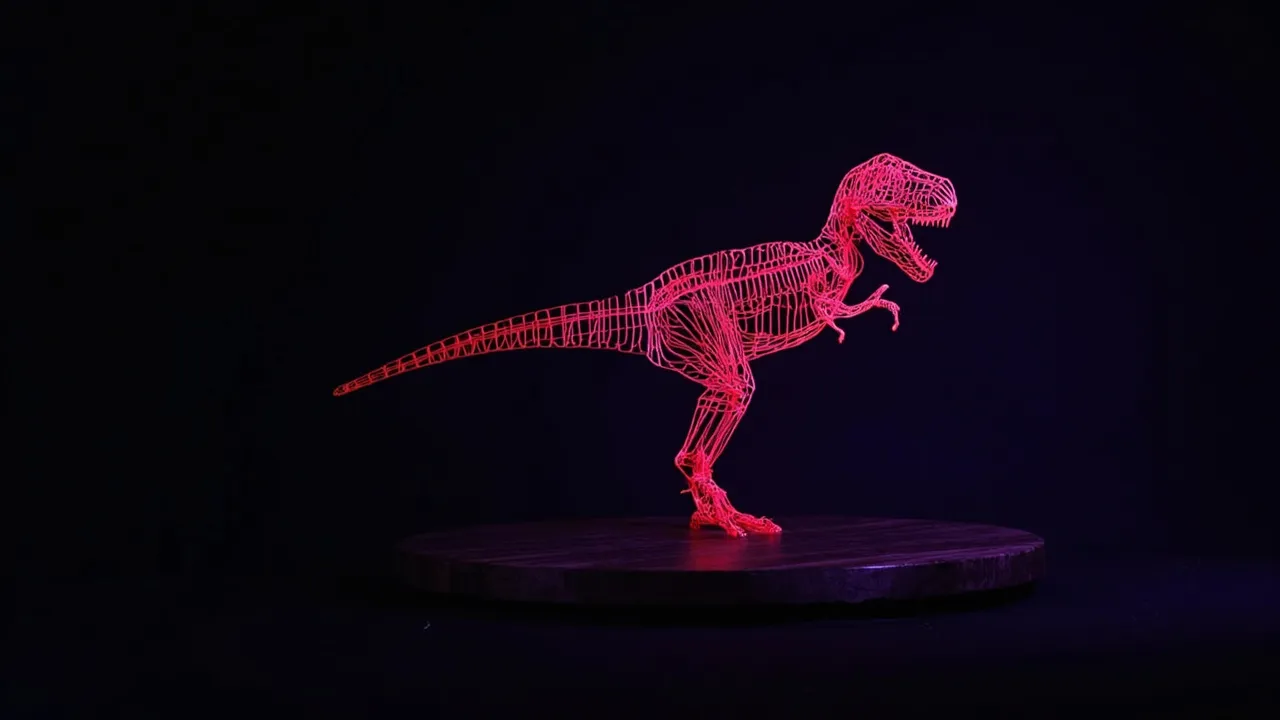
Imagine being a teenager well into middle age. That's basically what T. rex might have been, according to new research. Scientists have discovered these massive predators took a jaw-dropping 40 years to reach their full adult size—decades longer than we ever imagined.
Scientists have discovered that a Chinese-made sodium-ion battery can hold its own against Tesla's lithium-ion technology in some surprisingly impressive ways. This could be a game-changer for making electric vehicles and energy storage more affordable—but there's still a catch or two.