Science & Technology
Latest News
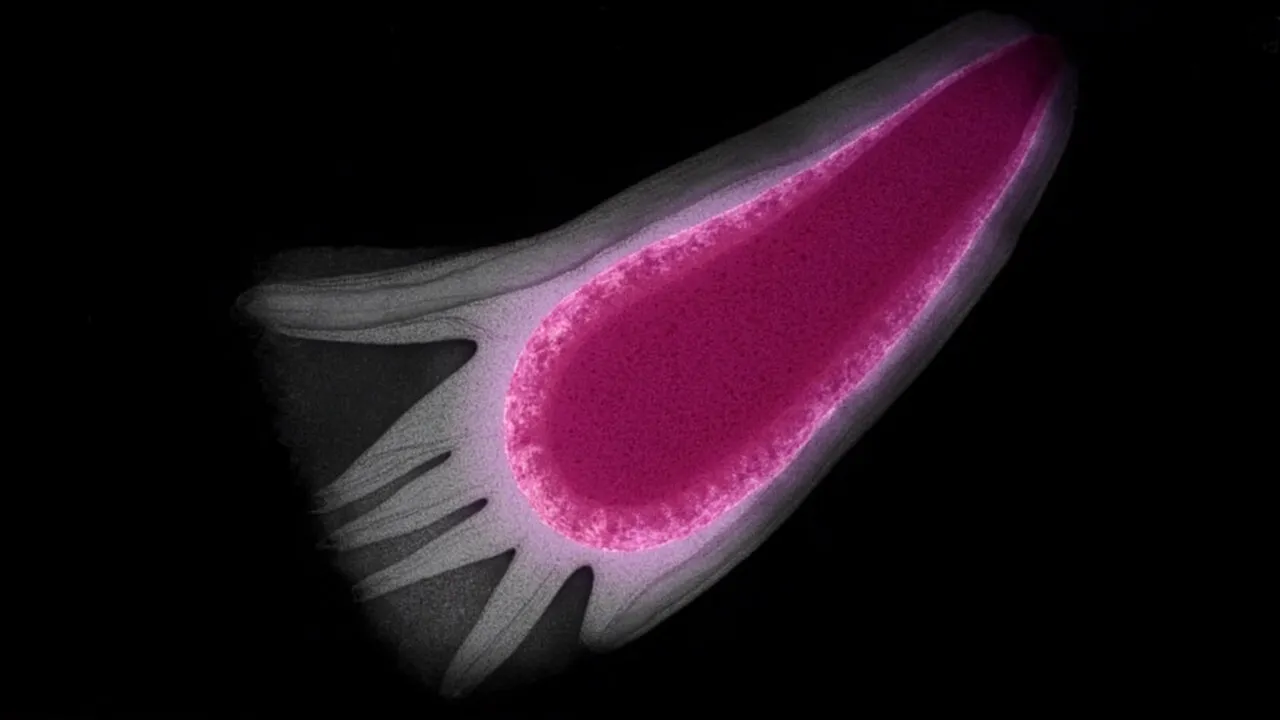
This Tiny Four-Winged Dinosaur Was Basically a Cretaceous Serial Killer

Scientists have uncovered a sneaky little predator with four wings that probably spent its days terrorizing ancient birds in what is now China. This newly discovered dinosaur, with feathers on both its arms AND legs, might be the culprit behind mysterious bone piles found at a famous fossil site.

2026-06-23T18:44:35.072186+00:00
The Great Cow Mystery: Why Did Bird Flu Choose Udders Over Lungs?

When H5N1 bird flu started spreading through American dairy herds in early 2024, something strange happened — the virus wasn't acting like any self-respecting flu should. Instead of attacking the lungs, it zeroed in on cow udders, causing severe and painful infections. Scientists were completely baffled. Now, a team of researchers has finally cracked the case, and honestly? The answer is kind of fascinating.

2026-06-23T18:21:38.660433+00:00
This Tiny Diamond Flaw Could Help Scientists Discover a Whole New Kind of Magnetism

Scientists have found a mysterious third type of magnet that could revolutionize our electronics—and they might use a tiny defect in a diamond to hunt for more of them. It's like finding out there's a secret third flavor of ice cream that nobody knew existed.

2026-06-23T17:49:36.710794+00:00
Your Kombucha Is Doing Something Way Cooler Than Just Tasting Good

Scientists recently discovered that the type of tea you use to brew kombucha doesn't just change the flavor—it fundamentally transforms what's inside the drink, from its chemical makeup to its potential health properties. The differences between teas are bigger than anyone expected. Have you ever wondered what's actually happening inside that funky, fizzy bottle of kombucha sitting in your fridge? I mean, we all know it's fermented tea with some mysterious "SCOBY" (which honestly looks like a sci-fi movie alien), but it turns out there's a whole lot more chemistry going on than most of us probably realized. A team of researchers from Wrocław University of Environmental and Life Sciences and Wroclaw Medical University decided to get down to the nitty-gritty and answer a seemingly simple question: does the type of tea you use to make kombucha actually matter? Spoiler alert: it matters A LOT. ## It's Not Just About Flavor Anymore Here's what really got me excited about this study. The researchers tested kombuchas made from five different teas—black, green, white, oolong, and pu-erh—and found that the fermentation process didn't just tweak the flavor. It completely reshaped the chemical composition of the final drink. Think about it this way: you're starting with tea (which already has its own set of compounds like polyphenols, catechins, and caffeine), adding some sugar, and then letting a colony of bacteria and yeast do their thing. What comes out the other side isn't just "flavored tea"—it's a fundamentally different beverage. "Individual teas differ in their content of polyphenols, catechins, caffeine, and other bioactive compounds, which are subsequently metabolized by SCOBY microorganisms," explained Associate Professor Helena Moreira, one of the lead researchers. "As a result, fermentation proceeds with different dynamics, and the final beverages differ in both chemical and aromatic profiles." ## The Scoop on What's Actually Happening in There Let me break down the fermentation process in a way that actually makes sense (because honestly, some science writing makes my eyes glaze over). First, the yeasts in the SCOBY get to work, converting sugars into alcohol and carbon dioxide. Then the bacteria jump in and transform those compounds into organic acids—mostly acetic acid (vinegar's claim to fame) and gluconic acid. This is what gives kombucha that familiar tart, slightly sour kick. But here's where it gets interesting: the fermentation also transforms many of the compounds that were originally in the tea. Some compounds disappear entirely, while new ones are created. The researchers found that during fermentation, new compounds associated with floral and fruity aromas emerged—including linalool and 2-phenylethanol, which you might recognize as substances found in essential oils and flowers. So basically, your SCOBY is like a tiny chemical factory that's rearranging molecules and creating something new. Pretty wild when you think about it. ## The Real Surprise: Green and Oolong Are Standouts Here's the part where things got genuinely surprising for me. When the researchers measured the antioxidant activity of all these different kombuchas, two types came out clearly on top: green tea kombucha and oolong tea kombucha. These showed the strongest ability to neutralize free radicals—those pesky reactive molecules that can damage cells and contribute to aging. Now, I'm not saying drinking kombucha will make you immortal or anything (please don't believe anyone who tells you that about any food or drink). But it's genuinely interesting that the tea base makes such a significant difference to the biological properties of the finished product. "We obtained kombuchas with highly distinct profiles of volatile aromatic compounds," Professor Moreira noted. And the kicker? This happened even though every batch was fermented under completely identical conditions. The only variable was the tea. ## What This Means for You (Probably) Look, I should be upfront: this research was done in a lab, not on humans. So we're not talking about proven health benefits here. The researchers themselves are careful to note that clinical studies would be needed before anyone could make specific claims about how kombucha affects human health. But here's why I find this stuff genuinely fascinating. We're living through this incredible moment where scientists are rediscovering how much there is to learn about fermented foods—products that humans have been making for thousands of years. It's humbling, in a way. We've been brewing kombucha for centuries, and we're only now beginning to understand the science behind what's actually happening. "Fermented foods are currently at the center of scientific interest because they combine traditional technologies with a modern approach to health and nutrition," Professor Moreira pointed out. Kombucha, she suggests, is a perfect example of this intersection. ## The Bottom Line If you're someone who drinks kombucha regularly (or has thought about trying it), here's something to consider: not all kombucha is created equal. The tea matters. A lot. Of course, taste is personal, and you should drink what you actually enjoy. But if you're choosing kombucha partly because you think it might be good for you, it turns out the type of tea it's made from could make a real difference. Green tea and oolong tea versions seem to come out ahead in terms of antioxidant potential, at least based on this research. Of course, plenty of other factors come into play—how long it's fermented, the specific culture used, whether it's store-bought or homemade—so this isn't the final word. But it's a fascinating glimpse into the complex chemistry happening in every glass of kombucha. And honestly? I think it's pretty amazing that something as simple as swapping one type of tea for another can completely change what ends up in your bottle. Now, if you'll excuse me, I'm suddenly very curious about what my local kombucha maker uses... ---

2026-06-23T16:33:22.101336+00:00
So We Pointed a Giant Radio Dish at a Space Rock — Here's What Happened

When a mysterious object from another star system swung through our cosmic neighborhood, scientists didn't just stare at it. They listened. Using a special array of radio telescopes in California, they spent over seven hours searching for any hint that this interstellar visitor might be carrying alien technology. Spoiler alert: no little green men, but the search itself is pretty fascinating.

2026-06-23T15:58:54.183406+00:00
Pressure Washer Deals Are Here — But Which One Actually Deserves Your Money?

Prime Day is bringing some seriously tempting discounts on pressure washers, with savings up to 40% across the board. But before you click "add to cart," let's talk about which models are actually worth your hard-earned cash and which ones will just gather dust in your garage.

2026-06-23T13:22:52.085346+00:00
Why I'm Actually Excited About Prime Day Greenworks Deals (And You Should Be Too)

Prime Day is almost here, and if you've been putting off upgrading your yard tools, this might finally be your sign. I'm breaking down why Greenworks deserves your attention and which deals are actually worth your hard-earned cash.

2026-06-23T12:23:03.720476+00:00
Why I'm Finally Convinced Everyone Needs a Portable Generator (And Yes, Now's the Perfect Time to Buy One)

Prime Day is here, and if you've been putting off getting a generator, this might be the nudge you need. I'm breaking down why these deals are actually worth your attention—and which ones I'd actually buy myself.

2026-06-23T11:50:06.982147+00:00
The Lost Bird World Hidden in a New Zealand Cave Has Scientists Stunned

Deep inside a cave near Waitomo, New Zealand, researchers uncovered fossils from a million years ago that reveal an entirely different world of birds—one that vanished long before humans ever set foot on the islands. The discovery is being called a "missing volume" in New Zealand's history book.

2026-06-23T11:16:12.367499+00:00
This Box on the Space Station Is Colder Than Anything You've Ever Experienced

NASA has just upgraded the Cold Atom Lab floating aboard the International Space Station, and honestly, what happens inside this refrigerator-sized chamber sounds more like science fiction than science. We're talking about creating a state of matter so weird that it challenges our very understanding of what matter actually is.

2026-06-23T10:42:02.673062+00:00
Scientists Just Found Evidence of a Long-Lost Moon-Sized World From the Dawn of Time

Deep inside a rare meteorite discovered in the Sahara Desert, scientists have uncovered the first direct evidence of an ancient planetary embryo that was destroyed billions of years ago—a world so massive it rivals our Moon in size. This discovery is rewriting what we thought we knew about how planets like Earth came to be.

2026-06-23T08:35:22.009623+00:00
Scientists Say We're All Thinking About Protein Wrong — And It's Costing Us Our Independence

New research suggests the protein guidelines we've been following are designed to prevent deficiency, not help us thrive. What if the key to staying strong and independent as we age is hiding in plain sight?

2026-06-23T03:38:03.834506+00:00
This One Procedure Is Giving Knee Pain Sufferers Hope Without Surgery

For millions of people dealing with achy, inflamed knees, the options have traditionally been limited to manage the pain or go under the knife. But a relatively new, minimally invasive procedure called genicular artery embolization (GAE) is offering a middle ground that's changing lives.

2026-06-23T03:26:42.772660+00:00
Why Your Next TV Might Just Look Like a Painting (And That's Pretty Cool)

Remember when TVs were those clunky boxes that dominated your living room? Well, 2026 is shaping up to be the year your television might finally pull off a disappearing act — transforming into wall art when you're not binge-watching your favorite shows.

2026-06-22T22:29:26.995543+00:00
I Just Discovered Amazon's Secret Lego Section—And My Wallet Is Already Nervous

Legos aren't just for kids anymore, and if you've ever tried to track down a retired set on the resale market, you know exactly how painful that can be on your bank account. Turns out, Amazon has been hiding a treasure trove of rare and hard-to-find Lego sets right under our noses, and I'm here to spill the bricks.

2026-06-22T22:06:23.305834+00:00
Finally, a Speaker You Can Actually Take Outside Without Anxiety

After years of coddling "outdoor-friendly" speakers that secretly wanted to live in climate-controlled living rooms, I found Turtlebox—and I'm never going back to being paranoid about my tunes.

2026-06-22T21:44:20.982068+00:00
The Only Garden Tool Shopping List You'll Ever Need (All Available on Amazon)

I've spent way too many hours scrolling through Amazon trying to find decent gardening tools, only to end up with cheap plastic junk that broke after one use. So when I found this roundup of actually good tools vetted by real testers, I had to share. Here's everything you need to transform your garden from "neglected mess" to "neighborhood envy" without the trial-and-error frustration.

2026-06-22T21:21:29.980782+00:00
Hey, Forget Prime Day — Something Way Better Just Dropped

Walmart just launched their Summer Deals Event with discounts reaching up to 86% off, and honestly, this might be the smart move before Prime Day even arrives. If you've been waiting to upgrade your tech and tools, the timing might finally be right.

2026-06-22T20:58:53.373978+00:00
Why I Finally Said Goodbye to My Stubborn Car Stains (And You Will Too)

After years of hiding coffee stains with sunglasses and pretending that mysterious spot on my couch doesn't exist, I finally got my hands on a steam cleaner that actually works—and my car seats have never looked better.

2026-06-22T20:36:39.767788+00:00
That Time America Dropped Four Nuclear Bombs on Spain by Accident

In 1966, a U.S. bomber collided with a refueling plane over Spain, scattering nuclear weapons across tomato fields and into the Mediterranean. Now, more than 50 years later, the veterans who cleaned up the mess are finally getting recognition for the health problems they suffered. --- Okay, story time. Picture this: It's January 1966. You're a fisherman on the southeastern coast of Spain, maybe grabbing your morning coffee, when suddenly — BOOM — something massive crashes into the Mediterranean Sea right off your coast. You squint through the morning light and see parachutes descending. Multiple parachutes. Coming from two aircraft that just collided in mid-air. No big deal, right? Just a normal Tuesday morning. Except the aircraft in question were a B-52 bomber carrying four hydrogen bombs and a KC-135 refueling tanker. And the whole reason they were up there? A Cold War strategy called Operation Chrome Dome — America's way of keeping nuclear weapons perpetually circling the Soviet Union, ready to strike at a moment's notice. Why Were Nuclear Bombers Flying Over Spain? Let me take you back to the 1960s. The Cold War was at its peak, and the idea of "mutually assured destruction" ruled everything. The thinking went something like this: if you have weapons that can destroy the world, and your enemy knows you have them, maybe — just maybe — nobody will actually use them. But here's the problem. Missiles in silos are great, but they're stationary. Submarines are stealthy, but they can only launch from specific locations. What if you want options? What if you want weapons that can reach anywhere on Earth within hours? That's where the strategic bomber came in. During Operation Chrome Dome, B-52 bombers armed with thermonuclear weapons took turns flying continuous patrol routes around the globe. One of those routes took them right over the Mediterranean, near a small Spanish fishing village called Palomares. It was a numbers game. Keep enough bombers in the air, at all times, and you've got a credible threat. The problem? Keeping weapons that could sterilize entire cities flying in circles for years on end isn't exactly... safe. The Collision January 17, 1966. 10:30 a.m. local time. The B-52G is mid-refueling with a KC-135 tanker when something goes wrong. Maybe there was turbulence. Maybe someone miscalculated. Maybe it was just the kind of terrible luck that changes everything. The two aircraft collided. Seven of the eleven crew members between the two planes didn't survive. The B-52 broke apart, and its payload began falling toward Earth. Four hydrogen bombs. Each one capable of causing destruction beyond imagination. But here's the strange part of this story — and strange might be too mild a word. None of the bombs were armed. They weren't ready to detonate. So what happened when they hit the ground? Three landed near Palomares. Two actually buried themselves in the earth, creating craters in the tomato fields outside town. The fourth? It came down in the Mediterranean Sea, parachuting into the water while witnesses watched in horror. The Cleanup Begins Within hours, the U.S. military descended on this peaceful fishing village like an occupying force. We're talking 1,600 military personnel in a town that probably didn't have a Starbucks. They cordoned off areas, evacuated locals, and started hunting for nuclear weapons in tomato fields. John Garman was 23 years old and working as a military police officer. He got to the crash site just a few hours after the collision. Here's how he described it to The New York Times in 2016: "It was just chaos... Wreckage was all over the village. A big part of the bomber had crashed down in the yard of the school." Just let that sink in. Bomber wreckage in a schoolyard. Nuclear weapons half-buried in farmland. Plutonium scattered across fields where farmers had been growing vegetables that very morning. They eventually shipped about 1,400 tons of radioactive soil and vegetation back to the United States for disposal. But there was one little problem: bomb number four was missing. The Hunt for the Lost Bomb Imagine being part of the team searching for a hydrogen bomb at the bottom of the Mediterranean. That's not a movie plot. That's what happened next. The Navy deployed 33 vessels and about 3,000 personnel. They brought in the deep-sea submersible Alvin — yes, the same Alvin from the Titanic expeditions — to search the ocean floor. But here's what really helped: a local fisherman named Francisco Simó Orts had actually watched the bomb fall. He'd seen it descend on its parachute. His eyewitness account gave the search team a starting point. The Alvin found it on a steep underwater slope, roughly 2,500 feet down. Progress! Finally! Except... it gets better. (By "better," I mean worse.) During the first recovery attempt, a cable snapped. The bomb slid deeper into an underwater canyon. It was lost again. For nine more days, this weapon sat somewhere in the Mediterranean, and nobody knew exactly where. I don't know about you, but I would have been losing my mind. How do you even explain that to your superiors? "Sir, we found it. Then we dropped it again." They finally brought it to the surface on April 7, 1966 — nearly three months after the accident. The bomb was dented but intact. No radiation leakage. Somehow, miraculously, nobody was killed by the radioactive material itself. The Real Cost: Decades Later The plane crash killed seven people. The bombs didn't explode. The radiation didn't immediately harm anyone at the scene. So everything was fine, right? Not even close. For decades afterward, the veterans who participated in that cleanup started getting sick. We're talking cancers. Rare diseases. Health problems that seemed to follow them wherever they went. The common thread? Radiation exposure from spending weeks in a nuclear contamination zone, handling radioactive materials without fully understanding the risks. These were the guys who dug through contaminated soil. Who stood guard while others handled bombs. Who breathed the air and touched the debris and came home changed in ways they didn't understand yet. But when they tried to get help — when they filed for veterans' benefits and health care — the Department of Veterans Affairs said what? That there was no radiation risk at the site. No radiation risk. From a site where hydrogen bombs had buried themselves in the earth. Justice (Finally) Comes to Palomares It took years of fighting. It took organizing. It took veterans telling their stories, getting lawyers involved, and refusing to be ignored. The Palomares Veterans Act passed in 2022. That's 56 years after the accident. Better late than never, I suppose. The legislation finally provides disability benefits and health care to surviving veterans who participated in the cleanup, plus some benefits to families of those who had already passed. But here's what gets me: these men were exposed to radiation during an official military operation. They weren't doing anything wrong. They were following orders, trying to keep their country safe, and they ended up paying the price with their health. And it took more than half a century for the government to acknowledge that maybe — just maybe — that exposure had consequences. The End of Chrome Dome Operation Chrome Dome didn't survive the Palomares Incident. The military suspended it not long after, and it was officially discontinued in 1968. But here's an interesting footnote: almost exactly two years after Palomares, another B-52 carrying nuclear weapons crashed near Thule Air Base in Greenland. That's when the Air Force finally said, "Okay, maybe flying hydrogen bombs around the world 24/7 isn't the best idea." Go figure. Looking Back I think about this story often when people talk about the Cold War as if it were some kind of noble chess match between superpowers. Sure, there were diplomatic victories and strategic brilliance. But there was also this: military personnel sent to clean up nuclear accidents that never should have happened, and then told for decades that their suffering wasn't real. The Palomares incident reminds us that history isn't just made of presidents and generals and treaties. It's also made of 23-year-old MPs standing in a schoolyard surrounded by wreckage, and fishermen who watched bombs fall into the sea, and veterans who spent the rest of their lives wondering why they got sick. Sometimes the real cost of history is paid by people whose names we'll never know. --- Source: Popular Mechanics

2026-06-22T20:15:19.408815+00:00