If you've ever wondered what to actually carry in your pockets every day, you're not alone—and the good news is you don't need to spend a fortune to upgrade your everyday carry game. I rounded up the best Prime Day deals on EDC essentials that prove great gear doesn't have to break the bank.
If you've been eyeing those fancy "frame TVs" that turn your living room into a gallery, now might be the perfect time to finally make the switch — and I'm genuinely excited about this deal.
After years of ignoring the subtle wrist aches that came with long workdays, I finally took the ergonomic keyboard plunge with the Logitech Wave Keys — and I'm wondering why I waited so long. This isn't a review of a gimmick; it's the story of how a gentle nudge toward better typing habits changed my entire relationship with my desk setup.
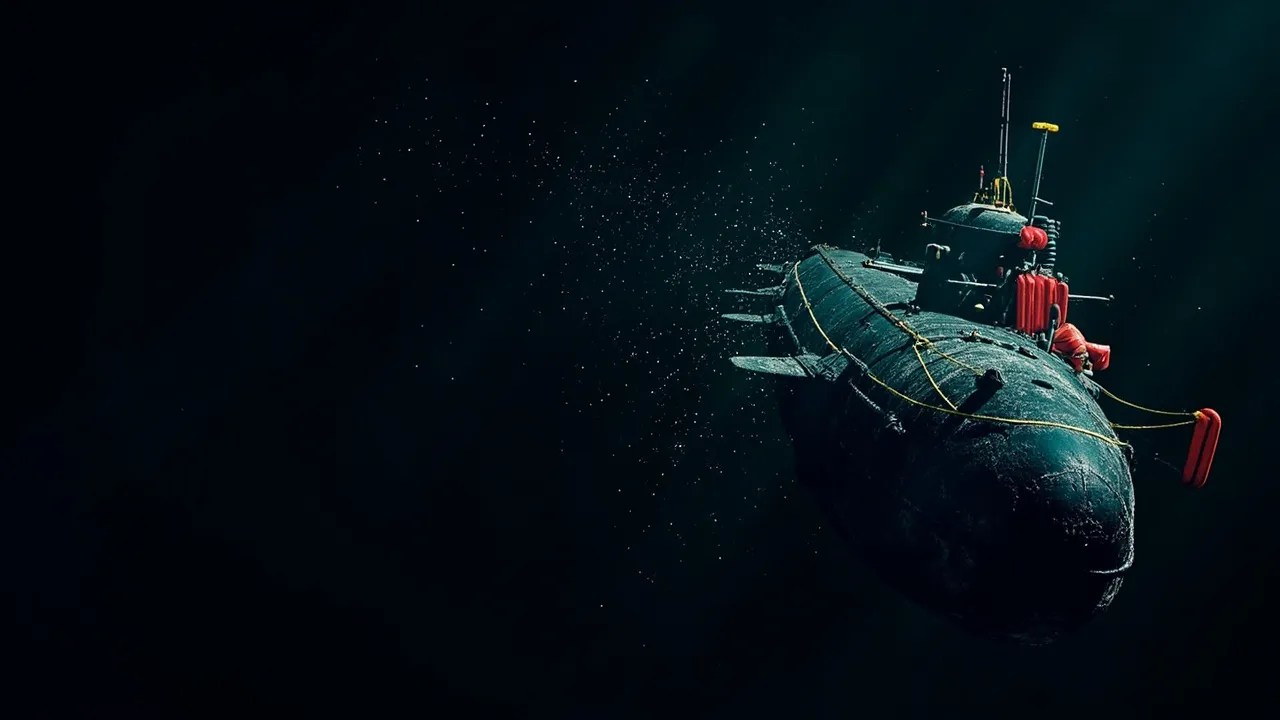
In 1997, researchers recorded an otherworldly sound so powerful it traveled across the entire Pacific Ocean. For years, nobody could explain it — and some people really, really wanted it to be a monster.
Prime Day is here, and if you've been eyeing some EDC upgrades, now's the moment to treat yourself. The best part? You don't need to spend a fortune to level up your daily carry game. Here's what I'd actually put in my pocket. Hey there, friends! So Prime Day rolled around again, and I know a lot of us are already drowning in deal emails. But here's the thing—I genuinely get excited about everyday carry gear this time of year, not because I need more stuff, but because good EDC feels like you. It's the stuff that travels with you, the tools that solve little problems before they become big ones. Let me share a few picks that caught my eye this year, all under $50, because great gear shouldn't require a second mortgage. The Knife That Actually Makes the Cut First up, the Civivi Baklash. It's sitting at around $37 right now, which is pretty sweet for what you get. I'm a sucker for that black-on-black aesthetic—it just looks clean and purposeful. The stonewashed finish isn't just for looks either; it actually gives you better grip when your hands are greasy or wet, which is kind of the whole point, right? What I really appreciate is the flipper mechanism. One quick motion and that blade is ready to go. No fiddling, no hesitation. There's also a little choil (that notch near the handle) that keeps your finger safely away from the cutting path, which is one of those thoughtful details that separates decent knives from genuinely well-designed ones. A Pen That Makes You Want to Write Here's where things get personal. We live in a keyboard world, but there's something almost meditative about putting pen to paper. The Lamy Safari fountain pen has been my go-to for years. At around $30, it's not the cheapest ballpoint on the shelf, but it makes jotting down notes feel like an event instead of a chore. Even writing a simple grocery list feels more intentional somehow. And while we're on the subject, grab a Moleskine notebook to go with it. I know, I know—they're everywhere. But here's the thing: they work. The paper is thick enough that your ink doesn't bleed through, and the binding actually lasts. I've filled probably a dozen of these over the years with everything from meeting notes to half-baked ideas at 2 AM. They're the reliable friend of notebooks, you know? The Takeaway The beauty of EDC isn't about collecting tactical gear or looking like you're ready for the apocalypse. It's about having a few thoughtfully chosen items that make your daily life run a little smoother. And the best part? You don't need to spend much to get there. Happy Prime Day hunting, everyone. What's in your pocket?
If you've been putting off upgrading your gaming setup, now's the time. FlexiSpot's OC3-Pro gaming chair is nearly half off, and honestly, it might be the smartest investment you make for your back and your K/D ratio.
San Carlos Reservoir in Arizona has become a ghostly reminder of how fragile our water resources really are, dropping to less than 1% full and triggering a massive fish die-off. I visited this area years ago, and the contrast between what I saw then and what's happening now is honestly heartbreaking.
Researchers discovered that a major climate emissions database founded by Al Gore is significantly undercounting carbon pollution from city vehicles - sometimes by over 90%. The findings raise important questions about whether the AI tools we're using to track climate change are actually giving us accurate information.
Ever wondered why some people describe transcendent, almost mystical experiences during intimate moments? It turns out your brain chemistry during sex is doing some seriously wild stuff—and scientists say you might be able to enhance these naturally occurring altered states.
Researchers have discovered that stress along two of California's most dangerous fault lines has reached levels not seen in a thousand years. Even more intriguing? They've identified a specific junction point that acts like a gate — and it's currently wide open.
New research just dropped a bombshell about the history of plague—and honestly, it's kind of terrifying. Scientists discovered that this deadly disease was already wiping out humans over 5,000 years ago, long before cities, farming, or even those infamous medieval rats came onto the scene.
After years of wrestling with a bulky, roaring vacuum, I discovered a silent little gadget that handles everyday messes without the drama—and it's honestly changed my cleaning routine.
A paleontologist discovered an extraordinary mummified fish fossil in New Zealand in 1999, but the details of the find were lost for years—until his son enrolled at the same university and made an unexpected connection. Now, this ancient predator has been officially named and is reshaping what we know about prehistoric marine life.
For nearly a century, giant boulders in Death Valley have been sliding across the desert floor with no visible help, leaving long tracks behind them like some kind of geological ghost story. Scientists were baffled. Now we finally know what was going on — and honestly? Nature is way cooler than we ever imagined.
Imagine taking a casual walk through what looks like an ordinary valley in the Netherlands, completely unaware that beneath your feet lies 3,000 years of human history. That's exactly what happened when archaeologists started digging before a routine nature reserve project—and what they discovered absolutely blew their minds.
In October 1871, a catastrophic wildfire swept through Wisconsin, killing more people than any other fire in U.S. history—yet almost no one has ever heard of it. The same week, another fire was burning in Chicago, and it would steal all the headlines, leaving thousands dead in the north woods to be largely forgotten by time.
A massive new study跟踪了超过11万人长达近十年,发现我们日常食物中常见的八种防腐剂与高血压和心脏病风险升高密切相关。这项研究的结果可能会让你重新审视购物车里装了什么。
Scientists at Mayo Clinic have stumbled upon a hidden backup system in the kidneys that helps regulate water balance, completely separate from what we thought was the only mechanism at work. The discovery came from an unexpected source: an 80-year-old gout drug that shouldn't have worked at all. And it might just change how we treat a devastating kidney disease affecting millions.
Some bees have a secret hiding spot from sweltering heat — but others don't. New research reveals that where a bee builds its home could determine whether it survives our warming world. And honestly, the findings made me rethink everything I thought I knew about these busy little pollinators.
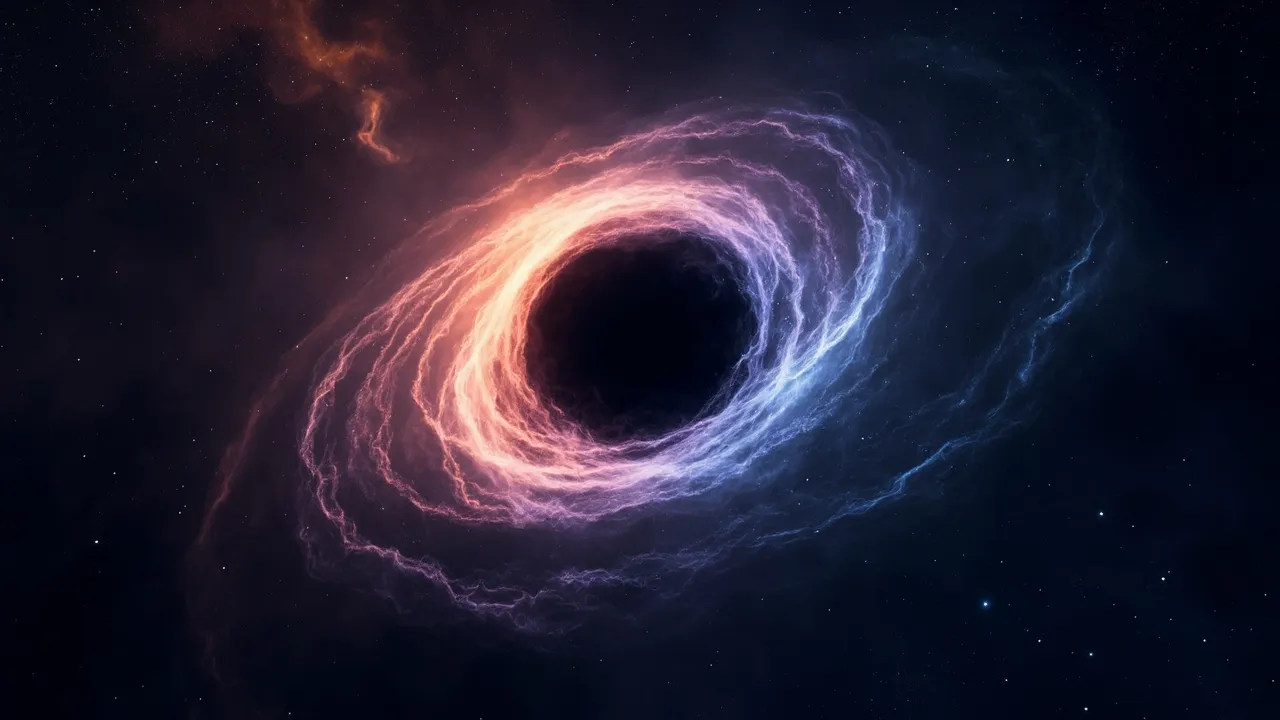
Two of physics' greatest theories don't play nicely together — but a mind-bending new idea suggests the universe itself might be keeping records of everything that ever happens, and that memory could be the key to understanding the mysterious dark stuff that makes up 95% of reality. The universe has a memory problem. No, I'm not talking about forgetting where you put your keys — I mean physics itself is struggling with a deep contradiction that's been bugging scientists for decades. Here's the deal: Einstein's general relativity (which explains gravity and how the cosmos works on large scales) and quantum mechanics (which governs the tiny world of atoms and particles) are both incredibly successful theories. They're like two-star athletes who are amazing at their positions but absolutely cannot work together on the same team. The tension becomes especially painful when we try to understand black holes, dark matter, dark energy, and how everything got started. And here's the thing — dark matter and dark energy? They're not minor details. They're basically running the show. Dark matter makes up about 27% of the universe, and dark energy accounts for roughly 68%. Everything we can actually see and touch — stars, planets, you, me, your morning coffee — makes up less than 5%. That's kind of humbling, right? So here's where it gets interesting. Some researchers are now proposing something that sounds almost philosophical: what if information itself is the most fundamental thing in reality — more basic than matter, energy, or even space and time? They call this framework the Quantum Memory Matrix (QMM), and honestly, the more I read about it, the more it feels like the universe is trying to tell us something profound. The basic idea goes like this: spacetime isn't actually smooth and continuous like we usually imagine. Instead, it's made of tiny, discrete cells — kind of like how digital images are made of pixels, except these are pixels of reality itself. And here's the beautiful part: each of these cells can store information about everything that passes through it. Every particle that zips by, every force that acts in that region, every interaction — they all leave a quantum "imprint" in the local spacetime. In other words, the universe doesn't just evolve. It remembers. Think about that for a second. Every event, every interaction, every moment — it's all being recorded in the fabric of space itself. We're living inside a cosmic journal that never forgets. This brings us to one of the most famous problems in physics: the black hole information paradox. Black holes are so dense that nothing, not even light, can escape them. According to Einstein's relativity, anything that falls into a black hole is gone forever. But here's the kicker — quantum mechanics says that's impossible. Information can never truly be destroyed. For years, physicists have been tearing their hair out over this contradiction. QMM offers a potential way out: as matter falls into a black hole, the spacetime cells around it are recording its imprint. When the black hole eventually evaporates (a process predicted by quantum physics), the information isn't lost — it's already been written into the memory of spacetime. The universe kept the receipt. But the researchers didn't stop there. They started wondering: if spacetime remembers everything through gravity, what about the other fundamental forces? It turns out the same principle applies. The strong and weak nuclear forces that hold atoms together also leave traces in spacetime. Even electromagnetism — the force behind lightning and magnets — changes the memory state of spacetime cells. This led them to a broader principle they call geometry-information duality. Essentially, the shape of spacetime isn't just influenced by mass and energy (as Einstein taught us), but also by how quantum information is distributed — especially through entanglement, that spooky quantum phenomenon where particles can be connected across vast distances. Now here's where things get really wild. The researchers found that clumps of these quantum imprints behave exactly like dark matter. They cluster under gravity and explain why galaxies spin at speeds that don't make sense if we only count visible matter. No exotic new particles required — just accumulated memories of everything that's ever happened. And dark energy? That mysterious force accelerating the universe's expansion? When spacetime cells get saturated and can't record new information, they contribute to a residual energy in spacetime. And here's the amazing part: this leftover energy has the exact mathematical form as the cosmological constant — the term that represents dark energy in our equations. The size even matches what astronomers have observed. Dark matter and dark energy might literally be two sides of the same informational coin. They're not exotic substances — they're what happens when reality remembers itself. Now, here's where my mind really started spinning. If spacetime has finite memory, what happens when it fills up completely? According to their latest research (just accepted for publication), the answer might be a cyclic universe — one that cycles through birth and death over and over. Each cycle of expansion and contraction adds more entropy (basically a measure of disorder) to the cosmic ledger. When the memory capacity is maxed out, instead of collapsing into a singularity, the universe "bounces" into a new cycle of expansion. They estimate our universe has already gone through three or four of these cycles, with fewer than ten remaining. Once all the cycles are complete, the universe enters a final phase of slowing expansion — and no more bounces. This means the true "informational age" of our cosmos is about 62 billion years, not the 13.8 billion years we usually talk about. We've been living in the middle of a much longer story. Of course, I have to be honest with you: this is highly theoretical stuff. Much of this research is still being peer-reviewed, and the ideas are speculative. But there's something deeply satisfying about this framework. It takes two seemingly irreconcilable theories and weaves them together through a third concept — information — that turns out to be fundamental to both. Maybe the universe isn't just a place where things happen. Maybe it's a place where everything that ever happened leaves a permanent mark. And maybe, just maybe, that's what dark matter and dark energy have been trying to tell us all along. I don't know about you, but I find that strangely comforting. We're not just passing through a forgettable cosmos. We're part of a universe that remembers everything — and that memory is written into the very fabric of reality itself. Now, if you'll excuse me, I need to go stare at the night sky for a while and feel appropriately awestruck. --- Source: ScienceDaily — "Could cosmic memory explain dark matter, dark energy, and black holes?"