Dark matter has been the universe's best-kept secret for centuries — invisible, mysterious, and making up about 85% of everything out there. But researchers now think they've found evidence that this elusive substance might be bumping into itself, leaving behind strange "scars" in space that could finally help us understand what we're dealing with.
Picture this: 460 million years ago, before dinosaurs even existed, before vertebrates thought about leaving the oceans, tiny millipedes were already doing their thing on land. A new study just dropped some major truth bombs about these ancient pioneers, and honestly? We owe them a huge thank-you.
You'd think dropping pounds would make you want to get up and dance through the streets, right? But fascinating new research reveals something unexpected about people taking popular weight loss medications like Ozempic and Wegovy—they actually become less active, not more. This finding has some serious implications for how we approach these increasingly common drugs.
New research reveals that middle age is getting significantly harder for Americans compared to previous generations — and our peers in Europe aren't experiencing the same struggles. Here's what's going on, and what we might actually do about it.
A fascinating new study just turned everything we thought we knew about sugar-free diets upside down. Turns out, that "no sugar, no problem" thinking might be way too simplistic — and scientists are warning that completely eliminating sugar could be doing more harm than good.
Think your immune system is purely modern? Think again. New research reveals that genes from our long-extinct cousins, the Denisovans, are still humming away inside millions of people today—particularly those with roots in Oceania—helping us fight off infections just like they did 45,000 years ago.
For decades, we've been told a beautiful story about how wolves returned to Yellowstone and transformed the entire ecosystem. But new research suggests that story might be more fiction than science—and the truth is actually more interesting.
Scientists have discovered fascinating evidence that parrots might do more than just mimic human speech—they could be using names to identify specific people, much like we do. Before you start thinking your bird is secretly plotting something, let me walk you through what researchers actually found.
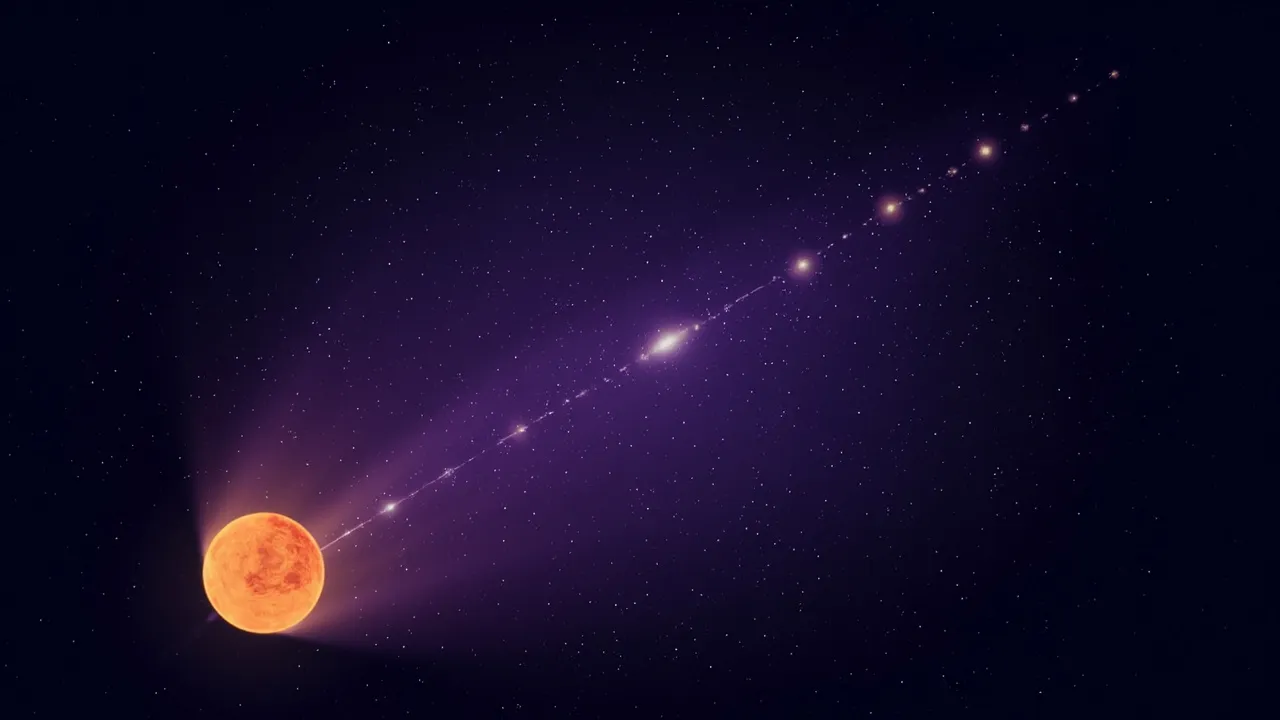
Scientists have long believed that when massive stars die, they collapse into black holes — points of infinite density where the laws of physics break down. But a mind-bending new theory suggests those cosmic death scenes might actually be giving birth to entire miniature universes, each one expanding with its own dark energy and existing in a stable balance with gravity. What if I told you that when massive stars die, they don't just disappear into infinite darkness? What if, instead of collapsing into a point of infinite density, they give birth to brand new universes? I know, I know — that sounds like something out of a science fiction novel. But hold on, because some physicists are taking this idea seriously, and honestly, the more I read about it, the more fascinating it becomes. Let me walk you through what's going on here. ## The Problem with Black Holes First, let's talk about what we "know" happens when massive stars die. When these cosmic giants run out of nuclear fuel, they can no longer generate the outward pressure needed to fight their own gravity. The star collapses in on itself, and for the most massive ones, we think this creates a black hole — a region where all that matter gets squeezed into an infinitely small point called a singularity. Here's the thing though: this singularity idea is kind of... problematic. Think about it. How can something containing the mass of billions of suns be compressed into literally zero volume? How can spacetime curve infinitely at a single point? And perhaps most confusingly, what happens to all the information about the matter that fell in? Physics says information can't be destroyed, but black holes seem to swallow it forever behind their event horizon. These aren't just philosophical concerns. These are genuine gaps in our understanding where the math breaks down and our known laws of physics stop providing reliable answers. ## Meet the Gravastar Because of these issues, some physicists have been exploring alternatives. And this is where things get really interesting. Enter the gravastar. Imagine an object that's almost as dense and massive as a black hole — so dense that its gravitational pull would be incredibly intense. But here's the key difference: instead of having a singularity at its core or an event horizon hiding everything from view, a gravastar would be filled with something called dark energy. Dark energy is that mysterious "something" that scientists believe is causing our universe to expand faster and faster. And in a gravastar, this dark energy would create an outward pressure that pushes back against gravity, potentially preventing the complete collapse that would normally form a black hole. Sounds pretty cool, right? The problem was, no one could figure out how gravastars would actually form in the first place. How does a collapsing star make this transition? What triggers the dark energy to take over? ## The Mini Universe Solution This is where two theoretical physicists — Daniel Jampolski and Professor Luciano Rezzolla — come in with their mind-blowing proposal. Their research suggests that when a massive star collapses almost to the point of becoming a black hole, something remarkable could happen inside that collapsing matter: a brand new universe could be born. Think about that for a second. Not just a weird gravitational object. An actual, honest-to-goodness mini universe. This baby universe wouldn't be all that different from our own Big Bang. Just as our universe began expanding rapidly from an incredibly dense state, this tiny universe would also expand — driven by dark energy. And as it expands, it pushes outward against the inward pull of gravity. The result? A cosmic tug-of-war. Gravity pulling inward, the expanding mini universe pushing outward. And right in the middle of that battle, you get a stable gravastar. ## Why This Matters Now, I want to be clear about something: this doesn't mean black holes don't exist. Professor Rezzolla himself emphasizes that black holes are still the "most natural and simplest solution" to what happens when massive stars collapse. The point isn't to throw out everything we know. The point is to stay curious and open-minded. History is full of examples where "exotic" ideas eventually became mainstream science. Quantum mechanics was once considered bizarre. The Big Bang itself was controversial for decades. Some of our most important discoveries came from scientists being willing to explore possibilities that seemed strange at first. As Rezzolla puts it: "It is easier to imagine that the Big Bang occurs only at a very late stage, when matter has already been compressed to an extreme degree, thereby giving rise to new effects." In other words, maybe the conditions for creating a universe aren't as impossibly remote as we thought. Maybe they're happening right now, in dying stars across the cosmos. ## The Bigger Picture Here's what really gets me about this whole thing. If gravastars can form through this process, it means there could be objects out there that look almost exactly like black holes but are actually something entirely different. Objects hiding entire expanding universes inside them. And if that's possible — if our universe could theoretically be nested inside something we can't even detect from the outside — what does that mean for our understanding of cosmic inflation, the multiverse, or the nature of reality itself? I'm not going to pretend I have answers. But I love that we're asking these questions. ## Wrapping Up Look, I'll be honest — this is the kind of science that makes my brain hurt in the best possible way. We're talking about stars that might be giving birth to universes while simultaneously preventing themselves from becoming black holes. The physics involved is incredibly complex, and these are still theoretical ideas that need more testing and scrutiny. But isn't that what makes science so exciting? The universe keeps surprising us. Every time we think we understand how things work, we discover new layers of complexity that challenge everything. And ideas that seem outlandish today might become fundamental knowledge tomorrow. So the next time you look up at the night sky and see those points of light — remember that those stars have some pretty dramatic futures ahead of them. And maybe, just maybe, some of them are quietly bringing new universes into existence, one gravitational tug-of-war at a time. How cool is that? --- Source: ScienceDaily
Researchers have finally uncovered the genetic culprit behind a mysterious movement disorder that doctors have struggled to diagnose for years. The discovery not only brings answers to affected families but also reveals a surprising new role for a gene we thought we already understood.
Scientists at Kyoto University have discovered that learning to play a musical instrument later in life can actually protect your brain from age-related memory decline. In a four-year study, people who kept playing showed significantly less shrinkage in key brain regions compared to those who quit. Here's what this means for you or your loved ones.
A fascinating new study reveals that our brains can keep getting sharper well into our 80s and 90s, challenging everything we thought we knew about aging and mental decline. And get this — the people who improved the most weren't the young ones.
Researchers have developed an experimental vaccine that dramatically lowers the amount of fentanyl reaching the brain, potentially preventing overdoses before they even start. The approach is clever in a way that might just outsmart drug manufacturers for once.
Remember that panic a few months ago when some astronomers suggested our understanding of the universe's expansion might be completely wrong? Well, breathe easy — it turns out we didn't mess up after all. A new study has confirmed that yes, the universe is still accelerating in its expansion, and no, we don't need to throw out decades of cosmological research.
Mental health struggles among teenagers have reached alarming levels, but one child psychologist believes there's an often-overlooked resource that could make a real difference: grandparents. The reasons might surprise you.
Astronomers have discovered something fascinating about distant worlds - the faster a planet spins, the less massive it tends to be. This isn't just a random cosmic fact; it might be the key to understanding how planets are born in the first place. And honestly? The answer involves something you might not expect: magnetism.
Imagine you're Lucy, taking a drink by a river in Ethiopia three million years ago. You might not be alone. Scientists just discovered that our ancient ancestor shared her landscape with a massive crocodile that has now been officially named "Lucy's hunter" — and honestly, the name is terrifyingly appropriate.
What if you could reboot your eyes the same way you restart a frozen computer? That might sound like science fiction, but researchers at MIT have found something remarkable: temporarily shutting down a damaged eye can actually restore its function. Meanwhile, another team has developed a tiny chip that's giving blind patients their central vision back. These aren't incremental improvements — they're paradigm shifts.
After years of dragging out the old gas mower every weekend, I decided to put one of those fancy robot lawn mowers to the test. The results surprised me — not just in how well it works, but in how much it genuinely improved my lazy Saturday mornings.
Hair loss affects millions of people worldwide, and while treatments exist, most just slow the inevitable rather than reverse it. But new research using artificial intelligence and stem cell science is opening doors to something that could actually bring your hair back — and it's happening faster than you might think. --- Let's be honest: losing your hair feels awful. I mean, it's just hair, right? But when you catch yourself avoiding mirrors or instinctively touching your scalp, you realize how much those strands actually mean to our sense of self. Whether you're a man or a woman, thinning hair can really knock your confidence. And the frustrating part? For years, the options have been pretty limited — slap on some minoxidil and hope for the best, or go the expensive route with hair transplants. Neither exactly feels like a real solution. Well, buckle up, because scientists are cooking up some genuinely exciting alternatives, and the research is straight-up fascinating. ## The Stem Cell Secret Here's the thing about hair: it's not just sitting there passively on your head. Each follicle is basically a little hair-producing factory, and the foreman of that factory is something called hair follicle stem cells. When these cells are awake and working, your hair grows. When they go dormant (which they naturally do in cycles), the hair eventually falls out and waits for the next growth phase. The problem comes when something — stress, illness, genetics — pushes those stem cells into permanent nap mode. They just won't wake up. The factory closes, production stops, and suddenly you're dealing with thinning hair or bald spots. But what if we could hit the snooze button on those sleeping stem cells and drag them back to work? ## Enter the AI Drug Hunters One company, Absci, based in Vancouver, Washington, is taking a wildly creative approach. They're using artificial intelligence to design a completely new kind of hair loss treatment called ABS-201. And honestly? The way they found it sounds like something out of science fiction. Traditional drug development is brutal. Researchers essentially play an enormously expensive game of trial and error, testing thousands of compounds hoping one might work. Absci flipped the script. Instead of searching for the right molecule in a haystack, they used AI to essentially design the perfect molecule from scratch — like creating the needle rather than searching for it. The target? A protein called the prolactin receptor. You probably know prolactin from its role in breast development and milk production, but it turns out this receptor also plays a sneaky role in hair loss. When it's activated, it can push hair follicles into dormancy. ABS-201 is an injectable antibody that blocks this receptor, essentially telling those lazy stem cells to get back to work. The really cool part? Unlike minoxidil, which mostly just prevents further hair loss, ABS-201 actually encourages regrowth. No existing treatments target the prolactin receptor this way — it's a completely novel mechanism. ## Monkey Business (and Mouse Business) Before getting too excited, scientists obviously needed to prove this actually works. So they tested it on macaques — those clever primates that, like humans, naturally experience pattern baldness. The results? After six months of treatment, these monkeys had full heads of hair again. Full. Heads. Of. Hair. They also tested it on mice, which showed even faster results — complete regrowth in just 22 days. Compare that to minoxidil, which only produced hair growth in about a third of the mice. The difference was striking. Human clinical trials started in December 2025, with more advanced testing planned for mid-2026. We're still early in the process, but the preclinical data has scientists genuinely excited. ## The Lactate Connection Meanwhile, researchers at UCLA took a completely different angle. A team led by Heather Christofk and William Lowry made a fascinating discovery: sleeping hair follicle stem cells have a very different metabolism than active ones. Specifically, the "awake" stem cells produce more lactate — a molecule your body generates when creating energy without oxygen. This gave them an idea: what if they could boost lactate levels in dormant stem cells and trick them into waking up? To test this, they used a clever aspect of mouse biology. Newborn mice are born furless, and their first few rounds of hair growth happen in synchronized waves. This made it easy to pinpoint exactly when stem cells should be active versus resting. The scientists bred mice with the lactate-producing enzyme disabled. The result? Unlike their normal siblings, who regrew fur within 70 days of being shaved, these modified mice stayed completely bald. The connection was clear: lactate is essential for hair growth. But here's where it gets really interesting. They also created mice with impaired mitochondria (the energy powerhouses of cells), which forced more glucose to be converted into lactate instead. These mice sprouted hair faster than normal. They confirmed this finding by treating normal mice with a molecule called UK-5099, which blocks the same mitochondrial pathway. Those mice also grew hair earlier than they should have. "We saw hair growing on these mice at a time when they shouldn't be growing hair," Christofk noted. That has to be one of the most satisfying sentences in scientific literature. ## A Scalp Cream That Could Change Everything The UCLA team teamed up with a medicinal chemist to design a derivative of UK-5099 that could be applied topically — no injections needed. The resulting compound, PP405, is a scalp cream that would let you basically slather on the treatment at home. They founded a company called Pelage Pharmaceuticals to push this forward, and the topical approach has obvious appeal. Nobody wants to go to a clinic for hair loss treatments if they can avoid it. ## My Take on All This Look, I know this stuff can sound like science fiction, and I try not to get too hype about early-stage research. But here's what makes me genuinely optimistic: we're seeing multiple different approaches converging on the same fundamental problem — how to reactivate dormant hair follicles. We've got AI-designed antibodies targeting prolactin receptors. We've got metabolism-based approaches using lactate. We've got topical treatments in development. The fact that so many smart people are tackling this problem from different angles suggests we're onto something real. Hair loss isn't just cosmetic. For many people, it's genuinely distressing and affects quality of life. The fact that science is finally taking it seriously as a target for reversal rather than just management is a big deal. Will these treatments work perfectly in humans? Will they be affordable? Will there be side effects we don't anticipate? The honest answer is: we don't know yet. Clinical trials take time, and plenty of promising treatments have stumbled at this stage. But for the first time in a long time, people dealing with hair loss might have something real to look forward to. And honestly? That's pretty exciting news. ---