Fan va texnologiya olami
So'nggi yangiliklar
Robot o'txo'rlar orasidagi "poyga mashinasi" - sinab ko'rdim, lol qoldim!

Mammotion sent me their Luba 3 AWD robot mower, and honestly, I expected another bland autonomous gadget. What I got instead was a speed demon that maps your yard on its own—but not without a few quirks you'll want to know about before buying.

2026-07-19T00:12:48.843340+00:00
Qadimiy momiyadan kutilmagan narsa topildi

Arxeologlar Misrdagi qadimgi dafngohda ajoyib kashfiyot qilishdi. Ularning ma'lum qilishicha, 1600 yillik mumyonining ichidan Gipponning "Iliadasi"dan bir bo'lak topilgan. Bu ilgari hech qachon sodir bo'lmagan hol — mumyolash jarayonida sehrli tuyalardan tashqari yunon adabiy matni ham qo'llanilgan. Bu kashfiyot qadimgi misrliklarning yunon adabiyotiga bo'lgan munosabatini anglashda muhim iz qoldiradi.

2026-07-18T23:56:54.061228+00:00
LG C6 OLED bir hafta testda — rostini aytsam

No question, the LG C6 OLED looks stunning. But after spending some time with it, I'm not convinced the upgrade from last year's model is worth it — unless you're going all in on size, I mean really going big.

2026-07-18T23:54:50.989526+00:00
Sirli Sabab: Insonlar Nega Kristallarni Millionlab Yillardan Beri To'playdi — Shimpanzelar Bizga Nima O'rgatdi

For nearly 800,000 years, humans have been gathering beautiful rocks for no clear practical reason. Now, scientists have found that our closest animal relatives — chimpanzees — have the same peculiar attraction to shiny objects. This discovery suggests our love of crystals might be hardwired into our DNA.

2026-07-18T23:56:54.893238+00:00
Bu kichik geko saraton ustidan g'alaba qozonishimizga yordam berishi mumkin — bu chalg'itish emas

Researchers have found that a common pet gecko species develops cancer at surprisingly high rates—and that troubling tendency might actually hold the key to better understanding and treating cancer in people. These small, colorful reptiles may have been hiding something important all along.

2026-07-18T23:49:53.829450+00:00
Sabzavotlarni professional pishirish qanday? (Va buning ahamiyati)

Yaqinda Cyclospora kabi parazitlar haqida eshitdim va bu menga sabzavotlarni xavfsiz haroratda pishirish uchun qanday asboblar ish beradi, degan savol tug'dirdi. Ko'p izlanishlar tufayli javobni topdim.

2026-07-18T23:39:49.522892+00:00
Voy, Qora dengiz ham ko'k bo'lishi kerakmasmidi? Yashirin siri

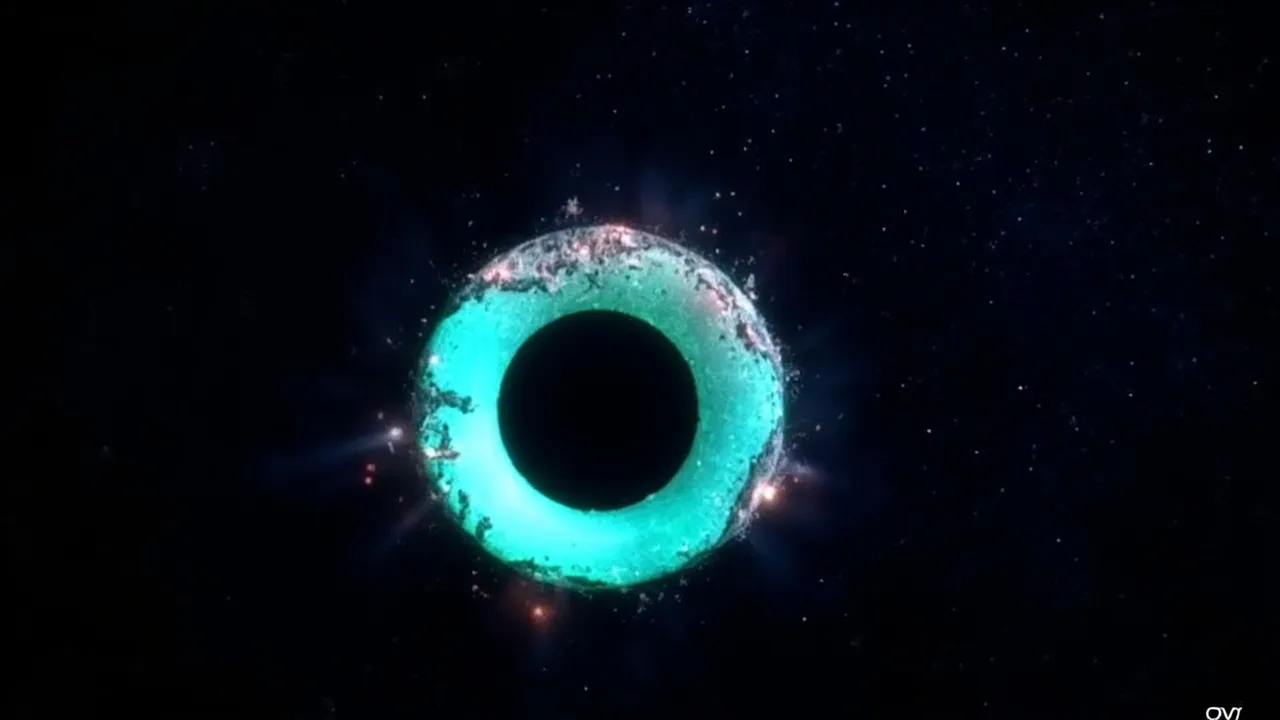
Every year, something magical happens to the Black Sea — and I mean that literally. The usually dark waters turn into a brilliant turquoise that's even visible from space. NASA just captured it on camera, and honestly, the images completely blew my mind.

Picture yourself as an astronaut floating aboard the International Space Station, orbiting Earth at 28,000 kilometers per hour. Most of the time, the planet below looks pretty familiar — clouds, landmasses, the blue shimmer of oceans. But then you pass over a stretch of water between Europe and Asia, and something strange catches your eye. The sea isn't its usual moody dark color anymore. Instead, it's glowing turquoise, like someone dumped a giant bottle of Caribbean-blue paint into the water.

No, this isn't a glitch. And no, you haven't accidentally ended up in some tropical paradise. You're looking at the Black Sea, witnessing one of nature's most dazzling seasonal transformations.

Here's what's actually happening: every late spring and early summer, massive blooms of tiny organisms called coccolithophores explode across the Black Sea. These are microscopic phytoplankton — impossibly small creatures that you couldn't see even if one landed on your fingertip. But here's the really wild part: each one of these little organisms is covered in tiny plates made of calcium carbonate, almost like wearing a little shell suit. When billions upon billions of them gather together — and I mean billions, with populations reaching astronomical numbers — all those reflective shells act like countless tiny mirrors, scattering sunlight and turning the water that gorgeous milky turquoise color. It's genuinely one of those "wow, nature is incredible" moments.

What's even cooler is that the Black Sea doesn't always look this way. At other times of year, different microscopic algae called diatoms take over. These have silica shells instead of calcium carbonate, and they give the water a darker appearance — the moody, almost ominous look the Black Sea is usually known for. So it's literally a sea of two personalities depending on the season.

And it doesn't stop at the Black Sea itself. The bloom extends into the Bosphorus — that narrow waterway running right through Istanbul. Astronauts have photographed it from the ISS, and you can see swirling turquoise patterns tracing the currents on both sides of the channel. How amazing is that? One of the world's most storied waterways, transformed into art from above.

Now, you might be wondering: why should we care about some pretty pictures of the ocean changing color? Fair question, and here's where it gets genuinely important.

First, these blooms offer a window into the health of marine ecosystems. Since they're visible from space, satellites can track them across huge areas — places where it would be incredibly difficult or expensive to send research vessels to collect water samples. Scientists can monitor changes over time and spot problems before they become disasters.

But here's what really fascinates me: these tiny organisms play a huge role in our planet's health. Coccolithophores absorb carbon dioxide as they grow — both from the atmosphere and from the surrounding water. When they die, some of that carbon sinks to the ocean floor and gets locked away for centuries or even longer. In a way, these invisible little creatures help regulate Earth's climate by pulling carbon out of circulation. We often think of forests as the planet's lungs, but it turns out the oceans are doing massive amounts of carbon storage work too — much of it thanks to organisms we can't even see.

So the next time you look at a map and see that big dark body of water between Europe and Asia, remember: for a few months each year, it puts on one of the most beautiful shows on Earth. And thanks to satellites like NASA's PACE, we get to watch it happen again and again from hundreds of kilometers above.

Sometimes the most extraordinary things are hiding in plain sight.

Source: https://www.sciencedaily.com/releases/2026/07/260713084900.htm

2026-07-18T23:41:58.309631+00:00
Yer ostidagi mo'jiza: 13 kishi qorong'ida uch hafta qanday tirik qoldi

In 1906, one of Europe's worst mining disasters claimed hundreds of lives. But when rescue teams called off the search, a handful of men were still alive. What happened next sounds like something from a survival thriller—except every word actually happened.

2026-07-18T23:31:26.888835+00:00
Olimlar Miya Hujayrlarida Yashirin "Qorovul" Topdilar — Bu Altsgeymerga Qarshi Kurash Usulini Tubdan O'zgartirishi Mumin

Olimlar miya hujayralarida allaqachon noma'lum tuzilma topdilar. Bu tuzilma kiruvchi va chiquvchi narsalarni boshqaruvchi kabi ishlaydi. Bu kichik darvozabon Alzheimer kasalligini tushunish — va ehtimol, oldini olish — uchun kalit bo'lishi mumkin.

2026-07-18T23:28:40.009030+00:00
Mushuk rasmlari ko'payib ketdi — olimlar nima qilmoqchi?

Data centers are absolute monsters — they gulp down electricity like it's going out of fashion and take up enough room to fit entire neighborhoods. But scientists might have stumbled onto something unexpected. The solution has been hiding in plain sight this whole time... and it's been inside you all along.

2026-07-18T23:18:10.307563+00:00
Ishchilar 1300 yillik Buddha haykalining ostidan topilgan narsa barchani hayratda qoldirdi

Some of the most remarkable discoveries come completely out of the blue. Construction workers in Thailand were digging a drainage system when they uncovered something extraordinary—hidden away beneath a huge reclining Buddha statue for more than a thousand years. This incredible find is giving historians an unprecedented window into an ancient civilization and the spiritual life of people who walked the earth 1,300 years ago.

2026-07-18T23:14:14.508838+00:00
Miya — kosmosga ulangan radio bormi?

Siz hech qachon shunday odamga duch kelganmisizki, bir zumdayoq, ikkoviz bir xil to'lqin uzra ekansiz? Olimlar bu hisning oddiy kayfiyat emasligini va u atrofimizdagi ko'rinmas energetik maydonlar bilan bog'liq ekanligini taxmin qilmoqda.

2026-07-18T23:09:35.461080+00:00
Feynman ham yechimini topa olmagan murakkab fizika masalasi — "xaqqul sprinkler" yordamida hal qilindi

Siz还记得那些奇形怪状的后院洒水器吗?那些管道弯弯曲曲、绕来绕去,水喷得到处都是,看起来超级搞笑?没想到这些看起来傻乎乎的小玩意儿,竟然帮科学家解开了一个困扰物理学界很久的谜题——而且答案比你想象的要精彩得多。

2026-07-18T22:51:58.000817+00:00
Buyaklar uchun yangi umid: millionlab insonlarni asrab qoladigan dori topildi

Researchers have unveiled encouraging results from a major new study. The medication finerenone shows promise in significantly slowing kidney function decline in patients with chronic kidney disease — including those without diabetes. This could be a game-changer for the millions of people living with this often silent condition.

2026-07-18T22:47:49.838593+00:00
Siz English sarlavhasini yozmadiz. Iltimos, sarlavhani yuboring - men uni tabiiy va romli o'zbekcha sarlavhaga aylantiraman.
2026-07-18T21:59:45.458455+00:00
Olimlar Suratdagi Maxsus Usulni Zarracha Ovchiga Aylantirdi — Bu Ajoyib!

Researchers have created a prototype detector that uses specialized camera technology to track invisible particles traveling through dense materials. The device could make one of physics' most difficult challenges a lot easier to solve.

2026-07-18T22:00:03.067162+00:00
Huckberry Yozgi Sale Boshlandi — Va Bu Haqiqatan Ham Zo'r

If you've been eyeing that waxed jacket or a solid everyday carry knife, this is your chance. Huckberry's summer sale just went live with up to 55% off their editor-tested gear—including some things that almost never go on sale. I already went through the best stuff so you don't have to.

2026-07-18T21:39:14.196353+00:00
Voy! 13-asr kemasidan sirli muqaddas buyum topildi — bu qanday topilma?

Just off the coast of Menorca, three medieval shipwrecks from the 1240s lie waiting in crystal-clear Mediterranean waters—and researchers recently stumbled upon them during a dive. One of these ancient vessels even holds a sacred reliquary that could still contain holy relics inside. No, this isn't the plot of an adventure film. It's a real discovery happening right now.

2026-07-18T22:01:12.062892+00:00
Yulduz bo'lsang ham, yeganing bir xil

Scientists have discovered a sun-like star that seems to have devoured one of its own planets, and its chemical composition tells the story. This finding opens up intriguing questions about what happens when planetary systems fail — and serves as a reminder that our own Earth may not survive when the sun eventually expands.

2026-07-18T22:11:52.453139+00:00
O'zini yo'q qiladigan plastik — bir haftada tamom

What if your plastic fork could just... vanish? No leftovers, no microplastics, nothing harmful — gone in a matter of days. That's exactly what researchers have managed to pull off with something they're calling "living plastic," a material that literally self-destructs using embedded bacteria.

Have you ever stopped to think about how long that plastic straw you used for 10 minutes will stick around? We're talking centuries here. A single-use item creating pollution that outlasts not just you, but your great-great-grandchildren. It's kind of ridiculous when you really think about it, right?

Well, some researchers at the American Chemical Society apparently got pretty frustrated with this absurd situation, so they decided to do something about it. Their solution? Make plastics that are alive — sort of.

The Big Idea: Plastic With a Built-In Self-Destruct Button

The concept honestly sounds like something out of science fiction. The researchers figured, what if we could embed tiny microorganisms directly into plastic that would, on command, eat the material from the inside out? These aren't just any bacteria — they're specially engineered versions that produce enzymes capable of breaking down polymers, which is what plastics are made of. Think of it like giving your plastic a little pocket of dormant warriors. They just hang out, doing nothing while the plastic functions completely normally. But the moment you want it gone? You wake them up, and they get to work dismantling their own prison.

The Secret Weapon: A Two-Enzyme Tag Team

Here's where it gets really clever. Previous attempts at this kind of technology relied on a single enzyme, which worked but not super efficiently. The team engineered a bacteria called Bacillus subtilis to produce two different enzymes that work together like a demolition crew. The first enzyme goes in and makes random cuts throughout the polymer chains, like snipping a tangled ball of yarn in random spots. Then the second enzyme comes in and carefully works from the ends, breaking everything down into those tiny monomer building blocks. It's like a tag team match where one wrestler tears everything apart and the other one neatly organizes the pieces. The result is complete, total, absolutely thorough decomposition. No fragments left behind. No microplastics.

Six Days. That's It.

In their experiments, the researchers created small films of this living plastic and let them sit under normal conditions. The material held up fine, with the same strength and functionality as regular plastic. Then came the fun part: activation. They added some nutrient broth heated to about 122°F, which woke up the bacterial spores. And within just six days, the plastic was completely gone. Not smaller pieces. Not fragments. Gone. Can we just appreciate how wild that is? Something that used to persist for hundreds of years now vanishes in less than a week.

Real-World Testing: A Wearable Device That Vanishes

The team didn't stop at lab experiments. They actually created a working wearable electrode from this material, like a fitness tracker sensor, for example. It worked perfectly, did its job, and when they were done with it, two weeks later it had fully degraded after activation. This opens up some really exciting possibilities for medical applications. Imagine implants or devices that need to function temporarily inside the body, then disappear without requiring another surgery to remove them. Pretty amazing, right?

The Road Ahead

The researchers are now working on activating these bacterial spores using plain water, which is huge because so much plastic pollution ends up in oceans, lakes, and rivers. They're also optimistic that this approach could eventually work with other types of plastics beyond just the one they tested.

Now, I'll be honest — we're probably still years away from seeing this in the products aisle. There's a lot of testing, safety evaluation, and manufacturing challenges to work through. But the fact that this technology exists at all gives me genuine hope. Every time I see a plastic bag blowing around in a parking lot or read another story about microplastics found in human blood, it makes me a little depressed about humanity's relationship with this material. But then I read about breakthroughs like this, and I think maybe we're not hopeless after all. Maybe we can actually figure this out.

What do you think? Is "living plastic" the future, or are there concerns I'm not thinking of? I'd love to hear your thoughts in the comments.

Source: https://www.sciencedaily.com/releases/2026/07/260715083552.htm

2026-07-18T22:03:58.687713+00:00