Science & Technology
Latest News
The Night 240 Feet of Earth Separated Nine Men from the Surface (And How Science Brought Them Home)

In July 2002, nine coal miners in Pennsylvania found themselves trapped 240 feet underground when their tunnel broke through into an abandoned mine filled with 50 million gallons of water. What followed was a race against time that would capture the nation's attention and remind us what ordinary people are capable of when they refuse to give up.

2026-07-02T12:25:35.997033+00:00
The Sea Just Spilled a 400-Year-Old Secret—And It's Prettier Than We Imagined

Imagine diving 60 feet underwater and finding a glittering pile of pure gold coins, jewelry, and mysterious artifacts just sitting there on the ocean floor. That's exactly what happened off the coast of Devon, England back in 1995. For three whole decades, nobody knew where this treasure came from. Now, finally, we do—and the story behind it is absolutely wild.

2026-07-02T12:13:54.743895+00:00
Why Olympians Sleep on Saatva (And Why You Should Too)

Saatva's Fourth of July sale offers 20% off orders over $1,000 — and yes, that's over $1,000 in savings. But here's what really caught my eye: the U.S. Olympic team sleeps on these mattresses. Let me tell you why that matters.

2026-07-02T12:04:08.859007+00:00
Wait, Can This Woman Really Trip Without Drugs? The Science Behind Her Wild Brain

Agustina Velez Picatto can voluntarily enter psychedelic-like states of consciousness without taking any substances—and researchers just watched her brain do it. This isn't just cool science; it might completely change how we understand altered states of mind.

2026-07-02T11:52:13.865876+00:00
Wait, Did Motorola Just Make the Perfect Little Phone?

Motorola just released a compact phone that's lighter than an iPhone Air and won't break the bank—and after spending time with it, I think they might have accidentally created something special for anyone tired of giant smartphones. You know what I really missed? Using my phone with one hand. Yeah, I said it. In a world where flagship phones keep getting bigger and bigger, Motorola went against the grain with their new Edge (2026) and shrunk everything down. We're talking a 6.3-inch display now, down from 6.7 inches last year. And get this—it weighs just 5.5 ounces. That's lighter than the iPhone Air, which Apple has been bragging about as their slim phone. Motorola did that with a budget phone. I didn't expect to be this excited about a $600 phone, but here we are. ## A Phone That Actually Fits in Your Hand Here's the thing about modern smartphones: they're basically tablets we strap to our faces. Don't get me wrong, I love a good big screen for watching videos or doom-scrolling, but there's something genuinely nice about a phone you can actually grip with one hand. The Moto Edge's dimensions are 6 by 2.8 by 0.28 inches, and because of that modest size, I could text, check emails, and scroll through social media without worrying the thing would slip out of my hand. You don't realize how much mental energy you spend holding onto a massive phone until you use something that fits properly. The back has this cool twill fabric-inspired texture that looks different from every other phone out there. I was rocking the Pantone Martini Olive color, and honestly? It's gorgeous. Very classy without being flashy. The trade-off is a plastic back instead of metal, but honestly, at this weight and price point, I think that's a fair compromise. ## That Camera Setup? Absolutely Wild for the Price This is where things get interesting. Most budget phones make you choose between having a decent main camera or an ultrawide lens. Many drop the telephoto entirely because it costs more. But Motorola threw a triple-camera setup on this thing: 50MP main, 50MP ultrawide, AND a 10MP telephoto lens. Plus a 50MP selfie camera. Let me put this in perspective: the Google Pixel 10a has two cameras. The iPhone 17e has just one rear lens. Motorola is out here giving you three lenses for $600. Now, I'm not going to sit here and tell you this camera matches a $1,200 Samsung or Pixel Pro. It doesn't. But for casual photographers who just want to capture life without overthinking it? You're not going to notice a huge difference in everyday situations. The photos look great, the colors are punchy, and the telephoto actually comes in handy more than you'd think. ## Performance That Won't Leave You Hanging Under the hood, you've got a MediaTek processor with 8GB of RAM. Nothing mind-blowing on paper, but in real life? This thing flies. I ran a bunch of apps at once—Chrome with multiple tabs, Outlook, Gmail, WhatsApp, Instagram—all while streaming lossless music from Qobuz. Zero lag. Even Red Dead Redemption looked surprisingly good on the AMOLED display. If you're a mobile gamer, this phone can handle your sessions without breaking a sweat. And the battery... Motorola put a 5,000mAh battery in this compact body, which is just impressive engineering. I used it heavily all day and never felt that panic of watching my battery percentage drop too fast. One full day of real use? Easy. That's not always a given even on much more expensive phones. ## The Stuff That Bums Me Out Look, no phone is perfect, and the Edge has some real annoyances. Storage is the big one. You get 128GB. That's it. That's the only option. In 2026, with games taking up gigs of space and our cameras shooting high-resolution photos and video, 128GB fills up fast. Even the previous generation Moto Edge comes with 256GB now, and it's cheaper. You'll definitely want to lean on cloud storage and streaming services here. The other issue is software support. Motorola only promises three years of Android platform updates. Google and Samsung are offering five to seven years now. After 2029, this phone won't get the latest Android features or security patches. That's a bummer if you're the type who holds onto phones for a long time. Also worth mentioning: IP69 weatherproofing. This thing can take a beating. I wouldn't be afraid to take it camping or use it without a case (though I probably still would because I'm paranoid). ## So... Is This the Budget Phone to Get? If you want a compact phone that doesn't feel like a compromise, yeah, this is pretty compelling. The camera setup alone at this price is bonkers. The battery life is excellent. It feels great in your hand. But if you need more storage or want a phone that'll last five-plus years with the latest software, you might want to look elsewhere. The Pixel 10a or Nothing Phone (4a) might serve you better long-term. Still, I genuinely didn't expect to like this phone as much as I do. Motorola took a chance shrinking everything down, and for anyone who's been missing that small-phone era, this is a breath of fresh air. Sometimes the best phones aren't the biggest ones. Source: https://www.popularmechanics.com/technology/gear/a71774910/motorola-edge-2026-phone-review

2026-07-02T11:41:13.998504+00:00
Why I Can't Go Back to Vacuuming Without Lights After Trying This Bissell

I thought I knew what clean floors looked like until I tried a vacuum with LED headlights. Spoiler alert: I was very, very wrong. Here's why the Bissell PowerClean FurFinder has completely changed my cleaning routine.

2026-07-02T11:30:19.292729+00:00
Why Metal Coolers Are the Coolest Way to Celebrate the 4th (And Every Summer Day)

As we gear up for July 4th celebrations, there's something about metal coolers that just hits different. They're nostalgic, they keep your drinks colder longer, and honestly, they make you look like you have your life together at any backyard BBQ.

2026-07-02T11:19:13.879625+00:00
I Finally Bit the Bullet and Bought a Carpet Cleaner — Here's Why I Wish I'd Done It Sooner

After years of living with "clean enough" carpets, I tested the Bissell Revolution HydroSteam and discovered what I've been missing. Spoiler: my rugs have never looked this good, and I'm genuinely wondering why I didn't do this sooner.

2026-07-02T11:08:10.976851+00:00
Why Your Floor Mats Deserve Better Than That Generic Rubber Stuff

After years of dealing with floor mats that slide around, collect gunk in all the wrong places, and look kinda sad, I finally understand why one company is obsessing over the one part of your car interior you've probably ignored forever.

2026-07-02T10:57:13.075844+00:00
Your Cells Remember Youth—And Scientists Are Figuring Out How to Remind Them

Scientists are testing a groundbreaking approach that could make certain types of blindness reversible by essentially reminding aging eye cells how to function like younger versions of themselves. It's not science fiction anymore—and the implications go way beyond vision.

2026-07-02T10:46:08.750245+00:00
The Bonkers Science Behind Why Astronauts Might Literally Eat Asteroids

NASA wants to put humans back on the Moon—and keep them there. But living 238,900 miles from the nearest grocery store poses some pretty wild challenges. Scientists are getting creative with everything from frozen moon water to asteroid dust burgers. Yes, you read that right. So here's something wild to think about next time you're complain about grocery prices: NASA is actually planning to send humans to live on the Moon, and someone has to figure out how to feed them. The space agency recently announced plans for a "semi-permanent" astronaut presence on the lunar surface sometime in the 2030s. Think of it like a Moon Airbnb—but instead of a charming cabin in the woods, you've got a hi-tech habitat in a crater where the sun literally never reaches. (Actually, scratch that Airbnb comparison. The reviews would be brutal.) ## Why This Is Harder Than It Sounds Here's the thing nobody tells you about space exploration: everything is catastrophically expensive and logistically nightmare-ish. Getting stuff off Earth is no joke. We're talking about $1.2 million per kilogram to ship supplies to the Moon. Imagine if your grocery delivery fee was that. You'd never order snacks again. And here's where my mind goes: what if something goes wrong during launch? That rocket exploding doesn't just mean lost cargo. It means astronauts up there watching their monthly food supply turn into a shooting star. That's a level of anxiety I cannot relate to. ## The Moon Has Ice, Which Is Actually Amazing News But before you start thinking this whole lunar base idea is doomed, there's genuinely cool news. The Moon appears to have significant deposits of frozen water, particularly near the south pole, hiding in craters that never see sunlight. Water is basically the superhero of space resources. Astronauts can drink it, obviously. But here's where it gets sci-fi: split that water into hydrogen and oxygen, and you've got rocket fuel. It's like the Moon is just casually sitting on a gold mine of possibilities. ## The Oxygen Problem (It's Bigger Than You'd Think) Now, oxygen. We've actually managed to create oxygen on another planet—Mars. NASA's Perseverance rover pulled off this trick using a device called MOXIE. But here's the reality check: between 2021 and 2023, it produced just 122 grams of oxygen total. To put that in perspective? That's about what a small dog breathes in 10 hours. One dog. Ten hours. Meanwhile, you've got multiple astronauts who need to breathe 24/7. We're going to need a serious upgrade in oxygen-generating technology before anyone's living comfortably up there. ## The Asteroid Food Situation (Yes, Really) And now we arrive at my favorite part of this whole conversation: the possibility that astronauts might eat asteroids. I know what you're thinking. "She lost me at asteroid food." But stay with me. Researchers at Western University published a study showing that carbon found in asteroid dust could theoretically be converted into food. They used a process called pyrolysis (basically heating stuff without oxygen) to transform carbon-rich materials into an oil that bacteria happily munched on. The bacteria aren't human food, obviously. But bacteria eating something means we're on the right track. It's like a proof of concept for cosmic cuisine. One researcher compared this to military applications—imagine feeding troops in remote locations by recycling their own waste. The phrase "we are what we eat" takes on a whole new meaning when "what we eat" includes yesterday's food wrappers. ## Could Moon Residents Grow Actual Food? Beyond asteroid snacks, there's also talk of "agrivoltaic agriculture"—basically growing crops under solar panels. This technique is already being explored on Earth to maximize land use, and the same principles could apply on the Moon. Throw in some experimental amorphous silicon solar panels, and you've got a system that might one day produce actual salads for lunar dwellers. Though I'm guessing Moon lettuce will never quite hit the same as a fresh garden salad here. ## The Bottom Line Look, the Moon base plan is ambitious. Maybe even crazy ambitious. But humanity has a habit of making "impossible" things happen when we put our minds to it. Will there be astronauts crunching on asteroid-derived protein bars within the next decade? Probably not quite yet. But the science is advancing faster than most of us realize. And honestly? The fact that scientists are even seriously considering "eating space rocks" as a viable food strategy tells me humans will find a way. We've always been remarkably good at figuring out how to survive in impossible places. The Moon is just the next logical step. Now if you'll excuse me, I need to go appreciate that Earth comes with breathable air and pizza delivery. --- Source: https://www.popularmechanics.com/space/moon-mars/a71785318/lunar-base-astronaut-living

2026-07-02T10:36:32.164278+00:00
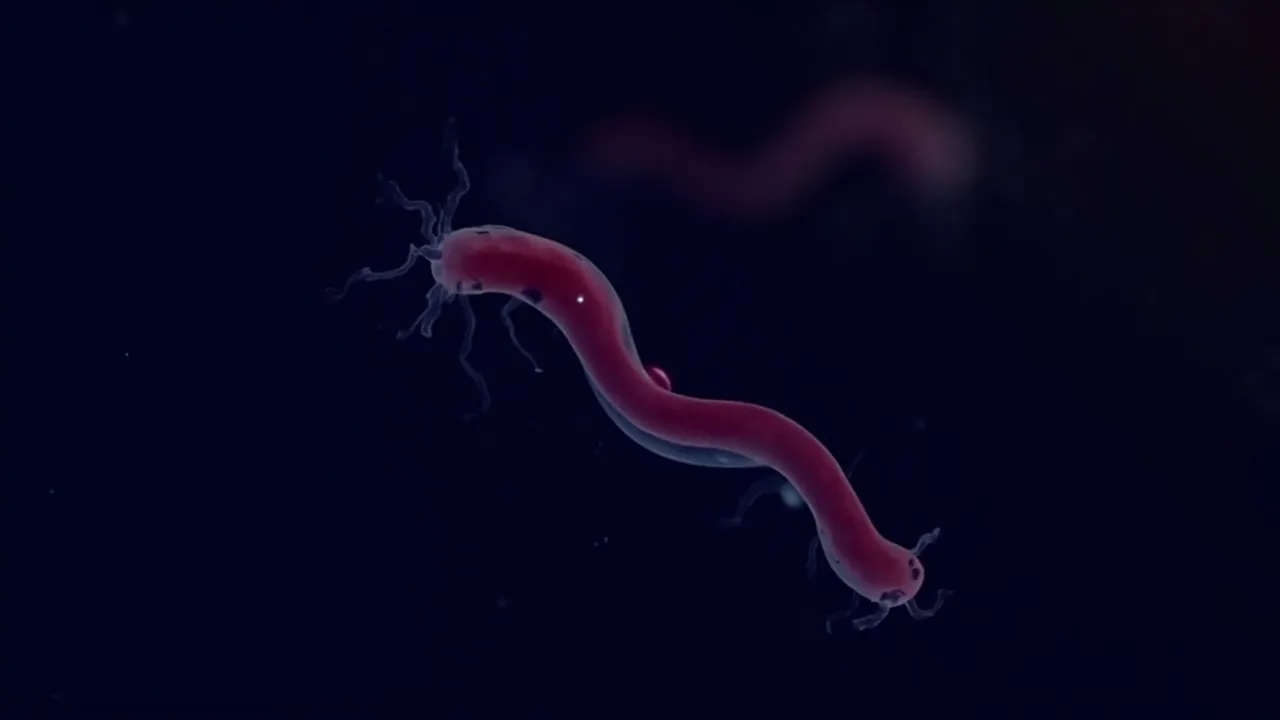
Why This Tiny Ocean Creature Fights Viruses Backwards — And Why That's Mind-Blowing

Scientists have discovered that sea anemones use a completely different immune strategy than humans, relying on a protein that actually suppresses their antiviral defenses — yet this "brake" is essential for survival. The findings upend our understanding of how animals evolved to fight viral infections.

2026-07-02T10:23:49.808054+00:00
Your Brain Is Basically a Prediction Machine — and Freud Figured It Out 130 Years Ago

You know that feeling when you're sure someone is judging you, even when they probably aren't? Turns out, your brain is literally hardwired to see the world through the lens of your past experiences. And here's the wild part: scientists are now realizing Freud was onto something huge all along.

2026-07-02T10:12:39.083943+00:00
Scientists Just Discovered Something Wild About the Brain That's Changing How We Study Movement Disorders

A surprising new finding from Virginia Tech is turning old assumptions about the cerebellum upside down—and it could completely change how we research and treat conditions like dystonia, ataxia, and tremor.

2026-07-02T10:02:06.863179+00:00
The Secret Life of Cancer Cells: How Melanoma Cheats the Aging Clock

Scientists have finally cracked one of cancer's most baffling tricks—figuring out exactly how melanoma tumors keep themselves alive by cheating cell death. The answer involves tiny protective caps on our chromosomes called telomeres, and a genetic double-whammy that gives melanoma cells the power to live far longer than they should.

2026-07-02T09:50:36.588476+00:00
Your Orange a Day Might Be Doing More for Your Brain Than You Realize

A fascinating new study from Japan suggests that vitamin C might be doing more than just boosting your immune system—it could be helping keep your brain healthy as you age. Researchers found that older adults with lower vitamin C levels had measurable differences in their brain structure, opening up exciting questions about what we put on our plates.

2026-07-02T09:39:56.166744+00:00
Half of Kidney Patients Never Even Start the Process — And It Might Be Killing Them

A groundbreaking new study reveals that nearly half of Americans with kidney failure who are referred for transplant never even begin the evaluation process. The research exposes troubling disparities based on where you live, whether you're married, and how much money you make. Here's why this matters — and what we might be able to do about it.

2026-07-02T07:48:07.405637+00:00
Scientists Just Discovered Something Wild About Yellowstone — And It's Not What We Expected

For decades, we thought we understood how supervolcanoes like Yellowstone worked. Turns out, we might have been completely wrong. New research reveals that Yellowstone's magma doesn't come from where everyone assumed — and the answer involves something scientists are calling a "mantle wind" flowing beneath North America.

2026-07-02T07:21:37.686269+00:00
The Sneaky Way Scientists Are Using Vitamin B12 to Outsmart Deadly Brain Cancer

Researchers have discovered that a modified form of vitamin B12 might be able to slip past the brain's natural defenses and deliver cancer-fighting drugs directly to tumors. It's like finding a secret backdoor into a fortress that has been locked against treatments for decades. And the early results? Honestly, they made me do a double-take.

2026-07-02T06:53:09.597551+00:00
Here's a Wild Idea: What If We Built Roads Out of Ocean Trash?

Hawaii is testing something that sounds almost too good to be true — turning fishing nets and plastic waste pulled from the ocean into actual road surfaces. And get this: early research suggests these "plastic roads" might actually be just as good (or even better) for the environment than traditional asphalt. Let me break down what they're doing and why it matters.

2026-07-02T06:23:07.329926+00:00